
No. Kubb is not a Viking game, and the claim does not survive contact with any evidence.
We manufacture and sell Kubb, so it would be convenient to let the Viking story stand. It is a better story than the real one and it sells sets. It is also the kind of claim that a buyer eventually repeats to someone who knows better, and then the whole catalogue looks unreliable.
Here is what is actually documented, what is not, and why the myth attached itself to the game.
What Is Documented
The word kubb is Swedish and means a block of wood, the same root as the English “cob”. The game as it is played today is recorded on Gotland, the Swedish island in the Baltic, in the early twentieth century.
The competitive form spread from there. The world championship has been played on Gotland since 1990, and that event is the de facto standard for the rules, because there is no international governing body with a rulebook that everyone has agreed to.
That is the documented history: a Swedish island, a twentieth-century folk game, and a championship that formalised it in 1990.
What Is Not Documented
There is no medieval written reference to Kubb. There is no archaeological find that has been identified as Kubb pieces. There is no illustration, no account, no inventory, no law banning it, nothing.
For a game that would supposedly have been played by warriors across Scandinavia for a thousand years, the documentary silence is total. Games leave traces: they appear in household accounts, in sermons against gambling, in travellers’ diaries, in the margins of manuscripts. Kubb appears in none of them before the modern period.
Why the Story Attached Itself
Three reasons, and they are not sinister.
- The pieces look old. Rough-sawn wooden blocks and sticks read as pre-industrial whether they are or not.
- The name sounds Norse. A short Swedish word with a hard consonant does most of the work.
- The 1990s needed a story. As the game spread out of Sweden into Germany, the UK and the US, “Viking game” gave retailers a one-line pitch. It stuck because it is useful, not because it is true.
Similar games with rough-sawn pieces exist in several European folk traditions, and it is entirely possible that something like Kubb was played in Scandinavia for a long time without being written down. Possible is not documented, and a product page is not the place to blur the two.
The Game as It Is Actually Played
A rectangular field five by eight metres. Five baseline kubbs on each end, the king in the middle, six batons per team.
| Piece | Count | Approximate size |
|---|---|---|
| King | 1 | 300 x 90 x 90 mm |
| Kubb | 10, five per team | 150 x 70 x 70 mm |
| Baton | 6 | 300 mm long, 35 to 40 mm diameter |
| Corner stakes | 4 | Mark the field corners |
| Field | 5 x 8 m | Short grass or any flat surface |
The Rules in Short
- Teams alternate. Each turn is six batons thrown at the opposing baseline kubbs.
- Knock down all five baseline kubbs and you may then attack the king.
- Topple the king before all the baseline kubbs are down and you lose immediately. This is the rule that makes the game tense rather than long.
- Kubbs knocked down in your half are thrown back into the opponent’s half by the opponent. That throw is the inkast.
- A kubb that lands after an inkast is stood up where it landed and becomes a field kubb. Field kubbs must be cleared before baseline kubbs can be attacked.
The Inkast Is the Game
Everything interesting in Kubb comes from the inkast. The opponent throws your fallen kubbs back into your half, and where they land is where they stay. A good inkast drops kubbs close together near the king, where they are easy to knock down in numbers but hard to approach. A bad inkast scatters them to the edges, where each one costs a baton.
That is why Kubb rewards a skill most players never practise: throwing a wooden block underarm to a spot, not to a target.
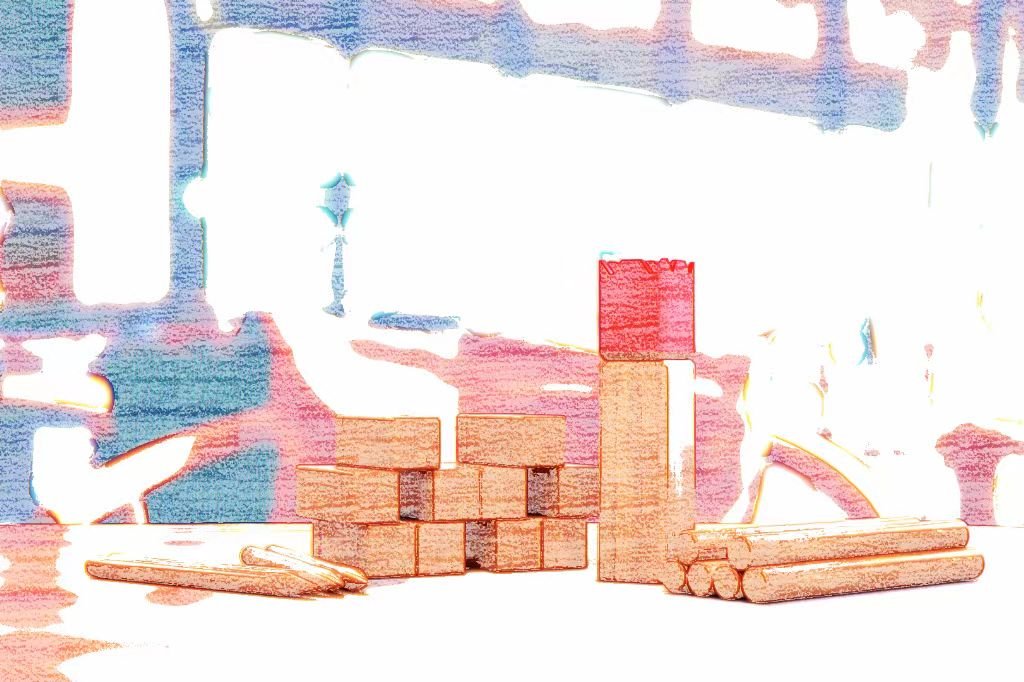
What to Specify When Buying
- Straight grain on the batons. The baton is the part that takes the most punishment, and a baton cut with diagonal grain snaps at the first hard contact.
- Species. Birch or beech. Pine dents at the impact faces within a season, and a Kubb set with dented kubbs wobbles when stood up.
- Moisture content of 8 to 12 percent at machining. Green wood shrinks and the kubbs go out of square, which means they no longer stand up cleanly.
- Squareness of the kubbs. A kubb that is 2 mm out of square stands badly and falls in a light breeze, and the customer blames the game.
- A bag that holds its shape. Ten kubbs, a king and six batons is a heavy, awkward bundle, and a bag with no base reinforcement fails at the seam within a season.
Conclusion
Kubb is a Gotland folk game recorded in the early twentieth century and formalised by a championship that has run since 1990. It is a good game with a clean, tense ruleset built around one excellent mechanic.
It is not a Viking game. Say so, and the rest of what you tell a buyer becomes easier to believe.
FAQs
1. Where did Kubb come from?
Gotland, Sweden. The earliest records are from the early twentieth century and the world championship has been played there since 1990.
2. Is there any Viking evidence?
None. No written reference, no archaeological find, no illustration.
3. Why is it called Viking chess?
Marketing. It is also not chess, and the name confuses people who then expect a board.
4. Is there an official rulebook?
No single international body. The Gotland championship rules are the de facto standard.
5. How much space does it need?
Five by eight metres, plus a little room behind each baseline.
Sourcing Wooden Garden Games in Bulk?
Kangjie is the direct manufacturer behind these games — no trading company, no middleman margin. We supply Kubb, Croquet, Molkky, Ring Toss, Tumble Tower, Cornhole and more to importers, retailers and brand owners worldwide.
- Factory-direct pricing with transparent volume tiers (500 / 1,000 / 5,000 units)
- OEM & ODM: logo, packaging, size and finish built to your specification
- EN71 & ASTM F963 compliant; FSC-certified timber
- Bulk lead time 30–45 days, quotation within 24 hours









