Engraving is the cheapest way to turn a wooden pin game into a gift, and the easiest way to ruin one. The difference is entirely in what gets engraved and where, because a pin has two jobs: it has to be identifiable by its number, and it has to survive being hit several hundred times.
This article covers what can sensibly be engraved on a numbered pin set, how the engraving methods compare, which timbers hold an engraved line, and what to put in a specification before a production run.
First, the Naming Question
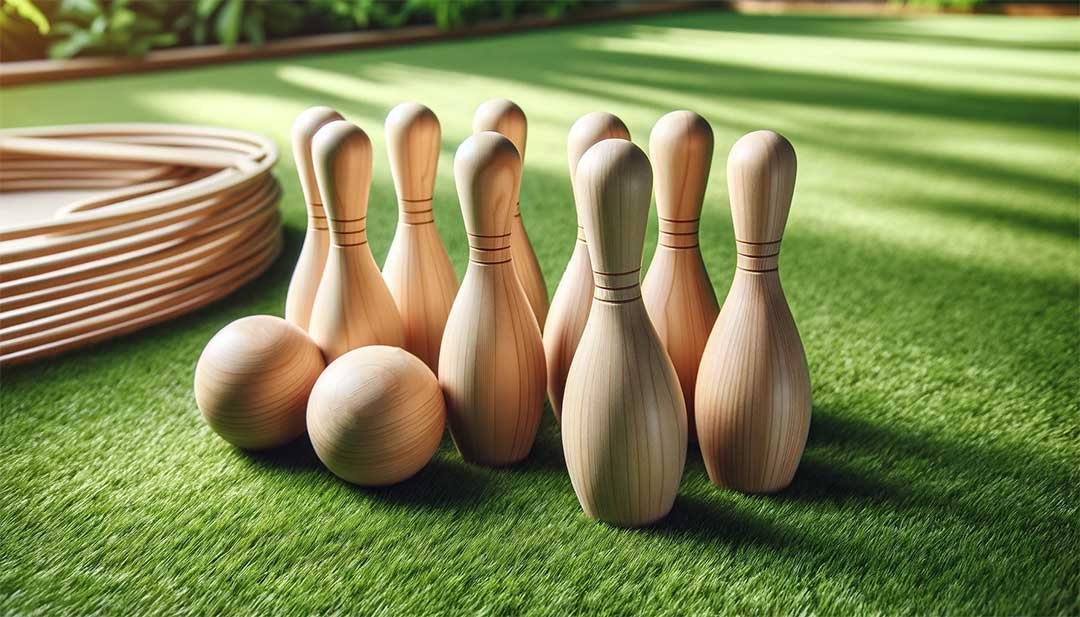
Mölkky is a registered trademark. The generic description is a numbered pin throwing game: twelve numbered pins and one throwing pin, scored by adding the numbers on the pins that fall.
For a custom order this matters more than usual, because engraving is permanent. If the brand name goes on the pins or the crate, it goes there for the life of the product. Whether that is permissible depends on your market and your relationship with the rights holder, and it is worth taking local advice rather than relying on a supplier’s reassurance.
What Can Be Engraved, and Where
A numbered pin set has very little free surface, and this is the constraint most people discover too late.
| Location | Space | Suitability |
|---|---|---|
| Pin face, above or below the number | Very small | Initials or a short date only; competes with the number for legibility |
| Pin base, underside | Small | Good for a name or a date; invisible in play and protected from impact |
| Throwing pin, body | Moderate | The best surface for a logo, because it is handled rather than hit |
| Crate or bag | Large | Where a full logo, a name and a message actually fit |
The honest summary: a pin set is not a good canvas for a long message. A logo on the throwing pin and a name on the crate is what works. Attempting to engrave a quote across twelve pins produces something illegible and, worse, damages the numbering.
Engraving Methods Compared
Laser engraving. A burned line, typically 0.5 to 1 mm deep. Fast, consistent across a run, and it does not wear off. On a soft timber the burn can bleed slightly at the edges, so the line width has to be chosen for the species. This is the standard method for volume.
CNC carving. A cut groove, 1 to 3 mm deep. More pronounced and more tactile, and it holds a paint fill well. It costs more in machine time and removes material, so on a small pin it has to be placed carefully.
Hand carving. Genuinely different from the other two, and genuinely expensive. It is a craft product rather than a production one, and it is not what a 500-set order is going to be.
Paint fill. Not an engraving method, but the thing you add to one. A carved or lasered line filled with paint is more legible and more decorative, and it is the option that makes a dark timber readable. Worth specifying separately, because it is an extra process step with its own cost.
Which Timber Holds an Engraved Line
Birch. Fine, even grain, takes a crisp laser line, and it is the usual choice for pins. It is not naturally rot resistant, so the finish is what protects it.
Beech. Dense and hard, machines cleanly, and it takes detail well. It is not a rot-resistant timber either, despite being widely described as one. A beech pin left out in the rain will go the same way as any other.
Walnut and mahogany. Darker and denser, and they look premium. Laser engraving on a dark timber needs a paint fill or it is barely visible, which is worth knowing before approving artwork.
Pine. Avoid for a numbered set. The hard-soft grain contrast makes both the number and the engraving uneven, and the pin dents under impact.
What Actually Decides Whether the Set Lasts
Three things, none of which are the engraving.
- Pin mass and base diameter. A pin that is too light falls over in wind and feels wrong; one with too wide a base does not topple properly. This is a design decision.
- Pin weight consistency across the set. Mismatched pins make the scoring feel arbitrary, and it is the defect buyers notice last and customers notice first.
- Finish on the end grain. A pin is hit end-on and sideways. Unfinished end grain is where water gets in and where the pin splits. Ask specifically whether the base and the top are coated.

Rules, Briefly
Twelve numbered pins are set in a loose group. Players throw the throwing pin from a marked line, aiming to knock pins over. Fallen pins are scored by adding their numbers, and a pin that is knocked over is stood back up where it fell, which is what makes the game progressively harder as the group spreads out.
A player who knocks over only one pin scores that pin’s number. A player who reaches exactly 50 points wins; going over 50 drops the score back to 25. That last rule is what turns the endgame into a precision problem rather than a power problem, and it is the rule most often left out of cheap rulebooks.
It is a throwing game with wooden pins, so it is not suitable for very young children. An age statement belongs on the box.

Care of an Engraved Set
Wipe with a damp cloth and dry immediately. Do not soak, and do not leave the set standing in water.
On the engraving itself: an unlacquered engraved line will collect dirt and darken over time, which most people like and some do not. A thin coat of beeswax over the engraved area keeps it clean and slightly deepens the contrast. Do not apply wax over a lacquered surface, because it will not bond.
Once a year, check the finish. If water no longer beads on the surface, it needs renewing. On an oiled set that is a wipe-on job; on a lacquered set it means sanding back and recoating.
Ordering a Custom Set
- Minimum order. Around 500 sets per design for a custom run. Single engraved sets are a retail gifting product, not a manufacturing order, and they are better sourced from a retailer than from a factory.
- Artwork. Send vector artwork and confirm it against a physical sample. A logo that reads well on a screen can disappear into a dark timber or lose its detail at pin scale.
- Sampling. Five to ten days after the specification is agreed. On an engraved product the sample is the only way to judge legibility.
- Production. Thirty to forty-five days after sample approval. Engraving adds time to the finishing stage, so build that into the plan rather than assuming the standard window.
- Confidentiality. A non-disclosure agreement is signed before artwork is shared, and a customer’s custom design is not produced for anyone else.
Frequently Asked Questions
How long does custom engraving take?
As part of a production run, engraving happens within the finishing stage, and the whole order runs thirty to forty-five days after sample approval. A single personalised set is a different process with a different timeline, and it is not what a factory order is set up for.
Can the engraving be coloured?
Yes, by adding a paint fill to a carved or lasered line. It is an extra process step and it is quoted separately. It is also the only way to make engraving legible on a dark timber.
Is the game suitable for children?
It is a throwing game with solid wooden pins, so it suits older children and adults rather than toddlers. The age statement should reflect the tested configuration.
Which timber is best for outdoor use?
Birch and beech are the usual choices for pins because they machine and engrave cleanly, but neither is naturally rot resistant. Outdoor life comes from the finish and from storing the set dry, not from the species.
Can we supply our own design?
Yes. Send vector artwork and a description of where it should go. On a numbered pin set the realistic placements are the throwing pin and the crate, and it is worth being told that up front rather than after the artwork is approved.
Sourcing Wooden Garden Games in Bulk?
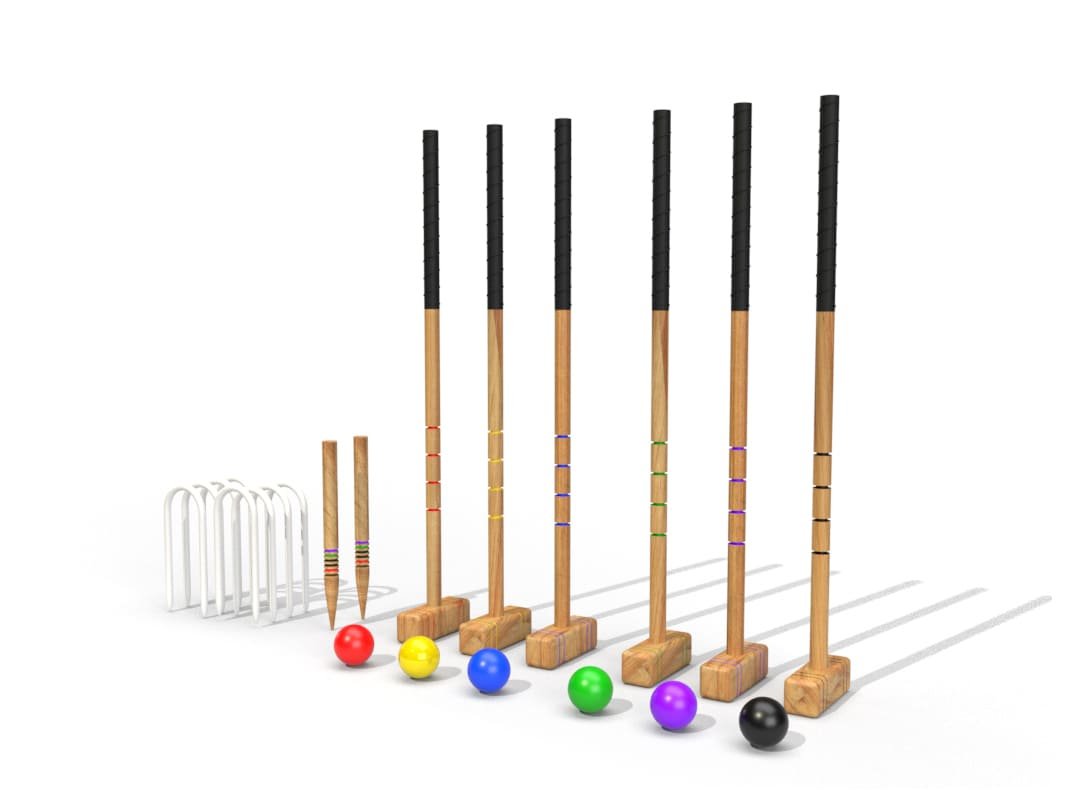
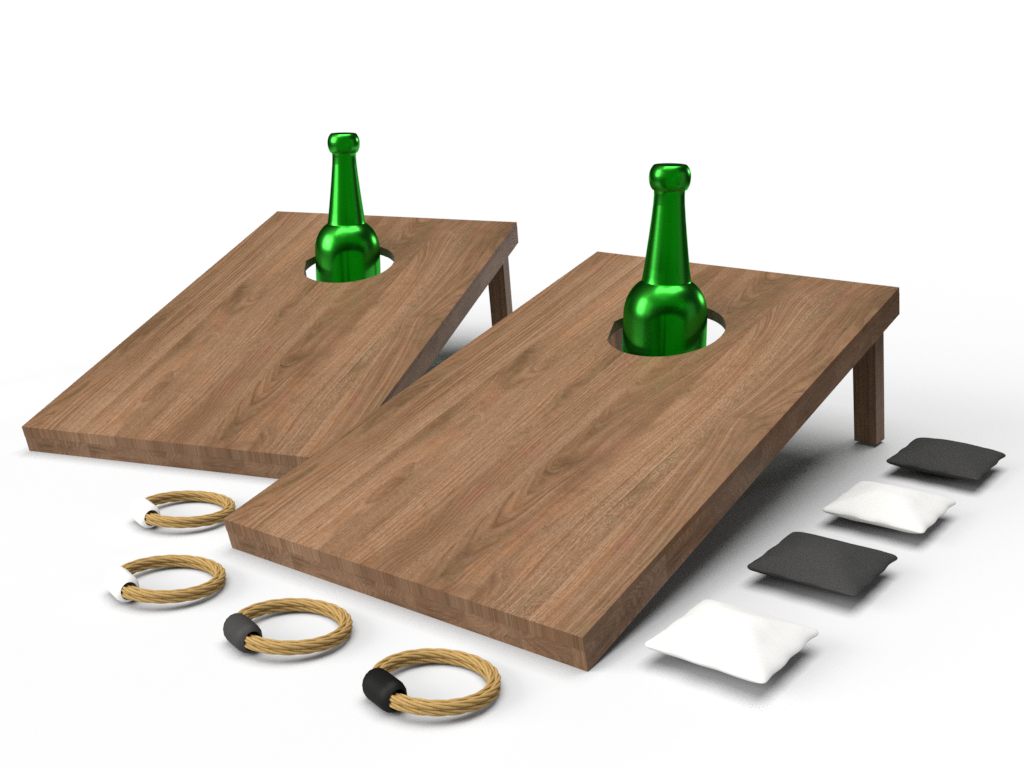
Kangjie is the direct manufacturer behind these games — no trading company, no middleman margin. We supply Kubb, Croquet, Molkky, Ring Toss, Tumble Tower, Cornhole and more to importers, retailers and brand owners worldwide.
- Factory-direct pricing with transparent volume tiers (500 / 1,000 / 5,000 units)
- OEM & ODM: logo, packaging, size and finish built to your specification
- EN71 & ASTM F963 compliant; FSC-certified timber
- Bulk lead time 30–45 days, quotation within 24 hours