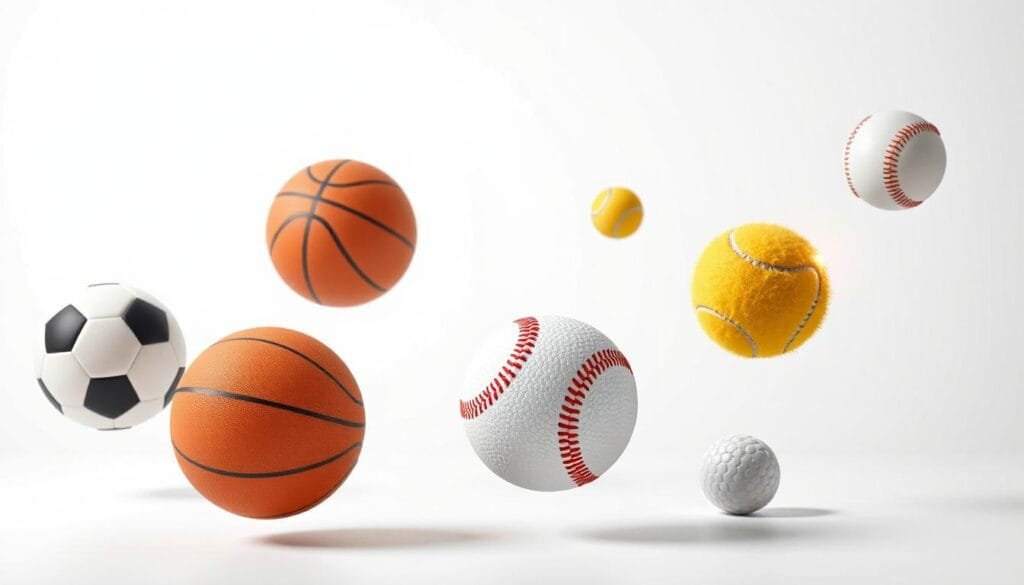
Picture this: you’re watching soccer, basketball, or even tennis. What’s the one thing they all have in common? A round ball. But why? Why not a cube, a pyramid, or a dodecahedron shaped like your ex’s ego? Let’s unravel this spherical mystery.
Round balls are predictable, easy to control, and obey the laws of physics like a well-trained puppy. They roll smoothly, bounce consistently, and minimize chaos—something even my morning coffee can’t do.
Now, let’s dive into the nitty-gritty.
The Physics of Simplicity
Aerodynamics 101: Why Round = Less Drag
Aerodynamics isn’t just for rockets. A round ball slices through air like a hot knife through butter. NASA studies show spherical shapes reduce turbulence, making them faster and more predictable. Imagine Cristiano Ronaldo trying to curve a cube—spoiler: it’d end up in the parking lot.
Bounce, Roll, Repeat: Consistency Wins
Round balls bounce uniformly because weight distributes evenly. A study by Sports Engineering Journal proved irregular shapes create chaotic rebounds. Translation: nobody wants a tennis match decided by a ball zigzagging like a caffeinated squirrel.
History’s Playbook
Ancient Games and the Birth of the Ball
Early humans weren’t idiots. They used animal bladders or stuffed leather—materials that naturally form spheres. The Chinese “Cuju” (ancient soccer) and Mayan ball games all relied on roundness. Why? Because kicking a rock hurts. A lot.
Industrialization: Making Balls Accessible
The 19th century brought rubber vulcanization, letting factories mass-produce identical balls. FIFA’s 1937 standardization sealed the deal: round = professional. Try selling a hexagon-shaped soccer ball today. I’ll wait.
The Psychology of Familiarity
Why Your Brain Loves Predictability
Humans crave patterns. A round ball’s behavior is as predictable as my dad’s “I’ll fix it later” promises. Neuroscientists at MIT found that predictable motion reduces cognitive load, letting athletes focus on strategy—not chasing a rogue icosahedron.
Tradition vs. Innovation in Sports
Ever seen a hexagonal basketball hoop? Me neither. Sports are steeped in tradition. Changing the ball shape would be like replacing coffee with kale smoothies—technically healthier, but emotionally devastating.
Exceptions That Prove the Rule
Rugby’s Egg-shaped Rebellion
Rugby said, “Screw symmetry!” Their oval ball allows erratic bounces, adding chaos to the game. But even rugby fans admit: passing a round ball 50 meters is easier than herding cats.
American Football: A Strategic Oddball
The pigskin’s shape enables spiral throws and tight grips. But let’s be real: if Tom Brady threw a sphere, he’d still win Super Bowls. The oblong shape is just drama for highlight reels.
The Business of Balls
Cost-Effectiveness of Spherical Production
Making round balls is cheaper. Machines mold them seamlessly, unlike crafting a 20-sided die. For businesses like mine (Kangjie), standardized shapes mean faster production and happier clients.
Global Standardization and Branding
Imagine if every country used different ball shapes. Chaos! FIFA, NBA, and Wimbledon enforce roundness to keep games universal. It’s like McDonald’s—same fries, worldwide.
What If Sports Used Different Shapes?
Chaos Theory: A Cube in Soccer?
A cubic soccer ball would turn Messi into a mere mortal. Passes? Unpredictable. Goals? Accidental. Fans? Rioting.
Fan Reactions: Love It or Trash It
Purists would revolt. But Gen Z might TikTok it into a trend. Still, tradition rules—just ask baseball’s refusal to adopt robot umps.
Conclusion
Round balls rule because they’re physics-friendly, historically rooted, and brain-approved. They’re the ultimate compromise between chaos and control. And hey, if you ever need custom wooden games that blend tradition and innovation, hit up Kangjie—we’ve got your back (and your balls).
FAQs
1. Why don’t sports use lighter materials for balls?
They do! Modern balls use synthetics, but weight must balance speed and control.
2. Could a non-round ball ever become mainstream?
Only if humans grow tentacles. Or Elon Musk insists.
3. How does ball shape affect game strategy?
Round = predictable. Odd shapes = chaos. Choose wisely.
4. Are there sports that secretly want to change their ball?
Ping-pong’s considering it. Just kidding—they’re purists.
5. What’s the future of ball design?
Smarter materials, embedded sensors, but roundness is forever.
Custom Message:
Looking for durable, custom wooden garden games that won’t roll away? Kangjie delivers quality, speed, and confidentiality. MOQ 500 sets, direct factory prices, and a team that responds faster than a penalty kick. Visit www.kangjiegardengame.com – let’s turn your ideas into profit! 🌳⚽
Sourcing Wooden Garden Games in Bulk?
Kangjie is the direct manufacturer behind these games — no trading company, no middleman margin. We supply Kubb, Croquet, Molkky, Ring Toss, Tumble Tower, Cornhole and more to importers, retailers and brand owners worldwide.
- Factory-direct pricing with transparent volume tiers (500 / 1,000 / 5,000 units)
- OEM & ODM: logo, packaging, size and finish built to your specification
- EN71 & ASTM F963 compliant; FSC-certified timber
- Bulk lead time 30–45 days, quotation within 24 hours