
The case for wooden outdoor games is usually made badly. The usual version is that wood is natural and plastic is junk, which is not true and does not survive a conversation with a buyer who has sold both.
The real case is narrower and more useful: wood is repairable, it holds perceived value, it supports a gift price point that plastic cannot reach, and it does not become waste after one season. Against that, wood is heavier, more expensive, less colour-consistent between batches, and genuinely vulnerable to moisture. Both sides are set out below, along with what a buyer should actually decide on.
What Wooden Outdoor Games Actually Are
The category covers two different things, and conflating them causes most of the bad buying decisions.
Games made from timber throughout. Tumble tower, kubb, croquet, skittles, ring toss, ladder toss. These are wooden products and they behave like wood: they need a finish, they move with humidity, and they can be sanded and re-oiled.
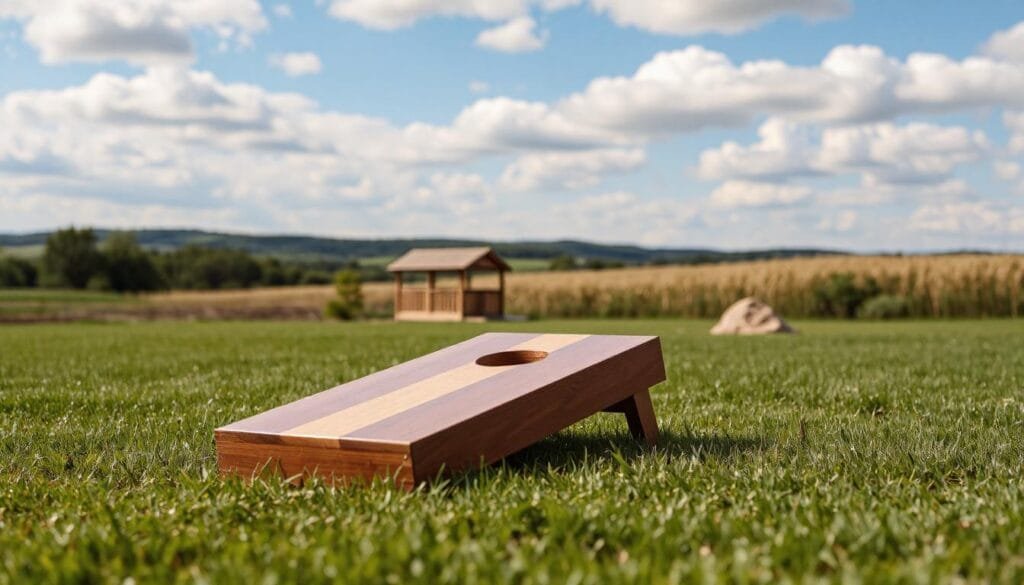
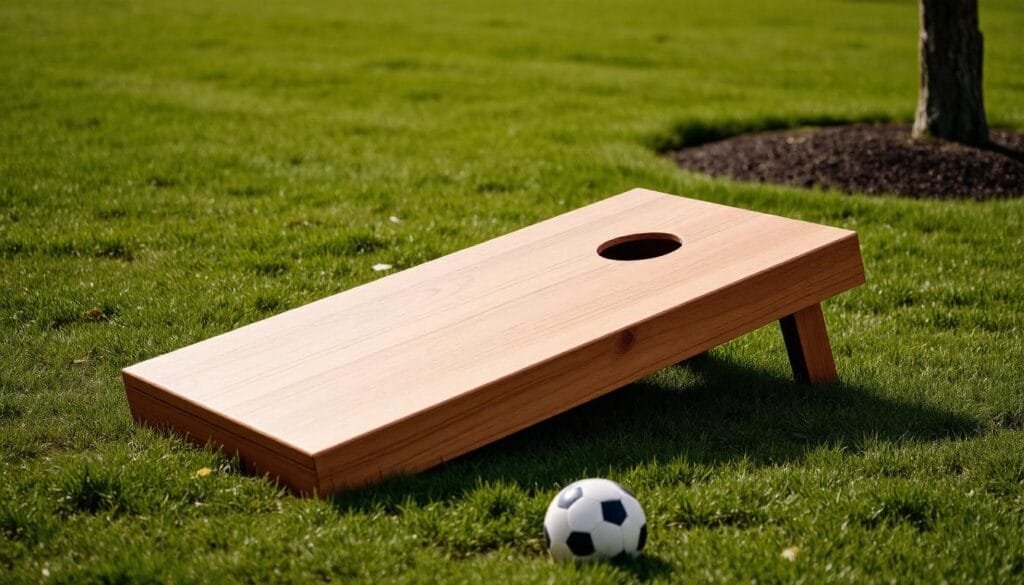
Games with a timber frame and a panel surface. Cornhole is the main example. The playing surface is plywood, because plywood is dimensionally stable and gives a consistent bounce. The frame is softwood. Calling this “a wooden cornhole board” is accurate; assuming it is solid hardwood is not.
Both are legitimate products. They have different failure modes and different price structures, and a specification should say which one you are buying.
Where Wood Genuinely Wins
It can be repaired
A scuffed wooden board can be sanded and refinished. A scratched plastic moulding cannot be repaired at all. For a venue, a hire fleet or a family that intends to keep the set, that is the whole argument.
It carries perceived value
Wood reads as a considered purchase. That supports a higher price point and opens markets that plastic does not reach: gifting, corporate orders, hotel and resort supply, and the upper end of garden retail.
It ages rather than degrades
A well-finished wooden set that has been looked after develops a patina. A plastic set fades and chalks. One of those outcomes supports a second-hand market and the other does not.
It is repairable at the component level
Bags, bolas, rings and pins wear out long before the wood does. If the supplier can sell spares, the product has a service life measured in years rather than seasons. This is a commercial feature, not a footnote.
Where Plastic Genuinely Wins
This section exists because a supplier who cannot argue the other side is not giving you a buying decision, only a sales pitch.
- Cost. At the entry price point, moulded plastic is simply cheaper. A wooden product priced against it loses.
- Weight. A plastic set of the same size costs less to ship, which matters for e-commerce where the customer pays the difference.
- Colour consistency. Moulded colour does not vary between batches. Timber does, and a reorder that does not match the first shipment is a real problem.
- Water. Plastic can be left out, hosed down and stored wet. Wood cannot, and no finish changes that.
- Complex shapes. Intricate geometry is cheap in a mould and expensive in wood.
The Moisture Question, Stated Plainly
This is where most wooden game marketing becomes dishonest. Wood moves with humidity. A set left outside through a wet season will swell, warp or split, and the finish only slows the process.
The accurate claim is: a wooden outdoor game is designed to be used outdoors and stored dry. That is a reasonable product promise, and it is the one to print. “Weatherproof”, “all-weather” and “survives anything the garden throws at it” are not, and a customer who leaves the set out and finds it split will hold you to whatever the packaging said.
What a good finish does buy you: resistance to a shower, resistance to spilled drinks, resistance to damp grass, and a surface that can be renewed in a few years rather than replaced.
The Sustainability Argument, Properly Made
The common version — wood biodegrades and plastic does not — is not accurate for a finished product. A wooden game contains glue, finish and often metal hardware, and it does not compost.
The defensible version has three parts:
- Timber sourcing can be verified. FSC certification is a real chain of custody, and it is auditable in a way that most plastic supply chains are not.
- Service life is the dominant environmental factor. A game that lasts fifteen years has a far lower impact per year of use than one replaced every two, regardless of material.
- Repairability extends life. A product that can be sanded and re-oiled is a product that does not need replacing, and that is a stronger environmental claim than material substitution.
What not to claim: that the product is biodegradable, compostable, or plastic-free. None of those survive a customer turning the box over.
The Products Worth Carrying
Tumble tower
The anchor product in the category. Rules in ten seconds, tension visible from across a garden, and the easiest item to brand because every block is a flat surface. Watch the block count: below about 40 the game runs out of moves too quickly.
Cornhole
Universal recognition, which removes the teaching barrier every other game has to overcome. Watch the carton cube, because boards are bulky and freight is charged on volume.
Ladder toss
Compact, portable, and it packs flat. Watch the cord, which is the component that fails first.
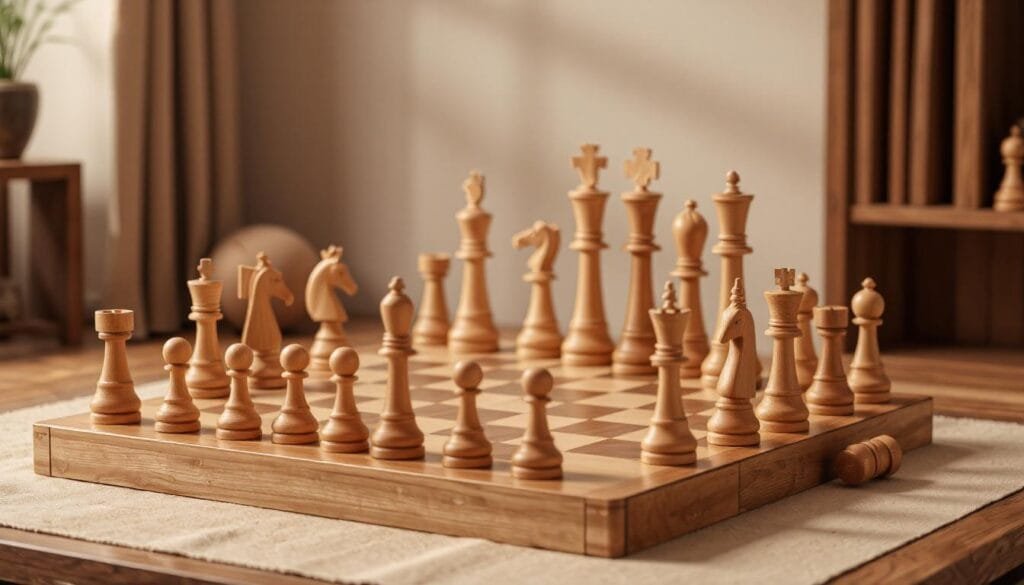
Chess and checkers, oversized
A different customer from everything else on this list: older buyers, gift buyers and the education market. No seasonality worth planning around, which makes it useful for smoothing a seasonal order book.
Maintenance, Realistically
Routine. Wipe with a damp cloth and dry immediately. Do not soak, do not use a pressure washer, and do not leave anything standing in water.
Annual. Inspect the finish. If water no longer beads on the surface, it needs renewing. On an oiled product that is a wipe-on job; on a lacquered product it means sanding back and recoating.
Storage. Dry, flat and off the ground. A damp shed is worse than a dry garage, and a plastic sheet over a wooden set outdoors traps condensation and is worse than nothing.
Hardware. Check screws and bolts once a season. A loose fixing on a cornhole leg or a ladder frame is the beginning of a split.
What Actually Decides Whether It Sells for You
Four factors, in order of how often they decide the outcome.
Price point relative to your customer. A wooden set that is 20 percent too expensive for your shelf does not sell, however good it is. This is the most common reason a proven product fails in a new market.
Carton cube. Bulky products lose money on freight and storage before they lose it on price.
Seasonality. Most of the category peaks in spring and early summer, with a second smaller peak before Christmas. Chess, dominoes and puzzles are the products that fill the rest of the year.
Spare parts. If you cannot reorder bags, bolas or pins, every worn part becomes a lost customer.
Frequently Asked Questions
Are wooden outdoor games safe for children?
They can be, if the edges are rounded, the finish meets the relevant toy safety standard, and any small parts are excluded from products sold for children under three. None of that is automatic with wood — it has to be specified and tested.
Can they be left outside all year?
No. Use outdoors, store dry. A finish extends the working life; it does not make wood suitable for permanent exposure.
Are they heavier than plastic?
Yes, and that is part of why they feel solid. It also means freight costs more, which is why carton cube matters more than unit price on this category.
Which timber is best?
It depends on the part. Hardwood for anything handled constantly, because softwood bruises at the edges. Plywood for a playing surface, because it is dimensionally stable. Rot-resistant species for anything in ground contact, which is rare in this category.
Do wooden games biodegrade?
Not in finished form. Glue, finish and hardware mean a wooden game does not compost. The environmental argument is about sourcing and service life, not biodegradability.
Sourcing Wooden Garden Games in Bulk?
Kangjie is the direct manufacturer behind these games — no trading company, no middleman margin. We supply Kubb, Croquet, Molkky, Ring Toss, Tumble Tower, Cornhole and more to importers, retailers and brand owners worldwide.
- Factory-direct pricing with transparent volume tiers (500 / 1,000 / 5,000 units)
- OEM & ODM: logo, packaging, size and finish built to your specification
- EN71 & ASTM F963 compliant; FSC-certified timber
- Bulk lead time 30–45 days, quotation within 24 hours









