
Wooden toys have taken a meaningful share of the US toy market over the past decade, and the usual explanation — that parents prefer natural materials — is only part of it. The more useful explanation for a buyer is a combination of repairability, perceived value, gift suitability and a compliance environment that rewards documented materials.
This article sets out what is actually driving demand, where wood genuinely beats plastic, where plastic genuinely beats wood, and what a US importer is legally required to do before a wooden toy can be sold.
What Is Actually Driving Demand
Four factors, in rough order of importance.
Repairability and lifespan. A wooden toy that loses a corner can be sanded. A cracked plastic moulding cannot be repaired at all. For parents who are tired of replacing things, that is the whole argument, and it is a defensible one.
Gift suitability. Wood reads as a considered purchase. That supports a higher price point and a market that plastic does not reach: grandparents, christenings, first birthdays, corporate gifting.
Sensory restraint. A large share of the complaints about modern toys concern noise, flashing lights and overstimulation. A wooden toy does nothing on its own, which is now a selling point rather than a limitation.
Documented materials. A wooden product has a traceable material story in a way that a multi-material plastic assembly does not. That matters to retailers who are asked about sourcing by their own customers.
What is not a reliable driver is the idea that wood is inherently safer. That is covered below, and the honest answer is more complicated.
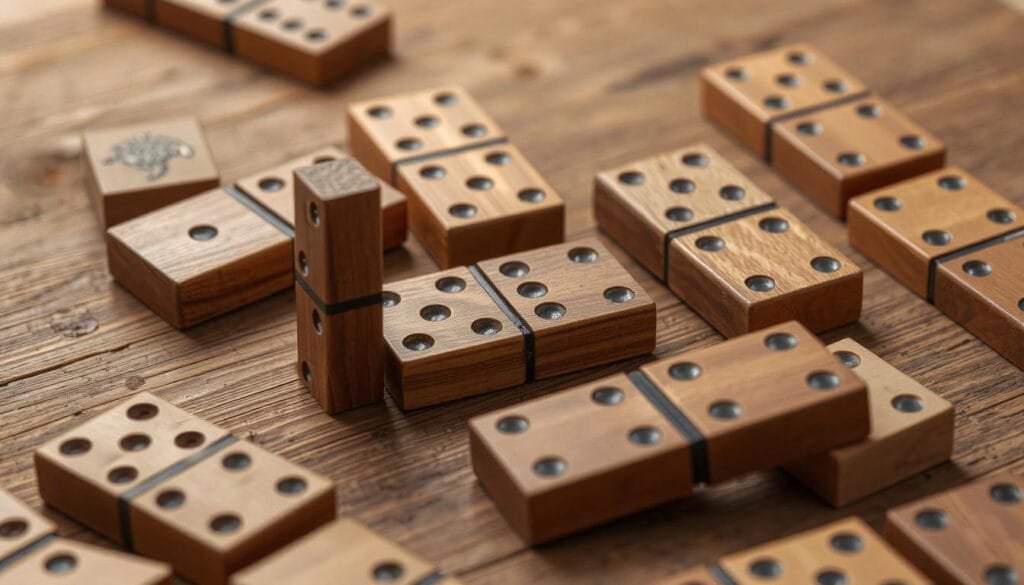
Where Wood Genuinely Wins
- Repairable surfaces. Scratches can be sanded out and the finish renewed. Plastic scratches permanently.
- Weight and feel. Wooden blocks and pieces have mass where it matters. Players and children notice the difference immediately, and it is the main reason cheap plastic versions feel wrong.
- No batteries, no electronics. Nothing to fail, nothing to replace, nothing to leak.
- Repairable finish. A wooden toy can be re-oiled after a few years. A faded plastic toy has no equivalent.
- Batch character. Grain and colour vary. Some buyers see this as a defect; most see it as evidence of a real material.
Where Plastic Genuinely Wins
This section exists because a supplier who cannot explain the other side is not giving you useful advice.
- Cost. At the entry price point, plastic is simply cheaper. Pretending otherwise leads to a product priced out of its own market.
- Weight in freight. A plastic toy of the same size costs less to ship, which matters for e-commerce where the customer pays the difference.
- Colour consistency. Moulded colour does not vary between batches. Timber does, and a reorder that does not match the first shipment is a real commercial problem.
- Moisture and cleaning. Plastic can be wiped, soaked and left wet. Wood cannot.
- Complex geometry. Intricate shapes and fine detail are cheap in moulding and expensive in wood.
- Impact resistance in thin sections. A thin plastic part flexes and survives; a thin wooden part splits.
The Safety Question, Properly Answered
The common claim is that plastic contains harmful chemicals and wood does not. The accurate version is that both materials are safe or unsafe depending on how they are specified, and the finish is usually the determining factor for wood.
For a wooden toy, the things that actually matter are:
- The finish. Paints, lacquers and oils must meet the heavy metal migration limits of the relevant standard. This is tested, not assumed, and it is the single most common failure point on wooden toys.
- Small parts. Any component that fits inside a small-parts cylinder is a choking hazard for children under three. This is a design decision, not a materials decision.
- Sharp edges and points. Sanding and edge radius are specified in the standard, and they are checked by test, not by eye.
- Hardware and fixings. Screws and inserts must not work loose in normal use, including after the abuse a child delivers.
- Strings and cords. Any cord above a specified length is a strangulation risk and is regulated accordingly.
None of these are solved by choosing wood. They are solved by specifying the product against a standard and testing it.
Certifications: What Each One Covers
| Document | What it actually covers | What it does not |
|---|---|---|
| ASTM F963 | US toy safety specification: mechanical hazards, flammability, heavy metals | Does not certify the factory or the timber source |
| EN 71 (parts 1–3) | European toy safety: physical properties, flammability, element migration | Not a US requirement; used as supporting evidence only |
| CPSIA / CPC | US legal requirement for children’s products, plus a Children’s Product Certificate | The CPC is issued by the importer, not the factory |
| FSC | Chain of custody for the timber supply | Says nothing about product safety |
| ISO 9001 | The factory’s quality management system | Says nothing about a specific batch |
| CE marking | A self-declaration of conformity for the EU market | Not a certificate issued by a third party |
If a supplier lists “all certifications” without naming the standard, the part and the laboratory, ask again. The distinction between these documents is not pedantry — it decides whether your shipment clears customs and whether your product is legal to sell.
What US Buyers Have to Do
Three obligations sit with the importer, not the factory, and they are worth planning for before the first order.
Test to ASTM F963. The product has to be tested by an accredited laboratory. The factory can arrange it, but the report has to cover your product as specified, not a similar one.
Issue a Children’s Product Certificate. Based on the test reports, the importer issues a CPC. This is a legal document and it is your responsibility, not the supplier’s, however helpful the supplier is.
Apply a tracking label. A permanent mark on the product and its packaging identifying the manufacturer, the production date and the batch. This is a physical requirement, and it has to be planned into the packaging, not added afterwards.
Sourcing Notes
- Minimum order. Around 500 sets per design for a custom run.
- Sampling. Five to ten days after the specification is agreed. On a wooden toy this is not optional, because feel and finish are the product.
- Production. Thirty to forty-five days after sample approval.
- Timber. FSC certification is available and is worth having if your retail customers ask about sourcing.
- Batch matching. Ask how a reorder is matched to the first run. Timber colour varies, and a second shipment that does not match is a commercial problem, not a manufacturing one.
Frequently Asked Questions
Are wooden toys actually safer than plastic ones?
Not inherently. Both are safe when specified and tested against the relevant standard, and both can be unsafe when they are not. For wood, the finish and the small-parts design are the things that matter most.
Why do wooden toys cost more?
Material cost, machining time and finishing time are all higher than moulding. The offset is lifespan: a wooden toy that lasts a decade is not more expensive per year of use.
Are they suitable for toddlers?
Only if the design has no small parts and the finish is compliant. Age labelling should follow the tested configuration, not the general category.
Can a wooden toy be composted?
Generally no. A finished toy contains glue, finish and often metal hardware. Composting claims on finished wooden products do not hold up, and they are better left off the packaging.
Can we customize for our store?
Yes: engraved branding, custom finishes, custom packaging and custom sizes. Custom tooling carries a setup cost that makes sense at volume, and it is worth being told honestly when it does not.
What about the 2024 trend forecasts?
We do not publish trend forecasts. What we can say is what our customers are ordering and reordering, which is a narrower and more reliable signal than a prediction about the market.
Sourcing Wooden Garden Games in Bulk?
Kangjie is the direct manufacturer behind these games — no trading company, no middleman margin. We supply Kubb, Croquet, Molkky, Ring Toss, Tumble Tower, Cornhole and more to importers, retailers and brand owners worldwide.
- Factory-direct pricing with transparent volume tiers (500 / 1,000 / 5,000 units)
- OEM & ODM: logo, packaging, size and finish built to your specification
- EN71 & ASTM F963 compliant; FSC-certified timber
- Bulk lead time 30–45 days, quotation within 24 hours









