
The fitness advice given to a forty-year-old is usually the same advice given to a twenty-year-old, delivered more slowly. It should not be, because what changes at forty is not capacity. It is recovery, and the cost of an injury.
That reframing matters for choosing an activity. A sport that is fun and slightly risky at twenty-five is a sport that costs you six weeks at forty-five. The right question is not “which game burns the most calories” but “which one will I still be doing in a year without getting hurt”.
Here is the honest comparison, with the energy costs and the injury patterns rather than the adjectives.
What Actually Changes at 40
- Recovery time lengthens. Muscle damage repair that took a day takes two or three. This is the biggest single change and it drives everything else.
- Tendon elasticity declines. Achilles and rotator cuff problems appear in this decade, and they are cumulative rather than sudden.
- Time gets scarcer. Not an excuse, a constraint. A session has to be worth its slot.
- Injury cost rises. A sprained ankle at 25 is a fortnight. At 45 it is six weeks and a physio bill.
None of that says “do less”. It says “choose activities where the failure mode is mild”.
The Energy Cost of the Options
MET values are the only honest way to compare these, because they are measured rather than described. Three METs is the moderate-activity threshold.
| Activity | MET, roughly | Trains | Main injury risk |
|---|---|---|---|
| Pickleball, doubles | 4.5 to 5.5 | Lateral movement, hand-eye, reactions | Achilles and knee, from sudden lateral push |
| Pickleball, singles | 7 | Same, at much higher load | Same, plus hamstring |
| Disc golf | 3 to 4 | Walking, shoulder rotation | Shoulder and elbow, from un warmed-up throwing |
| Tennis, doubles | 5 to 6 | Short bursts, overhead reach | Shoulder, elbow, ankle |
| Cornhole | 2.5 | Very little. Standing and walking | Almost none |
| Croquet | 2.5 to 3 | Walking, gentle trunk rotation, bending | Lower back, from the swing |
| Molkky, Kubb | 2.5 to 3 | Standing, walking, throwing | Shoulder, mild |
| Cycling, moderate | 6 to 8 | Cardiovascular, legs | Knee, if the fit is wrong |
The table makes the trade visible. Pickleball doubles is the only entry that is both genuinely social and above the moderate threshold, which is why it has spread so fast among people in this decade.
Cornhole and croquet are at the bottom, and pretending otherwise is how people end up disappointed.
Pickleball, and the One Thing to Know
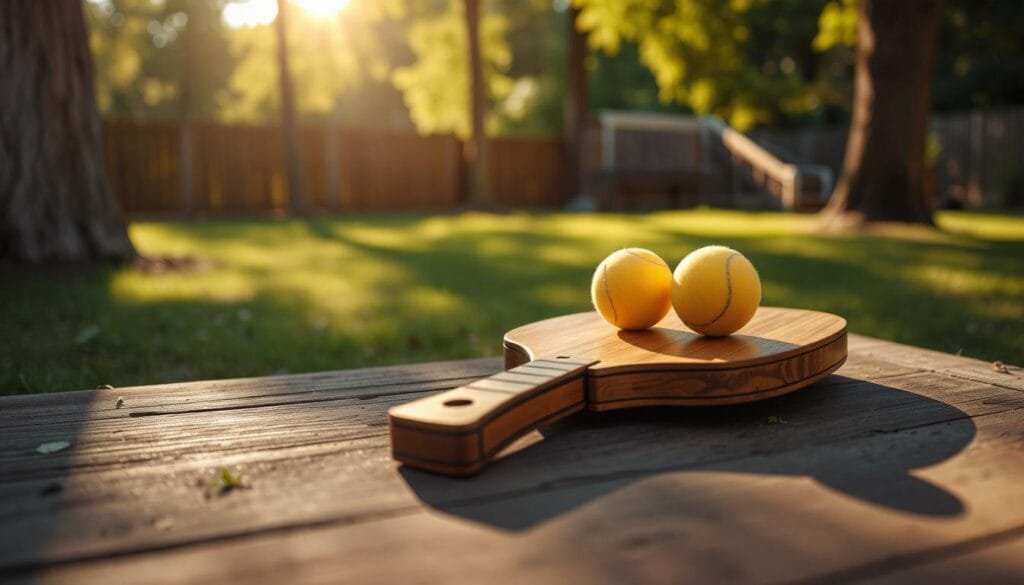
Pickleball is the obvious answer for this age group and it deserves it: a small court, a light ball, an underhand serve, and a format where four people can play at once.
The thing to know is that the injury pattern is not what people expect. It is not the running. It is the sudden lateral push at the kitchen line, in a semi-crouch, after twenty minutes of standing. Achilles ruptures in this sport are common enough that they have become a known pattern in sports medicine.
What reduces it: a proper warm-up with three or four minutes of skipping or side-shuffling before the first point, and not playing three hours in the first session after a winter off.
The Court
13.41 by 6.10 metres, net 864 mm at the centre. About a third of the area of a tennis court, which is the entire reason it fits into a life.
Disc Golf, and the Warm-Up Problem
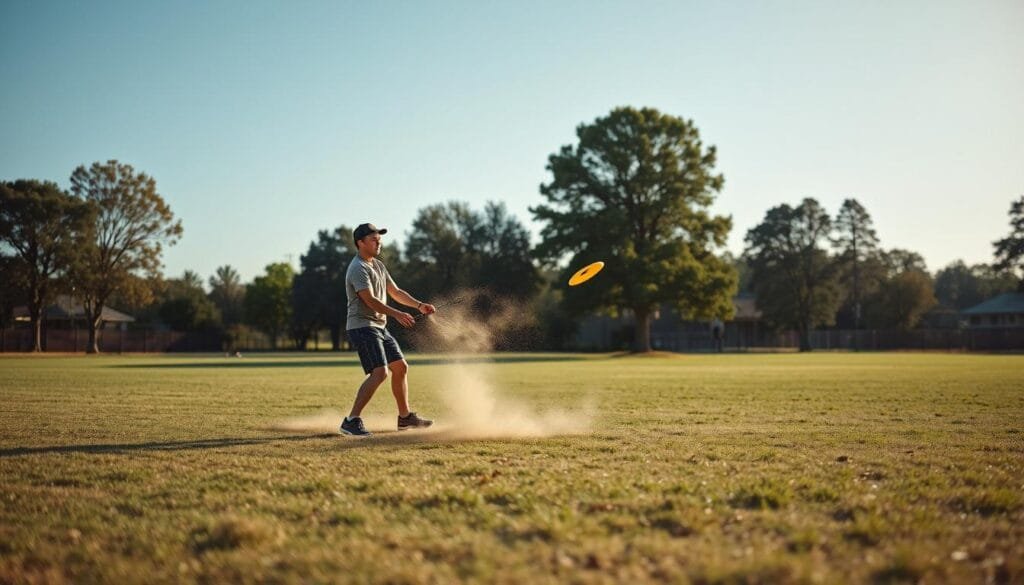
Disc golf is the best walking activity on this list: three to four METs, a course that takes an hour and a half, and no clock. It is also the one where people injure themselves before they start playing.
A drive is a full-body throw with a violent rotation. Doing twenty of them cold, on the first warm day of the year, is how elbows and rotator cuffs go. Ten minutes of easy throws at half power before the first real drive is the entire prevention strategy.
Where Garden Games Fit
Honestly: they are not fitness. Cornhole at 2.5 METs is slower than walking to the shop.
What they are is the thing that gets a person outside on a weekday evening when nothing else would. That has value, and it is a different value from a training effect. A garden game is the reason the family is standing in the garden for an hour instead of sitting in three different rooms.
If you want the movement to count, the games that reach three METs or more are the ones with walking and throwing: Kubb, Molkky, croquet at a full field size. The ones that do not are the ones played from a fixed spot.
What a Week Actually Looks Like
The public health guidance is 150 minutes of moderate activity plus two strength sessions per week. Games can supply the 150 minutes. They cannot supply the strength work, and skipping it is the most common mistake in this decade.
| Day | What | Why |
|---|---|---|
| Two days | Strength: squat, hinge, push, pull, carry | This is the part games cannot replace |
| Three days | 30 to 50 minutes of pickleball, tennis or brisk walking | The moderate minutes |
| Weekend | Disc golf or a long garden session | Volume without intensity |
| Any day | Ten minutes of balance and ankle work | The cheapest injury prevention there is |
Conclusion
At forty, the constraint is recovery and the cost of an injury, not capacity. Pick activities where the failure mode is mild, warm up properly, and keep the strength work that games cannot give you.
Pickleball doubles and disc golf are the two that combine a real energy cost with a social reason to turn up. Garden games are the reason to be outside, which is a smaller claim and a true one.
FAQs
1. What is the best game for fitness at 40?
Pickleball doubles, at about 4.5 to 5.5 METs, because it is genuinely social and above the moderate threshold. Disc golf for walking volume.
2. Is cornhole exercise?
Barely. It is about 2.5 METs, which is slower than a normal walk.
3. Why do people rupture Achilles tendons playing pickleball?
The sudden lateral push from a semi-crouch, usually late in a session. A four-minute warm-up and a gradual return after a break reduce it substantially.
4. Do I need to lift weights as well?
Yes. Games supply the moderate minutes and cannot supply the strength work.
5. How much should I play in the first week?
One session, and stop while it still feels easy. The injury happens in session two or three, not session one.
Sourcing Wooden Garden Games in Bulk?
Kangjie is the direct manufacturer behind these games — no trading company, no middleman margin. We supply Kubb, Croquet, Molkky, Ring Toss, Tumble Tower, Cornhole and more to importers, retailers and brand owners worldwide.
- Factory-direct pricing with transparent volume tiers (500 / 1,000 / 5,000 units)
- OEM & ODM: logo, packaging, size and finish built to your specification
- EN71 & ASTM F963 compliant; FSC-certified timber
- Bulk lead time 30–45 days, quotation within 24 hours









