
The two products look identical on a shelf and are priced differently, and buyers often assume the difference is the dice. It is not. The dice are the same six oversized cubes. The difference is what else is in the box.
One is a bare set: six dice and a bag. The other is a scored game: the same dice, plus scorecards, a pencil, a rules leaflet and a box insert to hold them. That difference in component count drives the price, the return rate and the shelf presence, and it is worth understanding before you choose a range.
The Real Difference Is Components
Six 89 mm dice and a cotton bag is seven parts. Add five scorecards, a pencil and a printed rules leaflet in a moulded insert and you have thirteen. Nothing about the playing experience changes, because the dice are identical.
| Bare dice set | Scored game | |
|---|---|---|
| Components | 6 dice, 1 bag | 6 dice, 1 bag, 5 scorecards, pencil, rules, insert |
| Unit cost driver | Dice | Dice plus print and packaging |
| Shelf presence | Low; looks like a component | High; looks like a finished product |
| Gift suitability | Poor without added packaging | Good |
| Return risk | Low | Higher; more parts to lose or omit |
| Best channel | Garden centre, sports, trade | Gift, bookshop, department store |
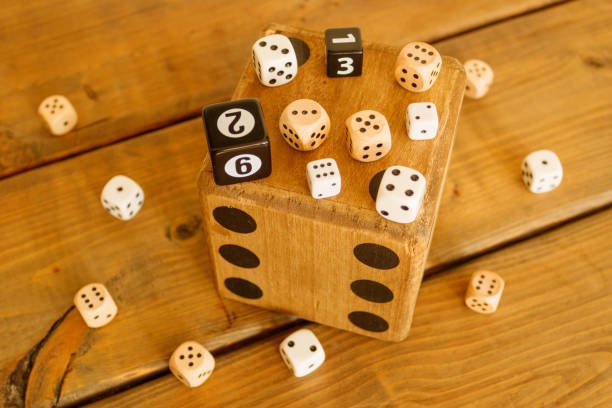
What a Bare Set Is For
A bare set is a tool. It is bought by someone who already knows what they want to play, or by a venue that wants dice for a bar table. It has no rules, which is a feature rather than a gap, because it means the set can be used for any of the dozen or so dice games that exist without implying that one of them is the product.
The commercial weakness is that it does not answer the question a gift buyer asks: what do I do with this. A bag of large wooden cubes is a strange object to give someone unless the packaging does the explaining.
What a Scored Game Is For
A scored game is a complete product. The scorecard tells the buyer what the game is, the rules leaflet tells them how to play, and the insert makes the box look like something that cost money to design.
It also has a competitive structure built in, which matters more than it sounds. Games with a scorecard produce a winner, and a game that produces a winner gets played again.
Which Sells Better Depends on the Channel
Gift retail. The scored game wins, and it is not close. A gift buyer is buying an object to hand over, and the box is most of what they are buying.
Garden centre. The bare set is often the better entry price point, sitting next to cornhole and ring toss as a lower-cost item that adds a category rather than competing with it.
Pubs, holiday parks and venues. The scored game wins, but with a modification: laminate the scorecard. A paper scorecard at a pub table lasts about a week.
Online. The scored game wins on conversion because it has more to photograph, and the bare set wins on margin because it ships in a smaller carton.
The One Thing That Goes Wrong
Component loss. The pencil disappears first, then the scorecards, and then the customer is left with a bag of dice and a vague memory of a game they cannot reconstruct.
Two design fixes that cost almost nothing. Print the scorecard grid on the inside of the box lid, so the game survives the loss of the cards. And supply five scorecards rather than one, because a scored game with a single card is a game that gets played once.
The third fix is the rules. A rules leaflet that folds out to A3 and prints the scorecard on the reverse is the most useful piece of paper in the box, and it costs less than a separate card plus a separate leaflet.
Price, and Where the Money Goes
The dice are the majority of the material cost in both products. Six 89 mm solid dice in beech are a substantial amount of timber, and no amount of packaging changes that.
What the scored version adds is print, a folding carton with a printed lid, and an insert. Those are cheap per unit at volume and they are what supports the higher retail price, because a customer will pay more for a box that explains itself than for a bag that does not.
Where the scored version costs you more is in returns and in quality control. Thirteen components means thirteen things that can be missing, wrong or damaged, and pre-shipment inspection has to check the count.
Making the Decision
Three questions, and they resolve it quickly.
- Is the product going to be given as a gift, or used? Gift means scored.
- Does the shelf have staff who can explain it? No means scored, because the box has to do the work.
- Is the price point the reason for the listing? Yes means bare, because the dice are the cost and everything else is margin you may not be able to recover at that price.
If the answer is genuinely unclear, the scored version is the safer first order, because a scored game can be sold as a bare set by removing the paper, and a bare set cannot be upgraded after the fact.
FAQs
Are the dice different between the two products?
No. Both use the same six oversized dice. The difference is the scorecards, pencil, rules and packaging.
Can I play the scored game without the scorecards?
Yes. The dice are the game; the cards are a convenience. That is the argument for printing the grid on the box lid.
What size dice are standard?
89 mm (3.5 in) is the standard garden size. 115 mm is available and 152 mm is a display piece rather than a playable die.
What should I check before ordering?
That opposite faces sum to seven, that all three dimensions are within 0.5 mm, and that the component count on the packing list matches what arrives.
What is the minimum order?
500 sets, with volume pricing at 500, 1,000 and 5,000. Samples 5 to 10 days, production 30 to 45 days.
Sourcing Wooden Garden Games in Bulk?
Kangjie is the direct manufacturer behind these games — no trading company, no middleman margin. We supply Kubb, Croquet, Molkky, Ring Toss, Tumble Tower, Cornhole and more to importers, retailers and brand owners worldwide.
- Factory-direct pricing with transparent volume tiers (500 / 1,000 / 5,000 units)
- OEM & ODM: logo, packaging, size and finish built to your specification
- EN71 & ASTM F963 compliant; FSC-certified timber
- Bulk lead time 30–45 days, quotation within 24 hours









