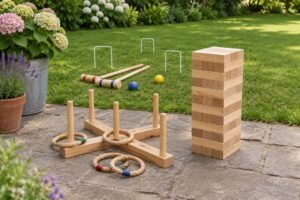
A wooden tumble tower and a croquet set may both suit a summer display, but shoppers need different spaces to use them. A buyer who compares the sets by unit cost alone can end up with a range that is hard to demonstrate in store or explain online. Start with where the games will be played, then review the sample and its retail box together.
European retailers should choose wooden garden games by matching each set to the customer’s available space, checking that the sample matches the specification, and confirming what needs to change for their own retail range. Ask about both the space needed to play and how the set is packed. Those details make it easier to compare games and prepare a useful supplier brief.
Use the questions below to narrow the range before requesting samples or discussing private-label options.
Which games suit smaller gardens and larger lawns?
Start with ring toss or a wooden tumble tower if shoppers are likely to play in a modest space. Ring toss still needs a clear throwing area, and a tumble tower needs a level surface and room for falling blocks. Ask for the space needed during play as well as the size of the assembled set.
For customers with a lawn or more open ground, compare croquet, Kubb, cornhole and ladder golf. Think about how each game fits the rest of the range. A garden centre might want something staff can show on a compact display. An online retailer may need a product photo with enough context to show the scale. See the wooden garden games range.
What should a retail buyer check in a sample?
Unpack the complete set, check the pieces against the contents list and play a round using the supplied instructions. Compare the dimensions, wood and finish with the specification. Look at how the pieces feel in use and whether they pack away easily after the game.
Review the box alongside the sample. Can a shopper tell which pieces come with the set, how much space it needs and how to store it? If the same product will be sold in several European markets, list the languages you need on the box and in the instructions before artwork is finalised.
What belongs in a private-label brief?
Send the shortlisted game, intended use, estimated quantity and retail packaging requirements. If the box needs to fit a particular shelf or display, include the available dimensions. For a logo or colour change, send the artwork or a visual reference and show where it should appear.
At Kangjie Garden Games, we can discuss game dimensions, wood options, colours, finishes, logos and packaging. A sketch or reference makes it easier to assess what can be adapted for your range.
FAQs
Can we start with a sketch for a new wooden game?
Yes. Include the playing area, how the pieces should be used and any size limits. Mark which details matter to the concept and which can change during development.
What information helps a supplier assess the retail pack?
Share the display orientation, preferred box dimensions and where the set will be sold. If you sell online as well, mention any photos or product information you need for the listing.
How can we compare samples from different suppliers?
Give each supplier the same brief. Record the actual piece count, dimensions, finish and packed layout for each sample. Use that record to explain which changes you want before approving production.
Conclusion
Shortlist games by playing space and retail fit, then compare complete samples. Share your private-label brief with our team to discuss the game, branding and packaging for your market.