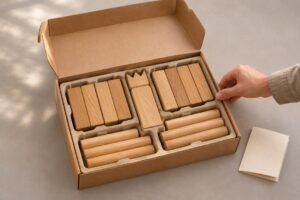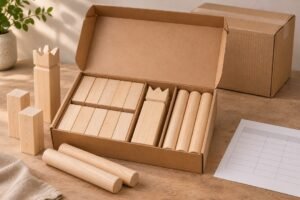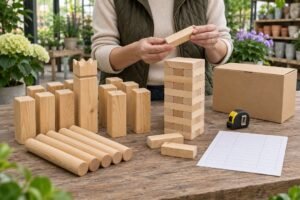
A wooden garden game can look ready for your range in a product photo, then take too long to set up or reveal that the smallest pieces are easy to lose when customers pack it away. Spotting those issues after a purchase order can mean rework, returns or a missed seasonal launch. Before committing, put the sample through the same steps a customer would follow from opening the box to storing the game.
Approve a wooden garden game sample when it plays as intended, customers can set it up and pack it away using the supplied instructions, and the supplier has recorded exactly which features the approved sample represents.
Use the same review steps for each candidate, then add checks specific to the game and how your customers will use it.
What should you test when you first open the sample?
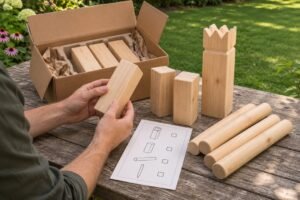
Open the sample as a customer would and check every piece against the contents list. Set the game up using the supplied instructions before asking the supplier for help.
Ask a colleague who has never played the game to do the first setup. Watch for places where they pause, turn a part around or guess which piece comes next. Capture each issue with a photo and the instruction step it relates to. That gives the supplier something specific to revise, whether the issue is a diagram, a part label or the way two components fit together.
After play, put every piece back in the pack. Check whether the smaller parts have an obvious place and whether the box closes easily after repacking. For a retailer selling to households with limited storage, this can affect whether a customer keeps the original box and how easily they can bring the game out again.
How should you check whether the game suits the intended setting?
Play a full round on the kind of surface your customers are likely to use. Check how much room players need to set up, take turns and retrieve pieces.
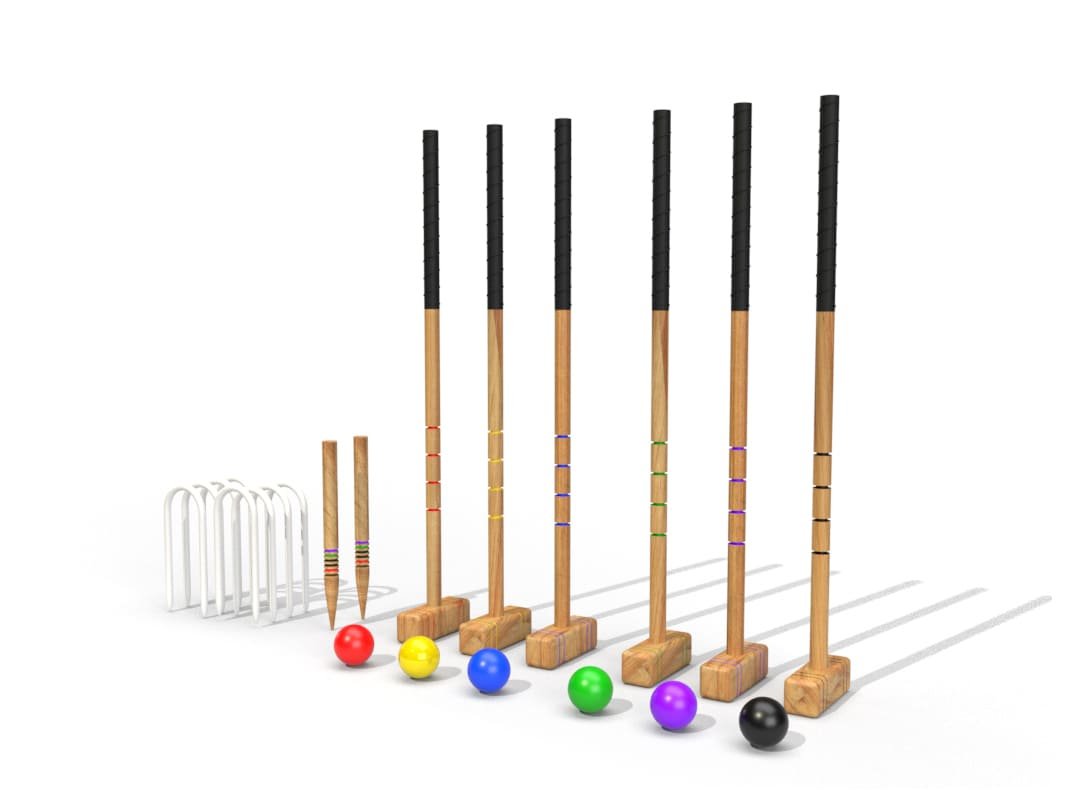
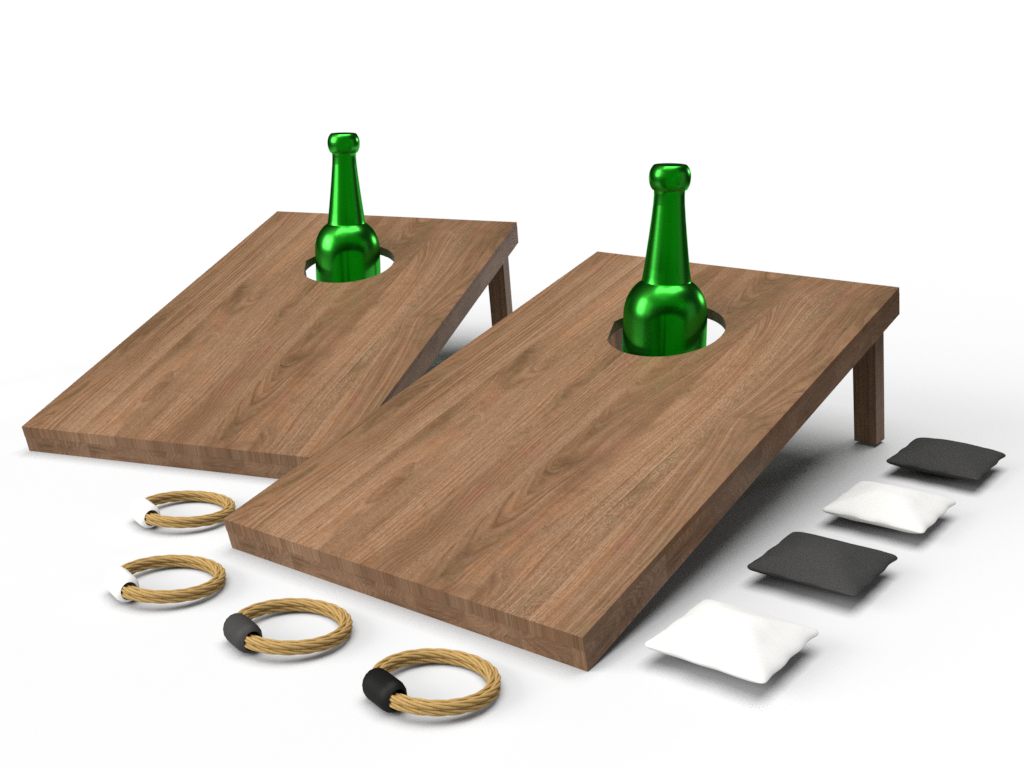
For croquet, see how easily players can position the hoops on a representative lawn and follow the course shown in the instructions. For cornhole, watch for movement during ordinary play and check how people lift and carry the boards once the game is over. The checks should reflect the intended use. A garden centre selling games for family gardens may put more weight on easy storage, while a distributor supplying event operators may want to observe repeated setup and pack-down.
Record the surface and conditions used during the trial. If outdoor exposure is part of the intended use, ask the supplier to confirm the care and storage instructions for the proposed wood and finish. A short play session gives you evidence about handling and setup. Ask separately for evidence supporting any durability claim you plan to make.
What should you record before approving the sample?
Use dated photos and a short approval sheet to record what you saw and which points still need confirmation. Ask the supplier to confirm which sample features will carry into the order.
For a private-label game, record the agreed dimensions, wood option, finish, logo artwork version, component list and packaging configuration. Tie each requested revision to a photo or marked-up drawing and agree how you will verify it. You may be able to check a corrected logo position on an artwork proof, while a change to how parts fit is easier to judge on a revised physical sample.
FAQs
Can we start with a sample from the existing range?
Yes. Use it to assess the basic game and handling. List any planned changes to dimensions, materials or branding so you can agree which changes need a further review.
Can one approved sample cover multiple colour variants?
Confirm which features the variants share. Ask for a separate colour or finish reference for each variant where the finished appearance affects approval.
When should we request compliance documentation?
Identify the intended market early and agree what documentation your business needs before placing the order. Ask which documents are available for the exact SKU and configuration you plan to buy.
Conclusion
Use sample approval to settle how the game plays, how it packs away and what the supplier will make. If you’re developing a private-label game, share your intended setting, estimated quantity and proposed changes with us for a feasibility discussion. Explore our customization options.