
A high-end custom chess board is a specification problem before it is a price problem. Once the wood, the square size, the finish and the branding are defined precisely enough that two factories would quote the same object, sourcing becomes manageable. Until then, every quote you receive is for a different product, and comparing them tells you nothing.
That is the most common reason buyers end up frustrated: they are comparing prices on boards that were never specified to the same standard.
This guide covers what actually has to be decided, where quotes and lead times usually break down, and what a supplier profile suited to a B2B buyer looks like.
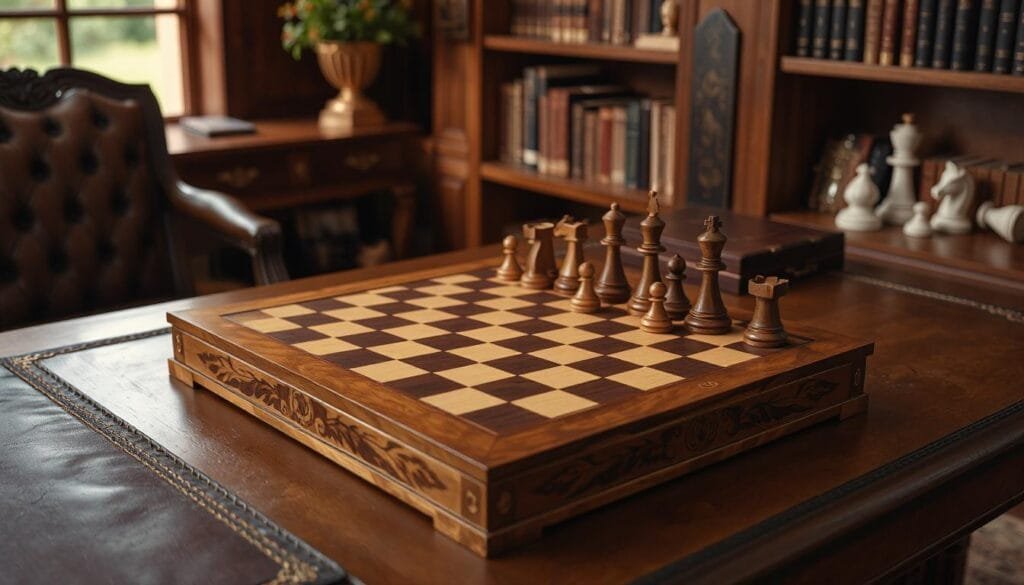
What “High-End Custom” Actually Covers
Four decisions drive almost all of the cost and nearly all of the quality difference. Getting them written down before you request quotes saves weeks.
The Specification Menu
Wood species. Walnut, maple, oak and padauk are the usual premium choices, and each behaves differently. On the Janka hardness scale the relevant range runs from roughly 1,000 to 1,700 lbf, which determines how well a playing surface resists dents in normal use. More important than the number is consistency: a batch that mixes pale and dark walnut will look like two products on the shelf. Specify species, grade and colour range, not just a name.
Square size and board dimensions. Tournament standard is 2.25 inch (57 mm) squares, paired with a 3.75 inch king. The general rule is that the square should be 1.25 to 1.3 times the base diameter of the king, so if your piece set is oversized the board has to follow. Promotional and decorative boards can use any size, but the cutting tolerance is what separates a usable board from a wall piece. Ask what tolerance the factory holds on square size and on overall flatness.
Finish. High-gloss lacquer, matte oil and hand-rubbed wax produce very different products from the same blank. Lacquer gives depth and a mirror surface but shows scratches; oil feels warmer and is easier to repair; wax is the least protective. Finish also changes packing requirements, because a gloss surface needs interleaving to survive transit.
Branding and packaging. Laser engraving on the border, a metal inlay crest, debossing on the playing surface, or a printed lid on the box. Each has a different setup cost and a different minimum. Engraving is the cheapest to add and the easiest to get wrong at small sizes – below roughly 8 mm the detail closes up.
What Separates High-End From Merely Expensive
- Joinery you can inspect. Tight miters, no visible gaps, no glue squeeze-out, squares that stay square after a season of use. A board that rocks on a flat table was not flattened after assembly.
- Correctly dried timber. Wood for a playing surface should be kiln dried to roughly 6–8% moisture content for indoor use. Skip this and the board cups or splits within months, usually after it has shipped.
- Finish build, not finish thickness. Several thin coats with sanding between them, rather than one heavy coat. A thick single coat looks acceptable in a photo and feels like plastic in the hand.
- Colour consistency across the batch. This is the requirement buyers forget to state and then complain about on delivery.
Why Sourcing Custom Boards Goes Wrong
The failures are repetitive. Almost every sourcing problem traces back to one of five places.
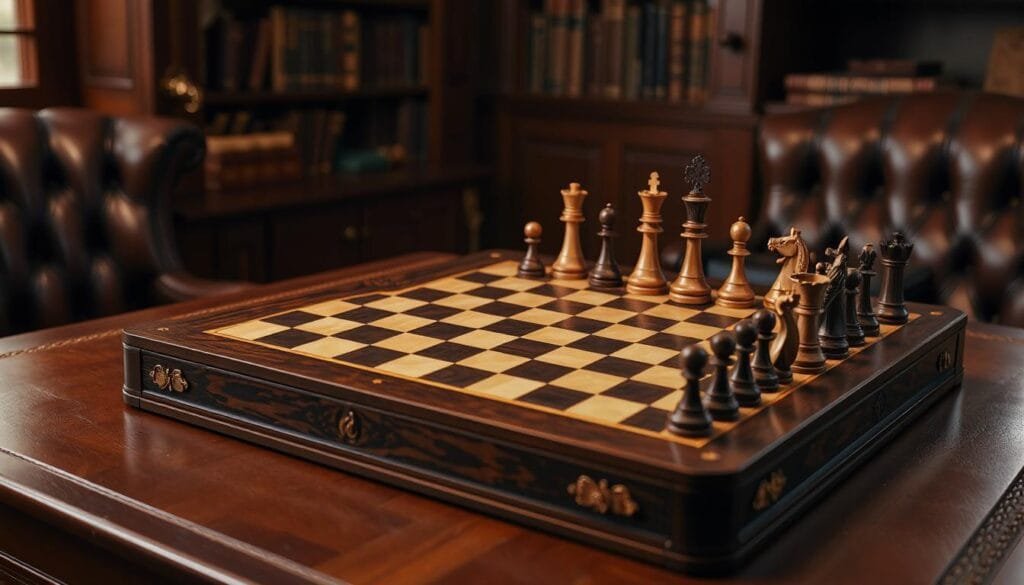
Quotes That Cannot Be Compared
Two quotes for a “walnut chess board” can differ by 60% and both be honest. The difference is usually board thickness, whether pieces are included, wood grade, packaging, Incoterm, and whether tooling and sample costs are amortised into the unit price. Ask for a line-item breakdown: material, labour, finish, branding setup, packaging, and the shipping term quoted. A supplier who cannot break it down is either guessing or hiding a markup.
A price that is far below the rest of the field is worth investigating rather than celebrating. Common causes are thinner stock, lower grade timber, a finish that will not survive a season, or a quote that excludes the packaging you assumed was included.
Lead Times That Do Not Hold
Twelve to sixteen weeks is a normal answer from a factory running a full order book. It is not a normal answer for a buyer with a fixed retail window. The question to ask is not “how long” but “counted from when, and ending where”. Production time measured from deposit is a different number from production time measured from sample approval, and both are different from door-to-door transit time.
Also confirm the factory calendar. Chinese New Year, the first week of October, and the weeks either side of them are effectively lost. An order placed in early January with a March delivery date is often an order that ships in April.
Communication Gaps
Silence during the quoting stage is a reliable predictor of silence during production. A useful test costs nothing: send a specific technical question – moisture content, tolerance, finish system – and see whether the answer comes back with a number in it. Vague reassurance in week one becomes a dispute in week ten.
Sample Problems
A sample should reduce risk, not add cost and delay. Three things to settle in writing before you pay for one: what the sample charge is, whether it is credited against the production order, and what the sample is actually made of. A sample produced by a different method from the bulk run – hand-finished in the workshop, machine-finished in production – tells you nothing about the order.
On timing, standard samples from a working factory take 5–10 days to produce, plus 3–7 days in transit. A quote of eight weeks for a sample usually means the item is not really in production yet.
Certification and Documentation
Which certificates you need depends on the market and on how the product is classified. Wooden games sold as toys in the EU fall under EN71, with EN71-3 covering heavy metal migration from coatings and surface materials. In the US, ASTM F963 and CPSIA apply. If you are buying FSC-certified timber, ask for the chain-of-custody documentation tied to your order, not a generic certificate PDF. For palletised shipments, ISPM 15 heat treatment is a shipping requirement rather than a product one, but it still holds up clearance if it is missing.
A supplier who cannot produce paperwork for a claim should not be making the claim.
What a Suitable Supplier Looks Like
Direct Manufacturer, Not a Trading Company
Buying direct removes a layer of margin and, more importantly, a layer of communication. With a trading company, every technical question makes two hops, and every quality issue is negotiated rather than fixed. The practical check is simple: ask for a video call from the workshop floor, and ask who owns the finishing line.
A Realistic Minimum Order
Very large factories want container volumes and will not set up a custom run below them. Very small workshops cannot hold tolerance across a batch. The useful middle is a factory that will accept a few hundred sets for a first custom order – 500 sets is a workable starting point for most buyers, and it is enough volume to justify a proper setup without committing to a container of unsold stock.
Quotation, Sampling and Production Speed
- Quotation: within 24 hours for a clearly specified request. Days, not weeks.
- Sampling: 5–10 days for a standard custom sample, with 3–7 days in transit.
- Production: 30–45 days from deposit and sample approval to goods ready at the port. Confirmed in writing, with a date.
Working Relationship
- Reads the specification. Replies to the actual question, and flags problems with the design before production rather than after.
- Solves sourcing issues. If a species is unavailable or a finish will not hold, says so early and offers an alternative with the trade-off stated.
- Signs an NDA. Standard practice before drawings are shared. Your design and your customer list stay yours.
- Answers within a stated time. Two working days is a reasonable baseline for a technical reply.
Where to Actually Look
Suppliers who fit this profile are not rare, but they are not found through the first page of a marketplace search either. The productive filter is to target manufacturers who already export custom wooden goods into Europe and North America. Three reasons this narrows the field usefully:
- They already know the requirements. Documentation, coating standards and packaging expectations are part of their normal process, not something you have to teach them.
- Custom is the core business. A factory set up for bespoke runs quotes and schedules them properly. A factory that mostly sells stock items treats custom work as an exception.
- Scale fits the order. Large enough to hold a production schedule, small enough that a 500-set order is worth their attention.
Trade shows, category-specific sourcing agents and referrals from buyers in adjacent product lines all outperform open marketplace search for this kind of work, mainly because someone has already verified that the factory can hold a specification.
How We Handle Custom Chess Boards
We manufacture wooden garden games and custom board games in Guangzhou, and we sell direct rather than through trading intermediaries. What that means in practice for a chess board project:
- Wood selection. Walnut, maple, oak and padauk, with grade and colour range agreed before production rather than after delivery.
- No intermediary margin. You deal with the factory, so the price reflects material and labour rather than two markups.
- 500-set minimum. Low enough to test a custom design in the market before committing to volume.
- 30–45 day production. Measured from deposit and sample approval, quoted as a date rather than a range of feelings.
- 24-hour quotes, 5–10 day samples. So the decision timeline is set by you, not by us.
- Inspection at stages. Incoming timber, after assembly, and after finishing. Problems are cheaper to fix before packing.
- NDA as standard. Signed before drawings are exchanged.
- Certification support. FSC-certified timber, EN71 and ASTM F963 compliance for the relevant markets.
If your requirement is outside what we do well – a one-off heirloom piece, or a volume that needs a fully automated line – we will say so rather than take the order.
Questions to Ask Before You Commit
These five questions separate a supplier who can deliver from one who is confident. Ask them before the sample stage, not after.
- What moisture content do you dry to, and can you show the reading?
- What tolerance do you hold on square size and on flatness?
- Is the sample made on the same line as production?
- Is the delivery date counted from deposit or from sample approval, and does it include transit?
- Which certifications apply to my market, and who provides the documentation?
Next Step: Quote and Sample
The sequence that works is short. Send a specification with wood, dimensions, finish, branding and target quantity. Ask for a line-item quote and a production date. Order a sample from the production line. Approve it in writing, then place the order.
Buyers who skip the specification step spend the time anyway, in revisions and disputes. Buyers who do it get comparable quotes in the first round.
Summary
Sourcing a fully custom, high-end wooden chess board comes down to specifying precisely and then choosing a factory that can hold that specification. In practice that means factory-direct manufacturing, a realistic minimum order in the 500-set range, quoted lead times of 30–45 days, samples in 5–10 days, and documentation for every certification claimed. The supplier profile matters more than the price list, because a cheap board that arrives late and warped costs more than the order saved.
FAQs
1. How long does a custom chess board sample take?
5–10 days for a standard custom sample, plus 3–7 days in transit. If a supplier quotes several weeks for a sample, the item is probably not in active production.
2. Is a 500-set minimum realistic for a genuinely custom board?
Yes, for a factory set up for bespoke runs. It is enough volume to cover setup and still let you test a design in the market before committing to a larger order.
3. How is a custom design protected?
With a signed NDA before drawings are shared. Ask for it at the quoting stage, and check whether it covers the design files themselves as well as the finished product.
4. Which woods suit a premium board?
Walnut and maple are the classic pairing for contrast and stability. Oak is harder and more resistant to denting; padauk offers strong colour but will darken over time with UV exposure. The right choice depends on whether the board is decorative or intended for regular play.
5. Can you supply FSC-certified timber?
Yes, with chain-of-custody documentation tied to the specific order. Ask for that documentation rather than a general certificate, since the certificate alone does not prove the timber in your shipment came from a certified source.
Working on a custom chess board project?
We manufacture direct in Guangzhou: 500-set minimum, 24-hour quotes, samples in 5–10 days, production in 30–45 days, NDA before drawings are shared. Send your specification and we will come back with a line-item quote: contact us
Sourcing Wooden Garden Games in Bulk?
Kangjie is the direct manufacturer behind these games — no trading company, no middleman margin. We supply Kubb, Croquet, Molkky, Ring Toss, Tumble Tower, Cornhole and more to importers, retailers and brand owners worldwide.
- Factory-direct pricing with transparent volume tiers (500 / 1,000 / 5,000 units)
- OEM & ODM: logo, packaging, size and finish built to your specification
- EN71 & ASTM F963 compliant; FSC-certified timber
- Bulk lead time 30–45 days, quotation within 24 hours









