Fifteen feet, measured from the base of one ladder to the base of the other. That is 4.57 metres, and it is the number every other decision about the game depends on.
The distance matters more in this game than in most, because the bolas are thrown in a high arc and the target is three thin rungs rather than a large board. Get the distance wrong and the arc stops matching the target: too close and every throw wraps, too far and the bolas arrive flat and bounce off.
The Short Answer
Fifteen feet between the bases, not between the rungs and not between the far edges. The base is the only reference that stays constant when ladders of different heights are used.
| Measurement | Standard | Metric |
|---|---|---|
| Distance, base to base | 15 ft | 4.57 m |
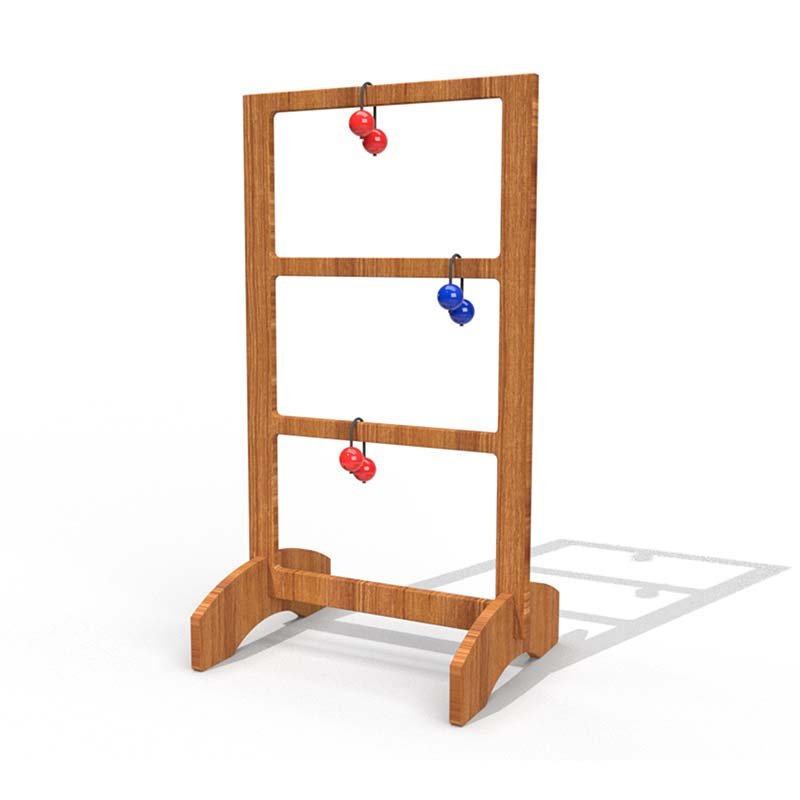
| Ladder height | 36 in | 914 mm |
| Rung spacing | 13 in | 330 mm |
| Rung diameter | 1 to 1.5 in | 25 to 38 mm |
| Bolas cord length | 12 to 13 in between balls | 300 to 330 mm |
| Bolas count per player | 3 | 3 |
| Target score | Exactly 21 | Exactly 21 |
Why Base to Base
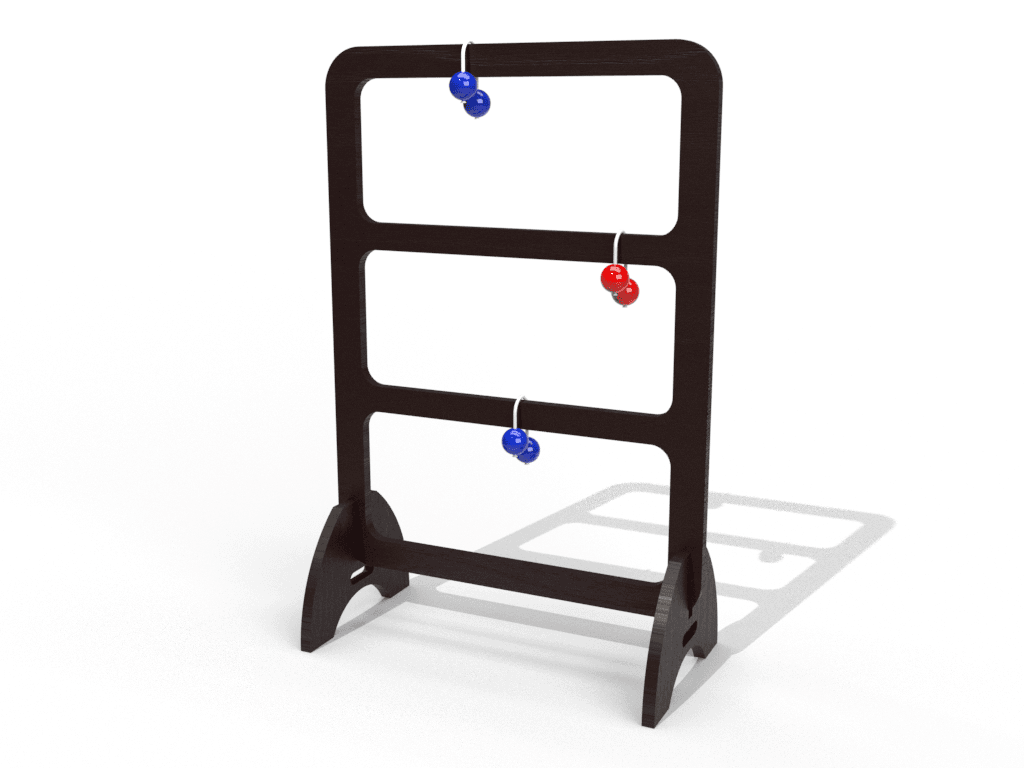
Because ladders vary. A 36 inch ladder and a 40 inch ladder have the same base but different tops, and if you measure between the top rungs the two players are throwing different distances. Measuring base to base keeps the game symmetric regardless of which set is on the lawn.
It is also the only measurement one person can take alone with a tape, which matters more than it sounds.
The Rules That Decide the Game
Most people know the scoring. Fewer know the two rules that make the game work.
- Three bolas per turn, thrown alternately between players or teams.
- Top rung 3, middle rung 2, bottom rung 1.
- A bolas that wraps and hangs counts as the rung it hangs from. This is the rule that produces most of the arguments, because a bolas can hang from the top rung without touching it. Agree it before the first throw.
- A bolas that hits the ground first and bounces on does not count.
- Exactly 21 wins. Going over 21 drops the score to 13, and you carry on from there. That single rule turns the last two turns of every game into an arithmetic problem, and it is the reason the game stays interesting.
On cancellation: the standard game does not cancel scores between players, unlike cornhole. Many house rules do, because people arrive from cornhole expecting it. Decide which version you are playing before the first turn.
Adjusting the Distance
| Distance | Metric | Who it suits | What changes |
|---|---|---|---|
| 10 ft | 3.05 m | Children under 8 | The arc still works; almost everything wraps |
| 12 ft | 3.66 m | Beginners, mixed groups | Forgiving but still requires aim |
| 15 ft | 4.57 m | Standard play | The intended balance of arc and accuracy |
| 18 ft | 5.49 m | Experienced players | Bolas arrive flatter and bounce more |
| 20 ft | 6.10 m | Novelty | Most throws hit the frame rather than the rungs |
The thing to understand about shortening the distance for children is that it does not make the game easier in the way people expect. At 10 feet the bolas arrives steeply and wraps constantly, which is satisfying, but the player has not learned to aim. Twelve feet is the better compromise: still reachable, still requires a target.
Measuring Without a Tape
An adult walking step is about 0.75 metres, so 4.57 metres is six paces. That is accurate to within about 30 cm, which is fine for a garden and not fine for anything organised.
Better: cut a length of builder’s line to 4.57 m, mark both ends with tape, and keep it in the bag with the bolas. It takes two minutes once and it removes the argument permanently.
Two reference objects that are close enough to be useful: a standard parking bay is about 4.8 to 5.5 m long, and a garden bench is usually 1.5 m. Six bench lengths is 9 m, which is too far; three bench lengths plus a bit is about right. The string is better than either.
What Actually Causes Bounce-Outs
“My bolas keep bouncing off” is the most common complaint about the game, and the usual diagnosis, that the ladders are cheap, is usually wrong.
Bounce-out is a function of three things, and only one of them is quality.
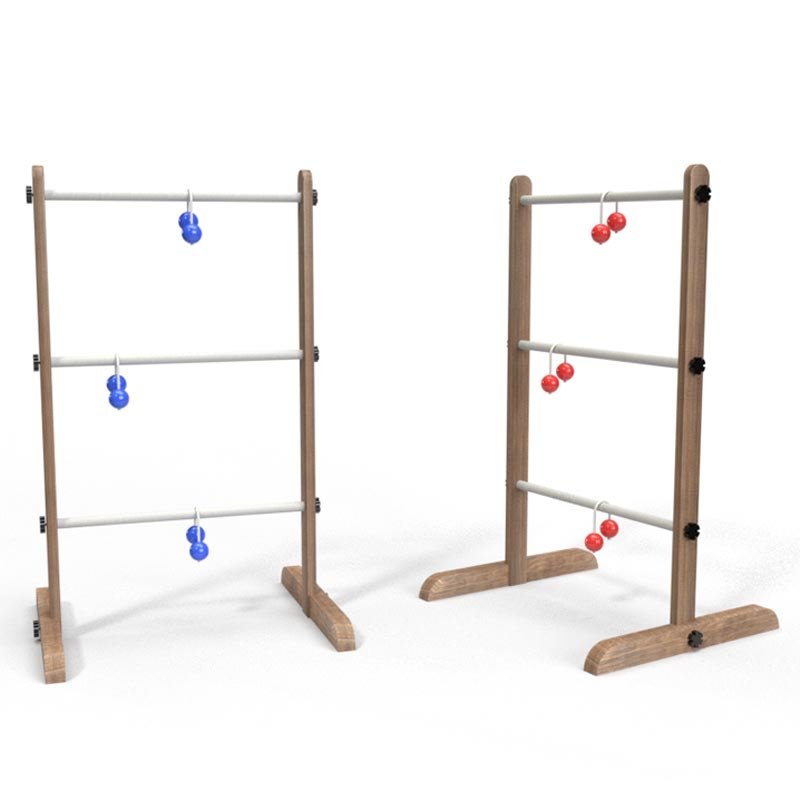
- Rung diameter. A thin rung is harder to wrap and the bolas rebounds off it. 25 mm is the practical minimum; 30 to 38 mm wraps far more reliably.
- Bolas ball size and cord length. Two balls on a 300 mm cord wrap well. A shorter cord makes the bolas stiff and it bounces; a longer one tangles.
- Where it hits. A bolas that strikes the rung dead centre bounces. One that strikes slightly off-centre wraps. That is not a defect, it is the skill of the game.
What genuinely indicates a poor set: rungs that flex when hit, a frame that moves on the ground, and paint that chips off the rungs within a month.
Surface and Setup
Short grass is the best surface. A bolas landing on grass stops; one landing on concrete bounces and rolls, which changes the game and damages the bolas.
Two setup errors cause most of the frustration. Setting up across a slope, so one player is throwing uphill and the other downhill. And setting up on ground soft enough that the ladder feet sink, which lowers the target during the game without anyone noticing.
Buying Notes
- Ladder height, rung spacing and rung diameter in millimetres. Rung diameter is the number that decides how the game plays.
- Frame construction and joint method. A screwed butt joint at the ladder feet is the first thing to fail.
- Bolas cord length and ball material. Rubber balls bounce less than hard plastic and last longer.
- Whether the feet are wide enough to stay upright when the ladder is hit.
- Carton dimensions and gross weight.
Minimum order 500 sets, samples 5 to 10 days, bulk production 30 to 45 days, quotation within 24 hours.
FAQs
How far apart should ladder toss ladders be?
15 feet, or 4.57 metres, measured from base to base.
How do you score ladder toss?
Top rung 3, middle 2, bottom 1. A bolas that hangs from a rung counts as that rung. Exactly 21 wins, and going over drops you to 13.
How far apart for children?
12 feet is the better compromise. At 10 feet almost every throw wraps and the child is not learning to aim.
Why do my bolas bounce off the rungs?
Usually because the rung is thin, or because the bolas struck dead centre. A 30 to 38 mm rung wraps far more reliably than a 20 mm one.
Can you play indoors?
Yes, if you have 4.6 metres of clear floor and a soft surface. The bolas will bounce on a hard floor, which changes the game.
What is the minimum order?
500 sets, with volume pricing at 500, 1,000 and 5,000 units.
Sourcing Wooden Garden Games in Bulk?
Kangjie is the direct manufacturer behind these games — no trading company, no middleman margin. We supply Kubb, Croquet, Molkky, Ring Toss, Tumble Tower, Cornhole and more to importers, retailers and brand owners worldwide.
- Factory-direct pricing with transparent volume tiers (500 / 1,000 / 5,000 units)
- OEM & ODM: logo, packaging, size and finish built to your specification
- EN71 & ASTM F963 compliant; FSC-certified timber
- Bulk lead time 30–45 days, quotation within 24 hours