When you are ordering custom garden games, the questions that decide whether the order goes well are almost never the ones on the enquiry form. They are about construction, tolerance and the factory’s ability to repeat a batch – and they are all answerable before you pay a deposit.
What matters most in a custom garden game is not the design. It is whether the factory can build that design the same way five hundred times.
Below is what to specify, what to check, and where custom orders usually go wrong.
Why Customisation Matters in Garden Games
Stand Out in a Crowded Market
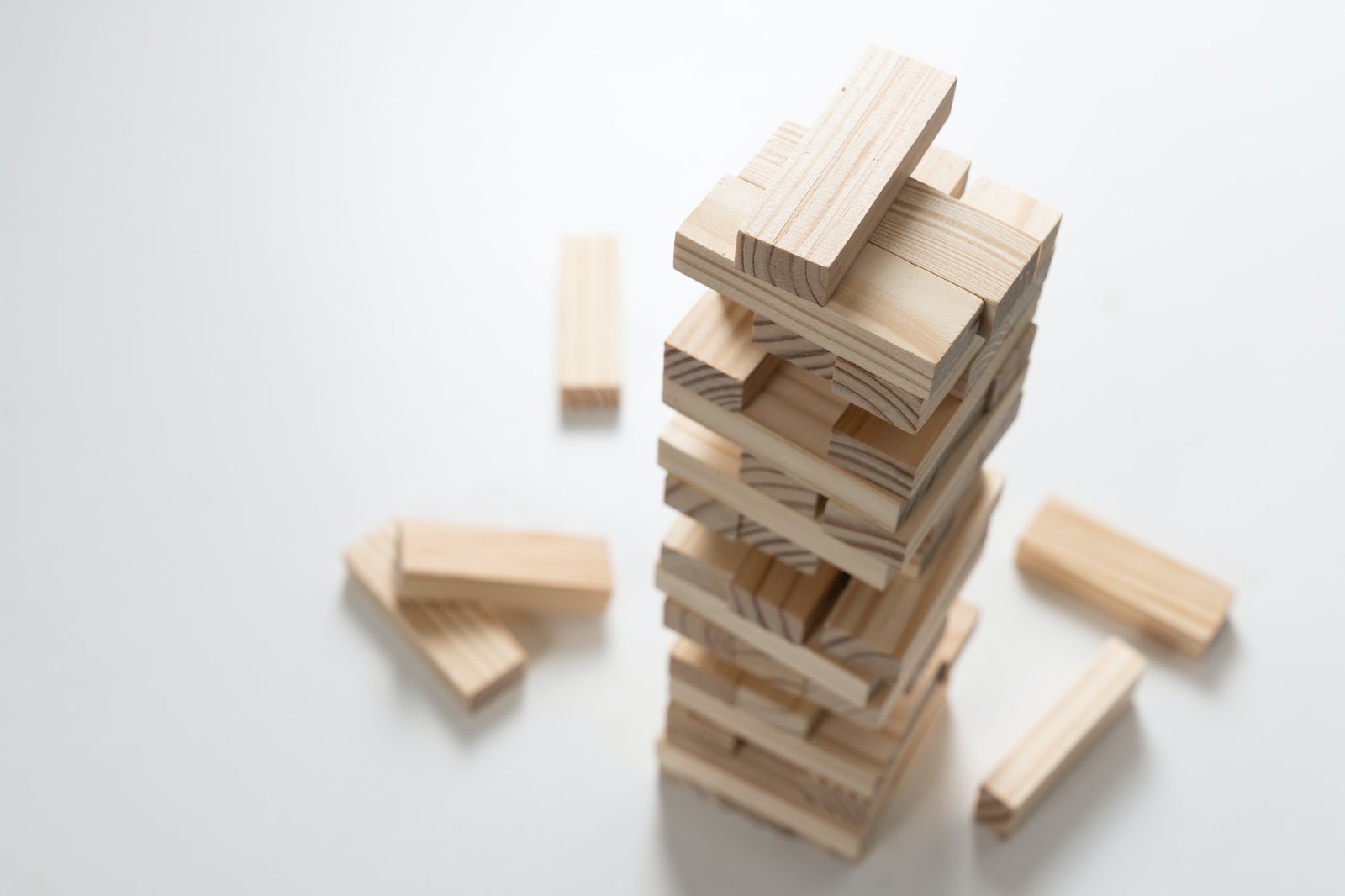
A stock tumble tower is a commodity, and it is priced like one. The same tower with a branded carry crate, a custom block size and a printed instruction card is a gift item, and it is priced like one. The manufacturing difference between the two is small; the retail difference is not.
The commercial argument for customising is therefore about price positioning rather than novelty. You are not customising to be different for its own sake – you are customising to move the product out of the price comparison that commodities are subjected to.
Match Your Brand’s Aesthetic
Wood species, stain and finish determine whether a product reads as rustic, modern or premium, and they are the cheapest variables to change. A pale maple with a matte oil finish and a dark walnut with a high-gloss lacquer can come off the same line and belong in different shops.
The constraint is consistency. A batch that mixes pale and dark boards looks like two products on the shelf, which is why species, grade and colour range have to be specified together rather than just the species name.
Key Factors to Consider When Ordering Custom Garden Games
Material Quality: Don’t Skimp on Durability
The relevant distinction for outdoor games is not hardwood versus softwood in the abstract, it is how the timber behaves when it gets wet and dries out repeatedly.
- Dense hardwoods – oak, acacia, teak – hold up outdoors and resist denting. They cost more and weigh more, which affects freight.
- Softwoods – pine, spruce – are cheaper and lighter but move more with moisture, so they need a proper finish and better drying to avoid warping.
- Engineered board – plywood and similar – is dimensionally stable and the most cost-effective option for flat components such as cornhole boards, though the edges need sealing.
Whatever the species, moisture content is the specification that matters most. Timber for an indoor product should be kiln dried to roughly 6–8%. Skip that and the game cups or splits within months, usually after it has shipped.
Design Flexibility: From Basic to Whimsical
It is worth separating two kinds of request, because they are quoted very differently.
A variant changes dimensions, colour, branding or packaging on an existing construction. It reuses the tooling, so it can usually run at the standard minimum and adds little to the unit cost.
A new design needs a prototype, possibly new tooling, and a tolerance study. It is a project rather than a variation, and it needs to be quoted as one. Both are feasible; conflating them is what produces disappointing quotes.
Certifications: Safety First
Which standard applies depends on the market and on how the product is classified. Wooden games sold as toys in the EU fall under EN71, with EN71-3 covering heavy metal migration from coatings and surface materials, alongside CE marking on the declaration of conformity. In the US, ASTM F963 and CPSIA apply. FSC-certified timber requires chain-of-custody documentation tied to the specific order.
Ask which standard covers your product and who issues the report. A certificate forwarded without context does not prove the goods in your shipment were tested.
Lead Times
Two numbers matter, and they are often conflated. Sampling takes 5–10 days to produce plus 3–7 days in transit. Production takes 30–45 days from deposit and sample approval to goods ready at the port. Ocean transit is additional: roughly 30–40 days to Europe and 14–25 days to the US west coast.
A supplier quoting six to eight weeks for a sample is usually telling you the product is not in production. A supplier quoting four weeks for production is either quoting a stock item or will miss the date.
Pricing: Cheap Isn’t Always Cheerful
A quote that sits far below the field is worth investigating rather than celebrating. The usual causes are thinner stock, lower grade timber, a finish that will not survive a season, or a price that excludes packaging you assumed was included.
Ask for the quote itemised – material, labour, finish, branding setup, packaging and Incoterm – so you can see what each element costs and remove one deliberately if the budget requires it.
Common Pain Points (And How to Avoid Them)
Delayed Deliveries
Garden games are seasonal. A shipment that lands in July is worth considerably less than the same shipment in March, and a missed window costs more than the order saved. Two things prevent it: a delivery date with a stated starting point, and a written acknowledgement of the factory calendar, since Chinese New Year and the first week of October remove two to three weeks from the year.
Poor Communication
Silence during quoting is a reliable predictor of silence during production. A useful test costs nothing: send a specific technical question – moisture content, tolerance, finish system – and see whether the answer comes back with a number in it.
Hidden Costs
Freight, packaging, branding setup, testing and inspection are the five lines that appear late if they are not quoted early. All five should be on the quotation, with the Incoterm stated on the document.
Why Kangjie Checks All Your Boxes
Fast Sampling
Standard custom samples take 5–10 days, plus 3–7 days in transit, and the sample charge is credited against the production order. The sample is built on the production line, so approving it means approving what will actually be manufactured. One round of adjustment is included.
Direct Factory Access
We manufacture rather than trade, so there is no intermediary margin and no layer between your question and the person who can answer it. Volume tiers are published rather than negotiated case by case.
Clear Communication
Quotes within 24 hours for a clear specification, itemised by cost element. Technical questions answered within two working days. One contact holds the file, so nothing needs re-explaining.
Conclusion: Your Next Step
Specify the material, the dimensions, the finish, the branding and the packaging in writing. Ask for an itemised quote. Order a sample from the production line. Confirm the delivery date’s starting point. Those four steps remove most of the risk from a custom order, and they cost nothing but attention.
Send your specification and target quantity, and we will come back within 24 hours with an itemised quote and a production date.
FAQs
1. What is the minimum order quantity?
500 sets for a custom run. That is enough to cover setup and test a design properly, and well below the thousands a distributor typically requires.
2. Do you offer design assistance?
Yes. A sketch, a reference photo or a physical sample is enough to start, together with the target retail price and market – those two determine which construction is appropriate far more than the drawing does.
3. How do you handle confidentiality?
A mutual NDA is signed before drawings are exchanged, covering design files as well as the finished product, and surviving the end of the commercial relationship.
4. What is the production lead time?
30–45 days from deposit and sample approval to goods ready at the port, with pre-shipment inspection and a photo report before the container is sealed.
5. Can you ship to Europe and the US?
Yes. Export documentation is handled at our end – commercial invoice, packing list, certificate of origin and test reports – and terms are usually FOB, CIF or DDP. Import clearance at destination is handled by you or your forwarder.
Ordering a custom wooden garden game line?
We manufacture direct in Guangzhou: 500-set minimum, quotes within 24 hours, samples in 5–10 days, production in 30–45 days, EN71 and ASTM F963 compliance, FSC-certified timber. Send your specification: contact us
Sourcing Wooden Garden Games in Bulk?
Kangjie is the direct manufacturer behind these games — no trading company, no middleman margin. We supply Kubb, Croquet, Molkky, Ring Toss, Tumble Tower, Cornhole and more to importers, retailers and brand owners worldwide.
- Factory-direct pricing with transparent volume tiers (500 / 1,000 / 5,000 units)
- OEM & ODM: logo, packaging, size and finish built to your specification
- EN71 & ASTM F963 compliant; FSC-certified timber
- Bulk lead time 30–45 days, quotation within 24 hours