Outdoor activity is usually sold with claims that cannot be checked: sharper focus, better decisions, a 30 percent drop in stress. Most of those numbers come from somewhere, get detached from their context, and end up on a product page where they mean nothing.
This is the version that holds up. What daylight, movement and being outside actually do, separated from what they are said to do, with the mechanisms rather than the adjectives.
It is also, unavoidably, a list of what outdoor games do not do, because the honest version of this argument is narrower than the marketing one.
What Daylight Actually Does
This is the strongest and least contested effect, and it has nothing to do with mood in the vague sense.
Light is the main signal that sets the body clock. Outdoor light on an overcast day is roughly 10,000 lux; indoor lighting is 200 to 500. The difference is not a matter of degree, it is a different order of magnitude, and it is the reason twenty minutes outside in the morning does more for sleep timing than an hour under an office ceiling.
The practical consequence for anyone who works indoors: the useful part of an outdoor break is the light, not the exercise. Standing outside for fifteen minutes does something that walking on a treadmill does not.
What It Does Not Do
It does not replace sleep, and it does not fix a schedule that is being destroyed by a screen at midnight. Bright light in the evening delays sleep; bright light in the morning advances it. The direction matters more than the total.
What Uneven Ground Does
Walking on grass, gravel or sand recruits the small stabilising muscles of the ankle and hip that a flat floor never asks for. This is a real difference and it is the reason a garden is a better place to stand than a kitchen.
It is also a risk, and the risk rises with age. Ankle sprains on uneven ground are the most common injury in this whole category, and they happen to people who were standing still, not running.
What It Does Not Do
It does not build cardiovascular fitness. Moving on uneven ground is a balance and proprioception stimulus. It costs very little energy.
What Games Actually Cost, in Energy
This is where the category oversells itself, and where a buyer should be sceptical of any claim that a garden game is exercise.
MET values express energy cost as a multiple of resting metabolism. Three METs is roughly the threshold for “moderate activity”.
| Activity | MET, roughly | What it compares to |
|---|---|---|
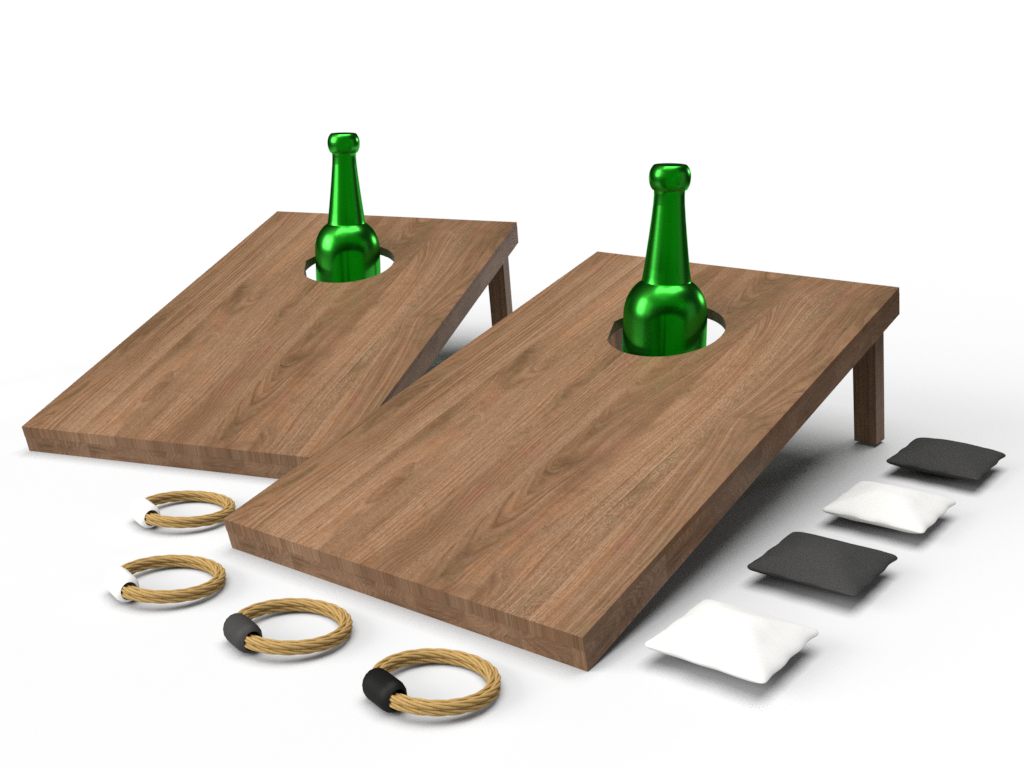
| Cornhole, standing and walking | 2.5 | Slow walking |
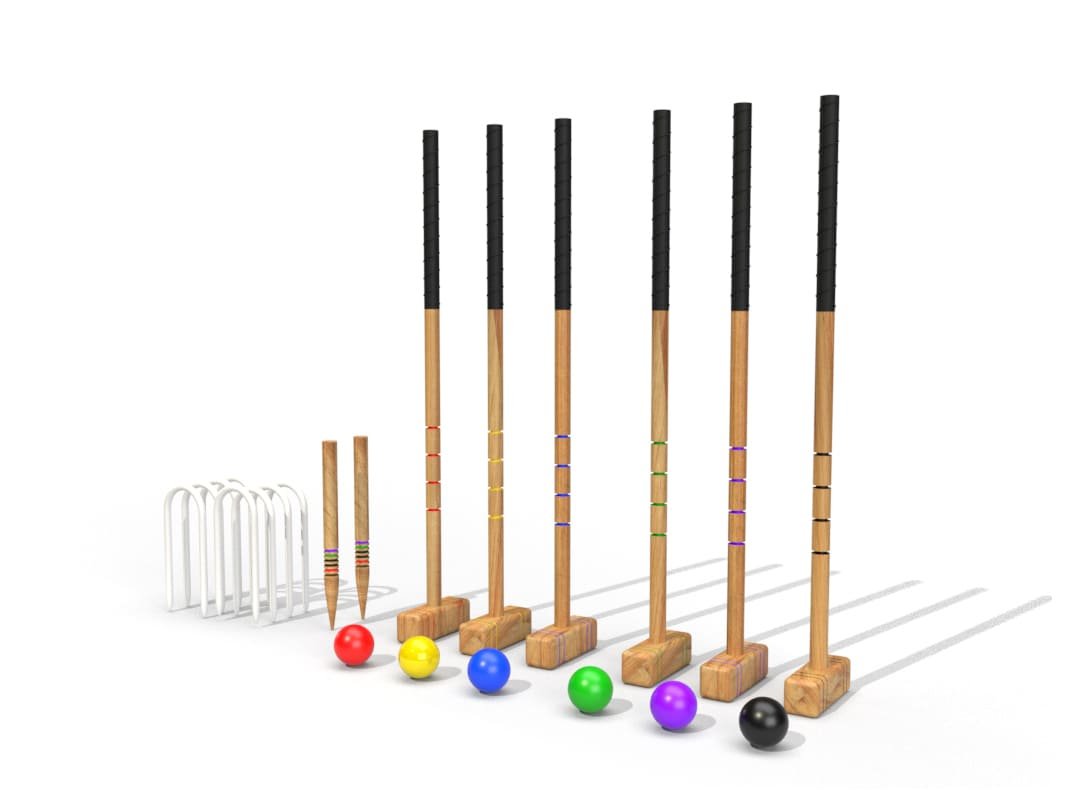
| Croquet | 2.5 to 3 | Walking at an easy pace |
| Casual frisbee throwing | 3 | Walking at 5 km/h |
| Disc golf, walking the course | 3 to 4 | Brisk walking with a bag |
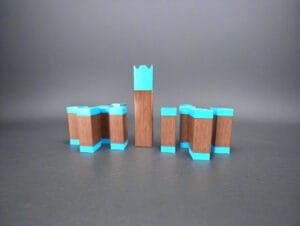
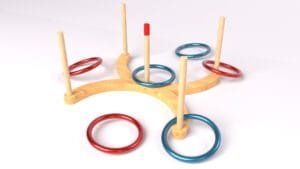
| Ring toss, Molkky, Kubb | 2.5 to 3 | Standing and short walking |
| Pickleball doubles | 4.5 to 5.5 | Cycling slowly |
| Pickleball singles | 7 | Jogging |
| Tennis singles | 7 to 8 | Running at 8 km/h |
Read that table honestly and the conclusion is uncomfortable for anyone selling garden games as fitness: most of them sit below the moderate-activity threshold. Cornhole is a social activity with some standing in it.
That is not a reason to avoid them. It is a reason to describe them correctly.

The Argument That Does Hold
Adherence beats intensity, and it is not close. The exercise that people actually do every week outperforms the exercise that is theoretically better and gets abandoned in February.
Garden games have three properties that support adherence and that gyms do not:
- They have a social reason to happen. Nobody cancels on a person; people cancel on a treadmill.
- The effort is invisible. A game asks for attention, not for effort, and attention is easier to give.
- They have a fixed end. A game of Molkky finishes. A workout does not, which is why it gets cut short.
So the honest claim is not that a game is a workout. It is that a game is the reason a person is outside and moving at all, and that is a lower and more defensible bar.
What to Ignore in This Category
- “Reduces stress by 30 percent.” Numbers like this come from specific studies with specific populations and specific measures. Repeating them without the context is not a claim, it is a decoration.
- “Boosts creativity.” The evidence for attention restoration in green space is genuinely mixed, and the effect sizes are small. It is plausible and it is not established.
- “Builds teamwork.” A game with a shared task makes conversation easier. That is a real and modest thing. It is not team development.
- “Detoxes” anything. Nothing in a garden detoxes anything.
What to Do With Fifteen Minutes
If the goal is the daylight effect, the order is: go outside, early, and do not wear sunglasses. If the goal is the movement, the order is: something with a reason to keep going, which is usually a game and rarely a route.
Both are worth fifteen minutes. Neither is worth exaggerating.
Conclusion
Outdoor activity gives you light, uneven ground, and a social reason to be standing up. Those three are real and they are enough.
It does not give you fitness, and a garden game that claims to is a garden game that has run out of true things to say.
FAQs
1. Is playing garden games exercise?
Light activity. Most sit at 2.5 to 3 METs, which is slow walking. It counts toward general movement and not toward a fitness programme.
2. What is the strongest real benefit?
Daylight exposure, which sets the body clock. Outdoor light is 10,000 lux on an overcast day against 200 to 500 indoors.
3. Does being outside improve focus?
The evidence is mixed and the effects are small. Treat it as plausible rather than proven.
4. How long should a break outside be?
Fifteen to twenty minutes is enough for the light effect. Longer is better for movement.
5. Are there risks?
Ankle sprains on uneven ground, sunburn, and dehydration. The first is the most common and it happens to people standing still.
Sourcing Wooden Garden Games in Bulk?
Kangjie is the direct manufacturer behind these games — no trading company, no middleman margin. We supply Kubb, Croquet, Molkky, Ring Toss, Tumble Tower, Cornhole and more to importers, retailers and brand owners worldwide.
- Factory-direct pricing with transparent volume tiers (500 / 1,000 / 5,000 units)
- OEM & ODM: logo, packaging, size and finish built to your specification
- EN71 & ASTM F963 compliant; FSC-certified timber
- Bulk lead time 30–45 days, quotation within 24 hours