Lists of “best selling” garden games are usually assembled from guesswork. This one is not. It is built from our own order book: the ten products our customers reorder most often, in roughly the order they reorder them. That is a narrower claim than “the market’s top ten”, and a more useful one, because it reflects what actually gets bought twice.
Each entry below says what the product is, why it reorders, and what to watch for before you commit to a container of it. Where a product has a known weakness, it is stated.
How This List Was Built
Three filters, applied to our own order history.
Repeat orders. An item that sells once is a novelty. An item a customer orders again the following season is a product with real demand behind it.
Range across markets. Items that sell in several countries are more robust than items that only work in one.
Manufacturing stability. Products that can be made consistently at volume, without the quality drifting between runs.
What this list is not: a market share ranking, a revenue ranking, or a forecast. We do not have visibility into other manufacturers’ order books and would not present a guess as data.

The Ten
1. Tumble Tower
The most reordered product in the category, and it is not close. The rules take ten seconds to explain, the tension is visible from across a garden, and the product photographs well. It is also the easiest item to brand, because each block is a flat surface.
What to watch: block count. Below about 40 blocks the game runs out of moves too quickly. Hardwood blocks hold their edges through more rounds than softwood, and a bruised edge is what makes a tower fall early.
2. Ring Toss
The lowest-cost entry point in the range and the easiest to customize, because the whole product is a board and a set of rings. It sells well as a gift and as a low-price add-on at the till.
What to watch: ring material. Wooden rings look better and break; rope rings last and look cheaper. Specify which, and price accordingly.
3. Chess and Checkers
A steady seller with a different customer from everything else on this list: older buyers, gift buyers, and the education market. It has no seasonality worth planning around, which makes it useful for smoothing a seasonal order book.
What to watch: square size and piece weight. A chess set with pieces that are too light to pick up cleanly reads as cheap regardless of how the board looks.
4. Ladder Toss
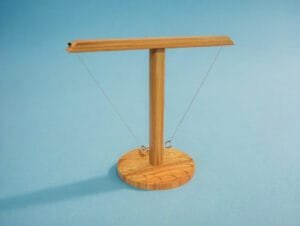
Compact, easy to demonstrate, and it breaks down flat, which makes it a good fit for camping and gift retail. It is one of the few games in the range that travels well.
What to watch: the cord. A cord that stretches lets the two balls drift apart and the game stops working. This is the number one return reason on the product.
5. Dominoes
Broad appeal, no seasonality, and cheap to customize because the tile back is a simple engraved surface. The double-six set is the volume item; larger sets are a smaller, more specialist line.
What to watch: tile count, because it decides which games the set supports. State it on the packaging.
6. Tic-Tac-Toe
A strong impulse purchase and a strong gift item, because it is instantly understandable and looks good on a coffee table. It is also the most common two-in-one pairing, with a cornhole hole at the other end of the board.
What to watch: piece storage. A set with nowhere to put the pieces loses them, and a set with missing pieces is a return.
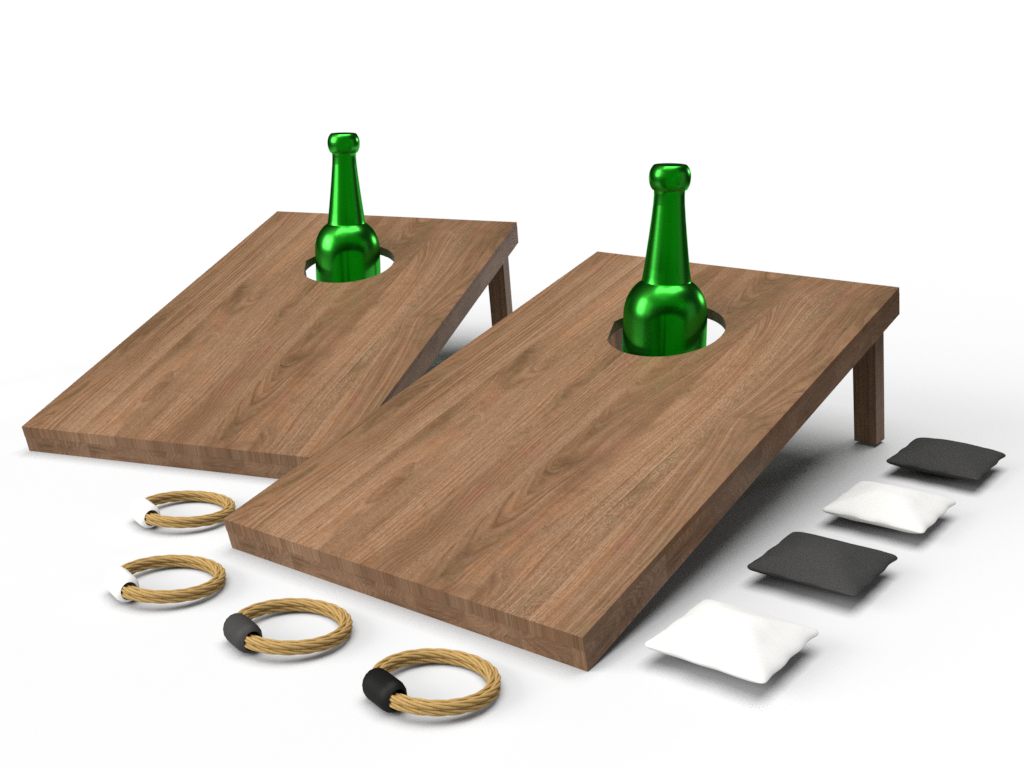
7. Cornhole
The anchor product in North America. Recognition is close to universal, which removes the teaching barrier that every other game on this list has to overcome.
What to watch: carton cube. Boards are bulky and freight is charged on volume, so packed dimensions decide whether the line is viable for you. Also check the hole diameter — a 5-inch hole is the standard cost-cutting trick and players notice.
8. Four in a Row
A large-format version of a game everyone already knows. It sells on size and on how good it looks set up at an event, which makes it a strong hire and venue product as well as a retail one.
What to watch: the frame. This is the most structurally loaded product in the range, and a frame that flexes will jam the discs. Ask about the joint construction.
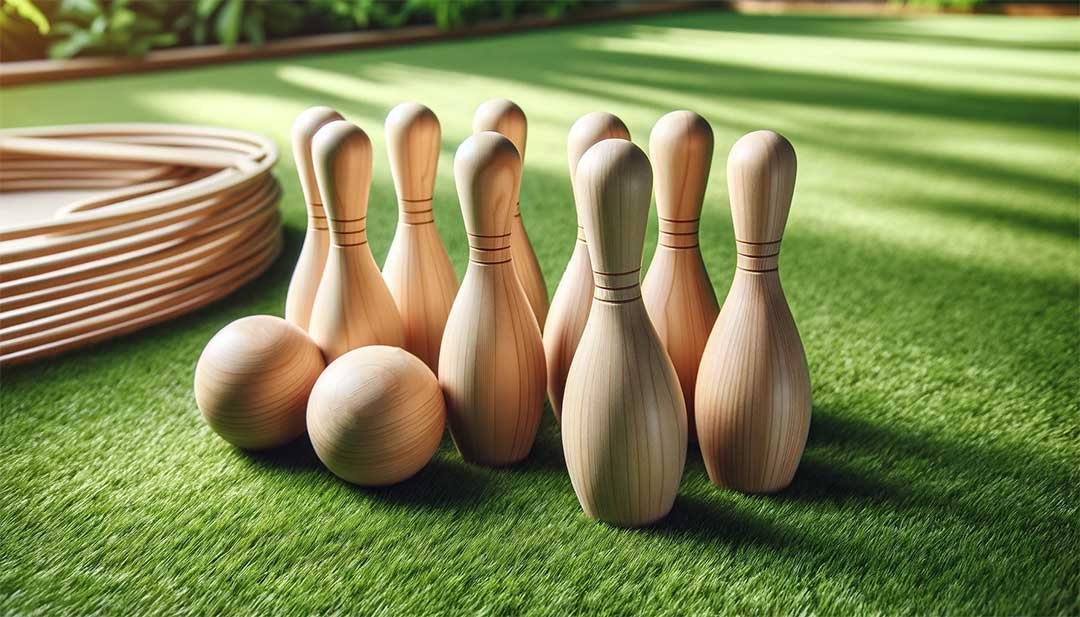
9. Skittle and Bowling Sets
A traditional form that sells steadily in Europe and increasingly elsewhere. Cheap to make, easy to pack, and it works for a very wide age range with the throwing distance adjusted.
What to watch: pin weight consistency. Mismatched pins make the game feel arbitrary, and it is the defect buyers notice last and customers notice first.
10. DIY and Paint-Your-Own Kits
A different customer again: parents and schools buying an activity rather than a game. The margin structure is different because the value is in the packaging and the instructions, not the timber.
What to watch: compliance. A kit sold as a children’s craft product carries the full toy safety requirement, and the paint or markers included have to be tested as part of the product, not sourced separately.
What Actually Decides Whether an Item Sells for You
The list above is a starting point, not a prediction. Four factors decide whether a specific item works in a specific shop.
Price point relative to your customer. A product that is 20 percent too expensive for your shelf does not sell, however good it is. This is the most common reason a proven product fails in a new market.
Carton cube. Bulky products lose money on freight and storage before they lose it on price. Cornhole and four in a row are the two items where this decides viability.
Seasonality fit. Most of this category peaks in spring and early summer, with a second smaller peak before Christmas. Chess, dominoes and DIY kits are the exceptions that help fill the rest of the year.
Demonstrability. Products that a customer can try in the shop outsell products that sit in a box. Tumble tower and ring toss are the easiest to demo; cornhole is the hardest because of the space it needs.
Ordering Notes
- Minimum order. Around 500 sets per design for a custom run. Below that, stock designs with your branding applied are usually the better route.
- Samples. Five to ten days after the specification is agreed. Worth doing even on a repeat order, because finish and timber colour vary between batches.
- Production. Thirty to forty-five days after sample approval. The window assumes the specification is fixed at approval.
- Compliance. EN 71 for Europe and ASTM F963 for the United States, with test reports from a recognised laboratory. FSC covers the timber supply chain, not product safety.
- Spare parts. Bags, rings, bolas and pins wear out before the wood does. If you cannot reorder spares, every worn part becomes a lost customer.
Frequently Asked Questions
Which single product should a new buyer start with?
Tumble tower or ring toss. Both are cheap enough that a slow first season does not hurt, both are easy to brand, and both photograph well enough to sell online.
Can you supply all ten from one order?
Yes, and mixed containers are common. It usually improves the freight economics, because the bulky items and the compact items balance out the container volume.
Do you provide sales data for these products?
No. We can tell you what our customers order and reorder, which is what this list is based on. We cannot tell you what will sell in your market, and any supplier who claims otherwise is guessing.
How much does customization add to the cost?
It depends on the change. Logo engraving or printing is a small addition. A new dimension, a new frame profile or new tooling carries a setup cost that only makes sense at volume.
What is the minimum order for a mixed container?
Around 500 sets per design, but the designs can be mixed within a container. The constraint is per design, not per shipment.
Sourcing Wooden Garden Games in Bulk?
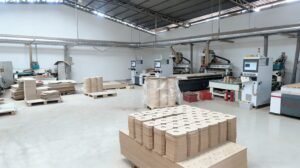
Kangjie is the direct manufacturer behind these games — no trading company, no middleman margin. We supply Kubb, Croquet, Molkky, Ring Toss, Tumble Tower, Cornhole and more to importers, retailers and brand owners worldwide.
- Factory-direct pricing with transparent volume tiers (500 / 1,000 / 5,000 units)
- OEM & ODM: logo, packaging, size and finish built to your specification
- EN71 & ASTM F963 compliant; FSC-certified timber
- Bulk lead time 30–45 days, quotation within 24 hours