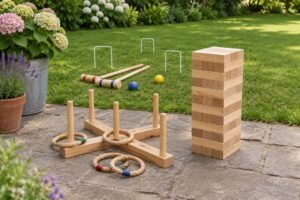
If you are buying wooden garden games for a shop, a venue or a rental fleet, multiplayer titles behave quite differently from single-player ones. The rules have to be teachable in under a minute, because eight people are standing around waiting. The pieces have to survive being handed from person to person for three hours. And the whole thing has to pack down small enough to go in a car boot, or it will not leave the storeroom.
That is a different brief from “looks good on a shelf”. Below is the set of games that consistently hold up in group play, what each one asks of you as a buyer in terms of weight, space and spare parts, and where the usual sourcing problems tend to appear.
What Actually Makes a Game Work for a Group
Four things decide whether a game gets played at a party or sits in the corner after one round.
Turn length. If a single turn takes more than about fifteen seconds, four players spend most of the game watching. Games with short, self-contained turns keep a group engaged far longer than games with long tactical turns.
Downtime. The best group games give the waiting players something to do: line up a shot, talk strategy, or defend a score. Games where everyone waits silently for one person to think are the ones that die at parties.
Age spread. A game that only works for adults aged 20 to 40 has a narrow market. A game that a nine-year-old and a seventy-year-old can play together, with the distance adjusted, sells into family events, schools, care homes and corporate hire all at once.
Footprint. Both the playing area and the packed size matter. A game that needs twelve metres of flat lawn is a different product from one that works on a patio.
The Lineup
Tumble Tower
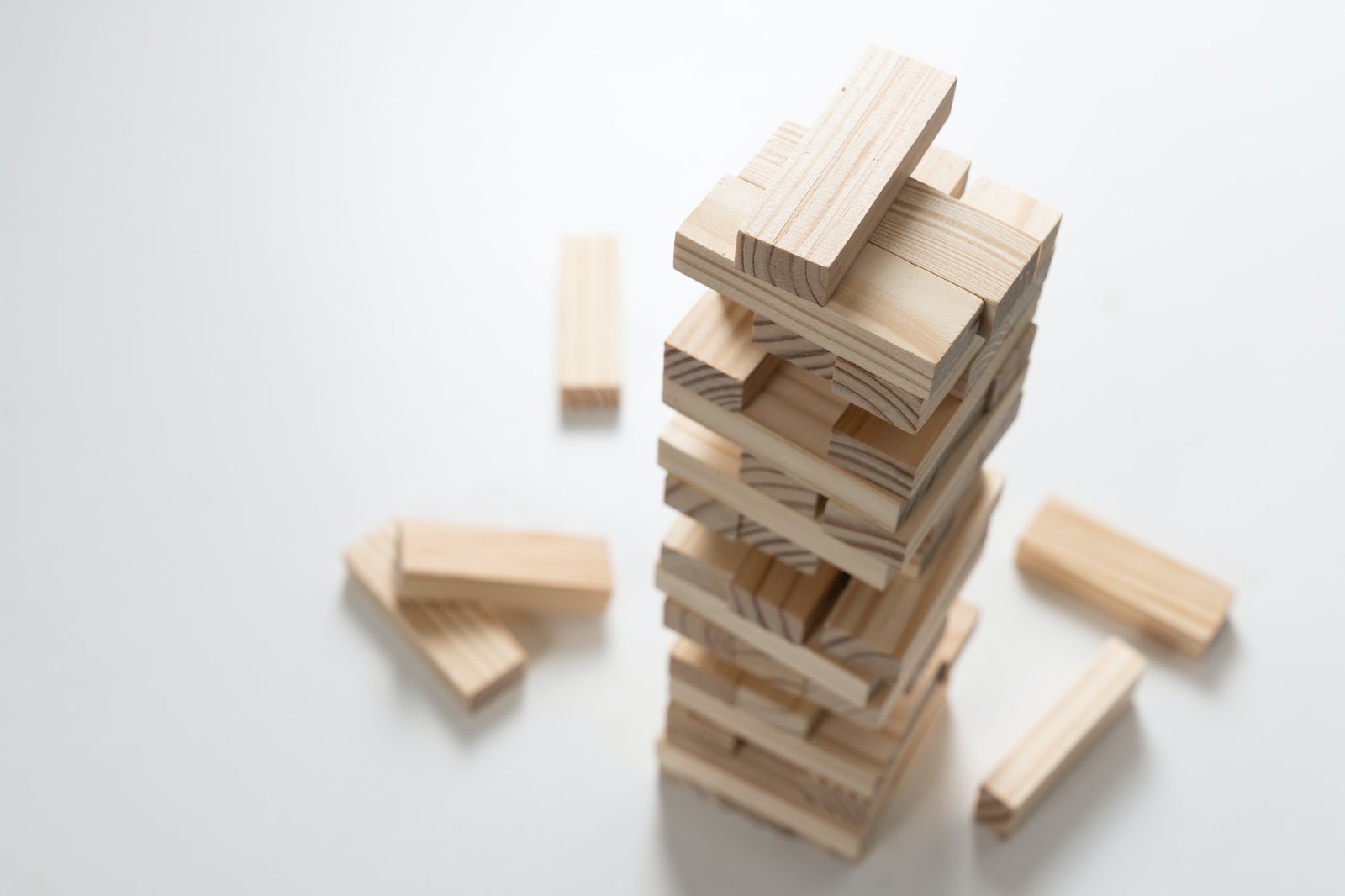
A stack of wooden blocks, built to a height and then dismantled one block at a time. It is the most reliable group game in the category because the tension is visible from twenty metres away and the rules take ten seconds to explain.
For group play, the block count matters more than the tower height. A 54-block set gives a game of roughly ten to fifteen minutes with six players. Sets with fewer than 40 blocks run out of moves too quickly once the tower is half gone, which is the most common complaint on cheap versions.
Wood choice is the other variable. Hardwood blocks hold their edges and keep the tower stable through more rounds. Softwood blocks are lighter and cheaper but bruise at the corners after a season of play, and a bruised block is what makes a tower fall early.
Cornhole
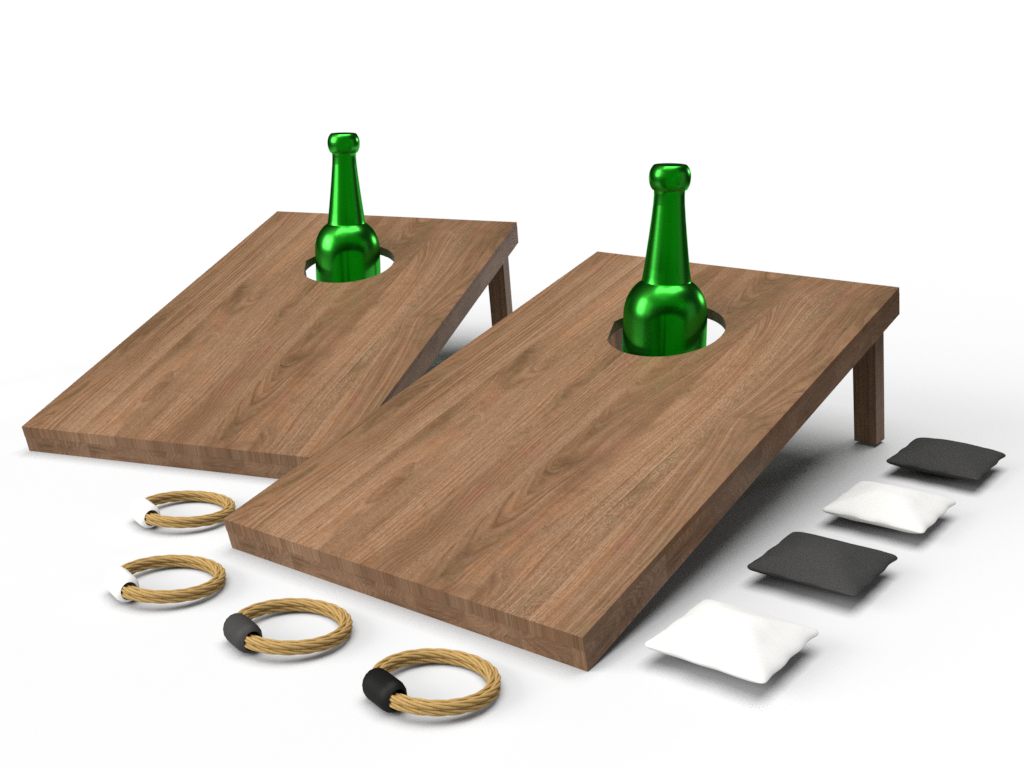
Two angled boards, eight bags, first to twenty-one. It is the default American lawn game and it is the easiest to sell because almost every customer already knows how to play it.
The details that separate a good set from a bad one are rarely visible in a photo. Board thickness drives how the bag reacts on impact: a thin board flexes and the bag slides, a solid board gives the soft landing players expect. The frame joint matters too, because the legs take the full weight of someone leaning on the board.
Bags are the part that wears out first. Wholesale buyers should expect to be able to order replacement bags separately, otherwise a customer with four split bags has to buy a whole new set.
Croquet
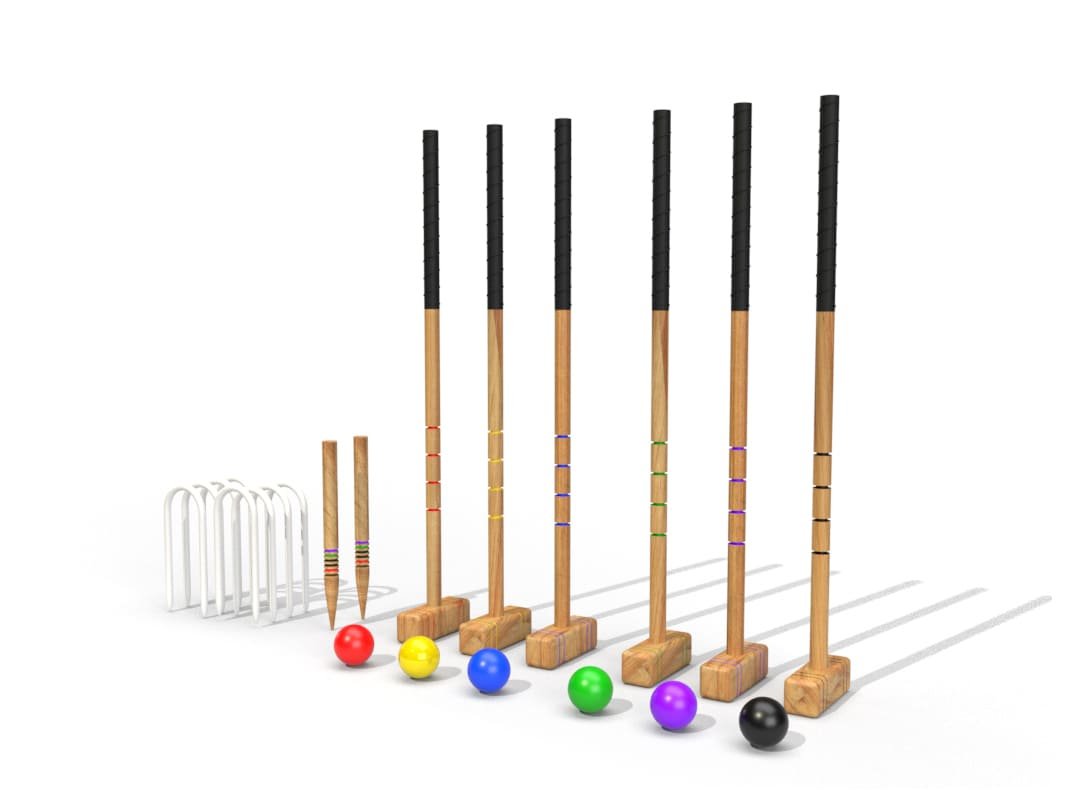
Six or nine wickets, four mallets, four balls. Croquet has the longest single turn of anything on this list, which makes it better for a relaxed afternoon than for a fast party rotation. Its advantage is that it occupies a group for a long time and looks impressive set up on a lawn, which is why it does well with hotels, wedding venues and estate hire.
Mallets are where the cost sits. A mallet head that is glued rather than pinned will separate in damp weather, and a set that arrives with loose heads generates returns you cannot argue with.
Kubb
A Swedish throwing game with a king block in the centre, five small blocks per side and six batons. Kubb is the game that most reliably converts people who have never seen it before, because the first round is easy to understand and the strategy appears on its own by the second.
It is a genuinely public-domain traditional game, so there is no licensing question around the name. What does matter is the wood: batons need to be dense enough to topple a block without splitting, and the king needs enough mass to stand up to repeated hits.
Ladder Toss
Two ladder frames, six bolas, points by rung. It travels well because the frames break down flat, and it works in a smaller space than cornhole. The bolas are the failure point: a weak cord stretches, the two balls drift apart, and the game stops working. Cord specification is worth more attention than most buyers give it.
Molkky
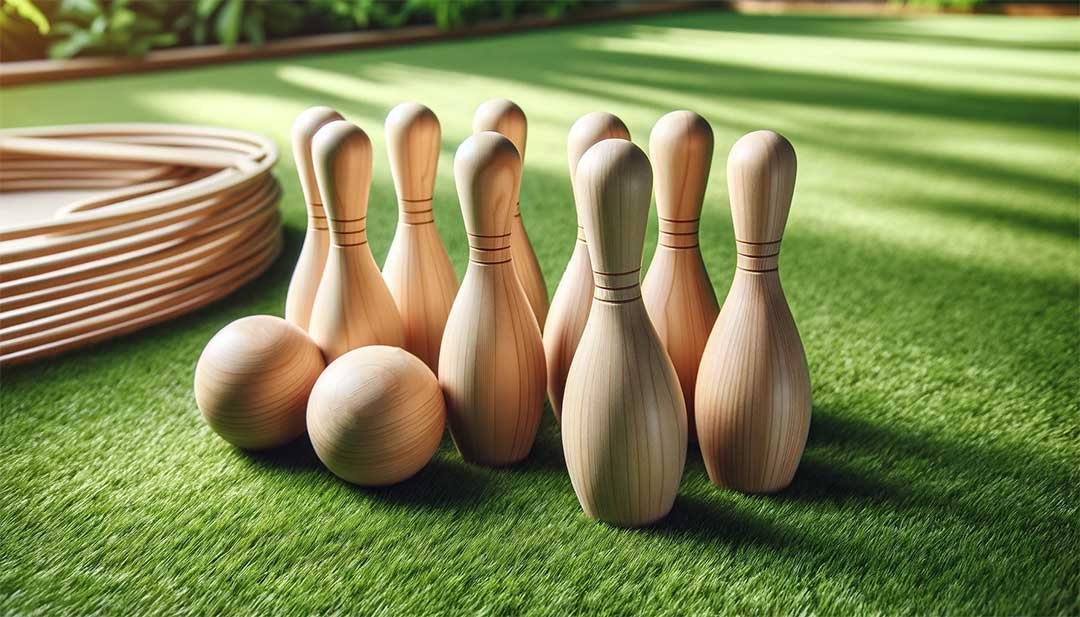
Twelve numbered pins and one throwing pin, scored by knocking pins down and adding the numbers on the fallen ones. The arithmetic is what makes it interesting for older players and what makes it a good fit for schools and family groups.
Note that Molkky is a registered trademark of its rights holder. If you intend to sell into markets where that is enforced, plan the generic description and the packaging copy accordingly, and take your own legal advice on what you can print.
Ring Toss and Hoopla
The cheapest entry point in the category and the easiest to brand, because the whole product is a board and a set of rings. It is also the game most often bought as a gift rather than for personal use, which changes how much packaging matters relative to the game itself.
A Quick Comparison for Buyers
| Game | Typical players | Space needed | Packed size | Rules explained in |
|---|---|---|---|---|
| Tumble Tower | 2 to 8 | Small, table or floor | One carry bag | 10 seconds |
| Cornhole | 2 to 4 | 8 to 10 m | Two boards, flat | 30 seconds |
| Croquet | 2 to 6 | 10 to 15 m | Long carton | 2 minutes |
| Kubb | 2 to 12 | 8 m | One crate | 1 minute |
| Ladder Toss | 2 to 4 | 5 m | Two folded frames | 30 seconds |
| Molkky | 2 to 12 | 4 m | One bag | 1 minute |
| Ring Toss | 2 to 6 | 3 m | One box | 10 seconds |
None of these figures are fixed. They are the ranges that hold up in practice when the game is used by a mixed group rather than two competitive adults.
What to Check Before You Commit to an SKU
Most of the margin in this category is lost on details that never appear in a product listing. These are the ones worth asking a supplier about in writing.
- Carton cube, not just weight. Freight is charged on volume for most of these products. A set that weighs 6 kg but ships in a 40-litre carton costs more to move than one that weighs 8 kg in a 25-litre carton.
- Finish specification. Ask which finish and how many coats. A water-based exterior finish with two coats behaves very differently from a single coat of oil, and the difference shows up in the second season, not the first.
- Spare parts availability. Bags, bolas, rings, balls and mallets all wear out before the wooden parts do. If you cannot reorder spares, every worn part becomes a lost customer.
- Hardware. Stainless fixings cost a little more and remove an entire category of complaint about rust stains on decks and patios.
- Consistency between production runs. Ask how a repeat order is matched to the first one. Timber colour varies between batches, and a customer who reorders in spring expects the set to match the one they bought last year.
Customization That Actually Sells
Customization is not a single feature. Some of it moves product and some of it just adds cost.
The options that reliably sell are the ones a customer can see before they buy: a logo laser-engraved on tumble tower blocks, a printed face on a cornhole board, a branded carry bag, and a box that photographs well. Corporate buyers care about the engraving because it turns a game into a gift. Retail buyers care about the box because it is what the product looks like on a shelf and in a listing photo.
The options that rarely pay for themselves are deep mechanical changes: a different block dimension, a new frame profile, a redesigned scoring system. These need new tooling, they slow the first order down, and they usually sell to the same number of customers as the standard version. If a customer asks for one, it is worth being honest about the volume at which it becomes sensible.
Certifications: What the Paperwork Actually Means
Toy safety paperwork gets misread constantly, in both directions. A short clarification of what each document covers:
- EN 71 is the European toy safety standard, in parts. EN 71-1 covers mechanical and physical properties, EN 71-2 flammability, EN 71-3 migration of certain elements. A compliant product should come with test reports against the relevant parts, issued by a recognised laboratory.
- ASTM F963 is the corresponding US toy safety specification. For the US market you will also need a Children’s Product Certificate, which is a document the importer issues on the basis of the test reports, not something the factory issues for you.
- FSC certifies the timber supply chain, not the safety of the finished product. It answers a sourcing question, not a toy safety question.
- ISO 9001 is a quality management system certificate for the factory. It says something about process discipline and nothing about whether a specific batch is safe.
If a supplier offers “all certifications” without naming the standard, the part and the laboratory, that is worth pushing back on.
Minimum Order, Sampling and Lead Times
For wooden garden games made to your specification, a minimum of around 500 sets per design is the usual threshold at which custom tooling, custom packaging and a sensible unit price all become possible at the same time. Below that, stock designs with your branding applied are usually the better route.
Samples typically take five to ten days once the specification is agreed, and bulk production runs thirty to forty-five days after sample approval. Those windows assume the specification is fixed before sampling starts. Most delays in this category come from specifications that keep changing after the sample has been made, not from the factory.
Frequently Asked Questions
Which of these games is the safest first purchase?
Tumble tower and cornhole. Both are already familiar to most customers, both photograph well, and both have low enough unit costs that a slow first season does not hurt.
Can one factory make all of these?
Usually yes, because they share the same materials and the same basic processes: cutting, sanding, drilling, finishing and assembly. The exception is anything with soft goods, such as cornhole bags, which is often a separate production line.
How do I handle the trademark question?
Some of these games are traditional and public domain, and some have registered names. The safe approach is to use the generic description in your own copy and packaging, keep any brand reference factual, and get local legal advice for the markets you sell into. This is a commercial decision, not something to leave to a supplier’s reassurance.
What is the most common cause of returns?
Not breakage. It is missing or wrong parts, and pieces that do not fit together because of tolerance drift between batches. A pre-shipment inspection that assembles a sample set from each carton catches almost all of it.
Sourcing Wooden Garden Games in Bulk?
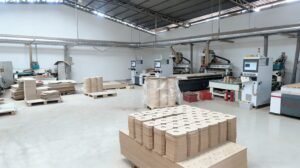
Kangjie is the direct manufacturer behind these games — no trading company, no middleman margin. We supply Kubb, Croquet, Molkky, Ring Toss, Tumble Tower, Cornhole and more to importers, retailers and brand owners worldwide.
- Factory-direct pricing with transparent volume tiers (500 / 1,000 / 5,000 units)
- OEM & ODM: logo, packaging, size and finish built to your specification
- EN71 & ASTM F963 compliant; FSC-certified timber
- Bulk lead time 30–45 days, quotation within 24 hours