
There are about eight ways to put a pattern on a wooden game, and they are not interchangeable. Each has a different cost, a different durability outdoors, a different minimum run, and a different implication for the safety testing of the coating.
This page is written for buyers rather than hobbyists: what each method is, what it costs in production, how it survives, and where it should and should not be used.
1. Laser Engraving
A laser burns the surface, removing a shallow layer and leaving a permanent mark. It is the default for logos and small text on wooden games.
- Durability. Excellent. There is nothing to wear off because nothing has been added.
- Cost. Setup cost per design, then a low per-unit cost. Cheap at volume, expensive for a short run.
- Look. The mark is darker than the surrounding timber and the contrast varies by species. It reads best on beech and rubberwood, weakest on very light or very dark stock.
- Best for. Logos, serial numbers, small text, fine linework.
- Watch out for. Engraving on a playing surface changes how a disc or ball travels. Keep it off the deck.
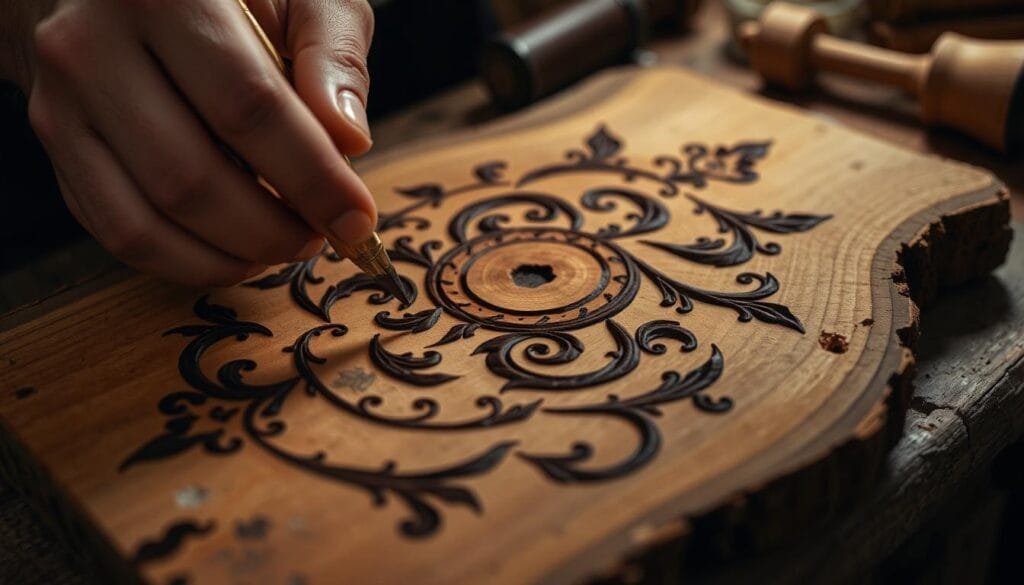
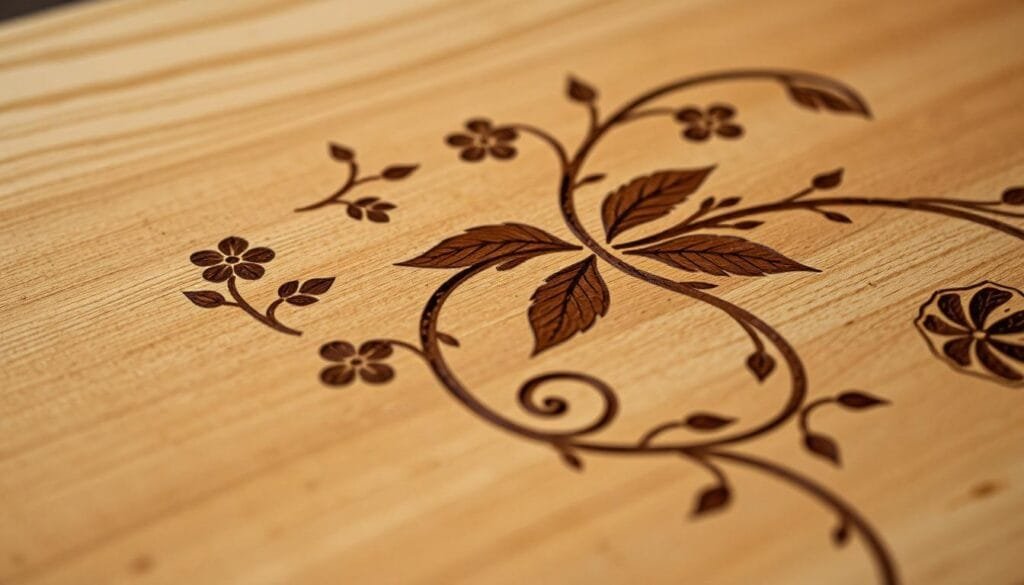
2. Pyrography (Wood Burning)
The same principle as laser engraving but done by hand with a heated pen. It produces a warmer, more variable line.
- Durability. Excellent, for the same reason as laser.
- Cost. High per unit, because it is hand work. Only viable for premium or one-off pieces.
- Look. Hand-drawn, slightly irregular, which is the point.
- Best for. Gift sets, high-end retail, personalised pieces.
- Watch out for. Consistency. Two hand-burned logos are never identical, which is fine for a gift and not fine for a retail range.
3. Screen Printing
Ink pushed through a mesh stencil. The standard method for flat panels and for anything that needs a solid colour.
- Durability. Good indoors and in light handling. It sits on the surface, so it wears at edges that are handled constantly.
- Cost. A screen charge per colour, then a very low per-unit cost. The cheapest method above about 500 units.
- Look. Flat and graphic. Good for bold shapes and solid colour, poor for fine detail.
- Best for. Cornhole board faces, box artwork, large logos on flat panels.
- Watch out for. The ink is part of the coating system. If the product is tested to EN71-3, the ink has to be in the tested specification.
4. Pad Printing
A silicone pad picks up ink and transfers it to a curved surface. This is how pips get printed on a domino or a number onto a rounded peg.
- Durability. Good, though less than engraving on a surface that is struck.
- Cost. Plate charge plus a low per-unit cost. Cheap at volume, workable at a few hundred pieces.
- Look. Crisp on small curved areas.
- Best for. Numbers, pips, small logos on cylindrical parts.
- Watch out for. On a part that takes impact — a skittle pin, a croquet ball — printed numbers wear off. Engrave those instead.
5. Painting and Stencilling
Colour applied by spray, brush or stencil. The most flexible method and the one with the widest range of quality.
- Durability. Depends entirely on the system. A sprayed water-based lacquer over a primer is durable; a single coat of craft acrylic is not.
- Cost. Low per unit, but each additional colour adds a masking and drying step.
- Look. Anything from a solid colour block to a hand-painted illustration.
- Best for. Children’s products, novelty sets, colour-coded pieces.
- Watch out for. Paint build-up on mating surfaces. A painted joint will not fit; mask it.
6. Staining and Dyeing
Colour that soaks into the timber rather than sitting on top of it. The grain stays visible, which is the whole appeal.
- Durability. Good, because there is no film to chip. It does fade under UV over years.
- Cost. Low. One extra step in the finishing line.
- Look. Natural. Two contrasting stains are how you distinguish the two sides of a strategy game without paint.
- Best for. Chess and draughts pieces, backgammon points, two-tone boards.
- Watch out for. Species absorb stain unevenly. Pine blotches; beech and birch take it evenly. Always test on the actual stock.
7. Inlay and Veneer
A contrasting material set into the surface: a different timber, a metal line, or a resin fill.
- Durability. Excellent if the inlay is flush and sealed. Poor if it stands proud, because it catches on things.
- Cost. High. This is the most labour-intensive method on the list.
- Look. The most premium result available on a wooden game.
- Best for. Crokinole boards, backgammon, premium chess boards.
- Watch out for. Movement. Timber and metal expand differently, and an inlay that is tight in summer will open in winter.
8. Carving and CNC Relief
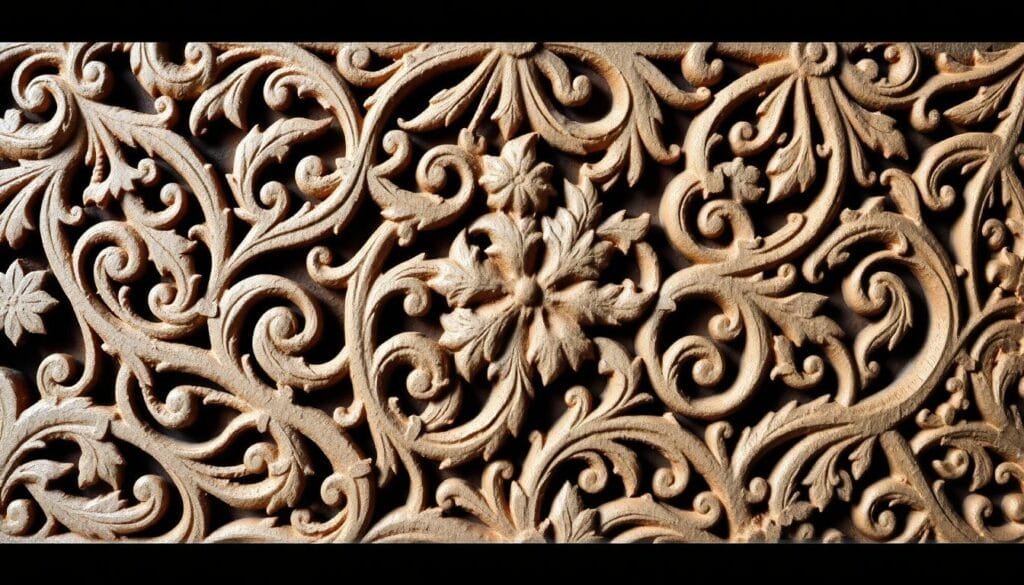
Material removed to create a three-dimensional pattern, either by hand or by a CNC router.
- Durability. Excellent. It is the timber itself.
- Cost. A CNC programme is cheap to run once written; hand carving is not.
- Look. Tactile. A carved pattern is felt as well as seen, which is a different product experience.
- Best for. Decorative borders, handles, textured grips.
- Watch out for. Dirt traps. A deep carved recess on an outdoor game collects debris and is hard to clean.
9. Decoupage and Paper Overlay
Printed paper glued to the surface and sealed under a clear coat.
- Durability. Poor outdoors. The paper layer is the weak point, and moisture gets under it at the edges.
- Cost. Very low.
- Look. Any printed image, which is its only advantage.
- Best for. Indoor decorative pieces. Not for garden games.
- Watch out for. This is the method most often proposed for cheap customisation and the one most likely to fail in service. If a supplier suggests it for an outdoor product, ask what happens after a wet season.

Choosing Between Them
| Method | Outdoor life | Cost | Minimum run |
|---|---|---|---|
| Laser engraving | Excellent | Medium | Any |
| Pyrography | Excellent | High | Small, hand work |
| Screen printing | Good | Low at volume | ~500 |
| Pad printing | Good | Low at volume | ~500 |
| Painting | Good if sprayed and sealed | Low | Any |
| Staining | Good | Low | Any |
| Inlay | Excellent | High | Premium runs only |
| Carving / CNC | Excellent | Medium | Any |
| Decoupage | Poor outdoors | Very low | Any |
The Compliance Point
Every one of these methods adds something to the product — ink, stain, resin, adhesive, paper — and that addition is part of the coating system that gets tested.
For a toy sold in Europe, EN71-3 covers migration of certain elements from toy material. For the United States, ASTM F963 and CPSIA apply. A report covers the specification that was tested, so a change of ink, stain or clear coat may take the product outside its report.
Ask which decoration methods are inside the tested specification before the artwork is signed off. It is a much cheaper conversation than the one after the test fails.
Conclusion
Engraving is permanent and works anywhere. Screen and pad printing are the cheapest at volume and belong on flat or small curved surfaces. Stain is the natural option for two-tone pieces. Inlay and carving are for premium products. Decoupage has no place on a garden game.
Tell us the pattern, the product and the volume, and we will tell you which method fits and what it does to the unit cost and the testing.
FAQs
What is the most durable way to put a logo on a wooden game?
Laser engraving. Nothing is added, so there is nothing to wear off.
What is the cheapest at 500 units?
Screen printing for flat panels and pad printing for small curved parts. Both have a setup charge that is amortised across the run.
Can the pattern be full colour?
Yes, through screen printing with multiple colours or through a printed and laminated panel. Each additional colour adds a step and a screen charge.
Does a custom pattern affect safety testing?
It can. Inks, stains and clear coats are part of the tested coating system, so a change may take the product outside its existing report.
Is decoupage suitable for outdoor games?
No. The paper layer fails at the edges once moisture gets in. It is an indoor decorative method.
Sourcing Wooden Garden Games in Bulk?
Kangjie is the direct manufacturer behind these games — no trading company, no middleman margin. We supply Kubb, Croquet, Molkky, Ring Toss, Tumble Tower, Cornhole and more to importers, retailers and brand owners worldwide.
- Factory-direct pricing with transparent volume tiers (500 / 1,000 / 5,000 units)
- OEM & ODM: logo, packaging, size and finish built to your specification
- EN71 & ASTM F963 compliant; FSC-certified timber
- Bulk lead time 30–45 days, quotation within 24 hours









