
The name is the first thing a customer asks about and the last thing a manufacturer thinks about. For cornhole, the two are directly connected: the name describes the original construction, it carries a double meaning that has pushed some leagues to rename the sport, and it affects which search terms a retailer should be targeting.
The short answer is that the name comes from the corn-filled bags and the hole they are thrown at. The longer answer is that the origin story is genuinely unsettled, and the naming controversy is a commercial fact rather than a curiosity.
Here is what is actually documented, what is folklore, and why the naming question matters if you are sourcing or selling the product.
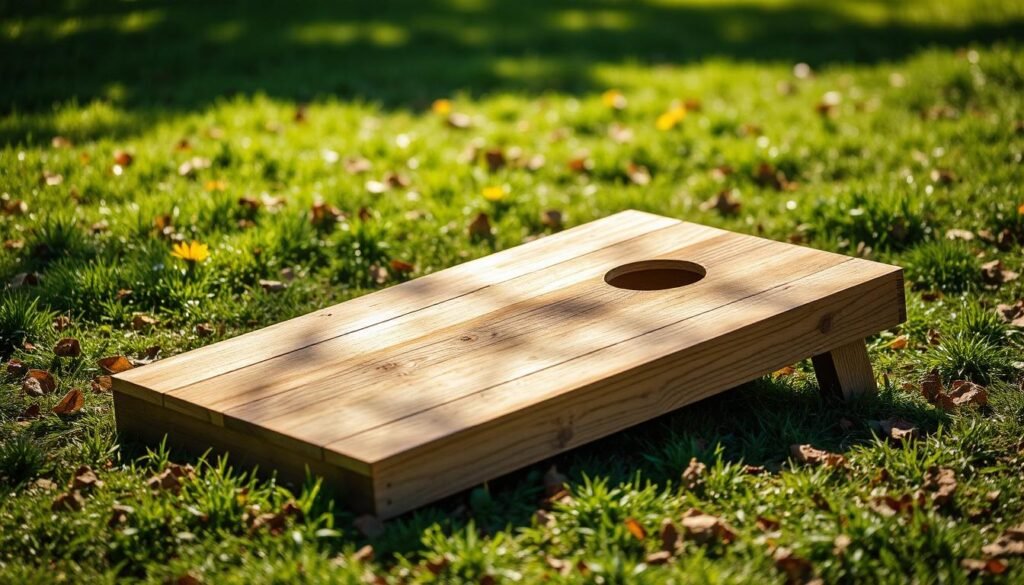
The Short Answer
Cornhole is a compound of two literal things: bags filled with dried corn, and the hole in the board they are aimed at. In the game’s earlier American form, the bags were stuffed with feed corn because it was cheap, available on any farm, and softer than the stones the game is said to have descended from.
That is the explanation most sources give, and it is consistent with the equipment. The complication is that the game has several claimed origins, and each one implies a different answer about the name.
Where the Game Came From
Three accounts circulate. None is conclusively documented, and a supplier or a retailer repeating one as fact is repeating folklore.
The German Account
The most widely repeated version traces the game to eighteenth-century Germany, where a similar toss game was played, and follows German immigrants to the American Midwest, where the equipment was adapted to what was available – corn sacks instead of stones.
The account is plausible and widely cited, but the documentary trail is thin. It is best described as a tradition rather than a record.
The Older European Account
A second version places the game in a much older European tradition of throwing games aimed at a target hole, of which cornhole is one regional variation among several. This account explains the game’s structure but not its name.
The American Account
A third version treats cornhole as an American development of the twentieth century, with the modern board format emerging in the Midwest and the game spreading through tailgating culture rather than through inheritance from Europe.
What is documented is the modern phase: the game became a fixture of Cincinnati and the surrounding region in the late twentieth century, spread through family gatherings and tailgates, and was formalised into leagues and a national governing body in the 2010s. The precise moment it acquired its name is not recorded, which is why the origin question remains open.
Why the Name Is Contested
The word carries a second, crude meaning in American English, and that has produced a real commercial split.
Several leagues, school programmes and family-oriented retailers use alternative names – bag toss, bags, or baggo – to avoid the double meaning on signage, in school settings and on packaging aimed at children. Some tournaments use the traditional name; others do not. The sport’s governing body uses cornhole, and the equipment sold under either name is identical.
For a buyer this is not a trivia point. It determines what goes on the box.
What the Name Means for a Retailer
Three practical consequences.
Search terms differ by audience. “Cornhole” carries the volume, because it is the name the sport is known by and the term most people search. “Bag toss” is the term used in school and family contexts. A listing that uses only one of them misses part of the market.
Packaging has to match the channel. A product destined for a school supplier or a family catalogue is easier to sell under bag toss. The same product in a sports retailer sells under cornhole. Printing both on the carton is common, and printing the wrong one is a reason a buyer declines.
The name affects age grading. A product marketed to children falls inside toy safety rules – EN71 in the EU, ASTM F963 and CPSIA in the US – while an adult-marketed game may not. Naming and marketing copy are part of how a product is classified, so the decision has a compliance cost attached.
From Backyard to League
The commercial rise is easier to document than the origin, and it explains why the product sells.
The game moved from family gatherings into bars and tailgates, then into organised leagues, and then onto television. A governing body was established in the United States in the mid-2010s, standardised court dimensions and board specifications followed, and the result is a rare thing in outdoor games: a format with a casual version and a competitive version that use the same equipment.
That dual structure is the commercial engine. The casual player buys a set for a garden; the league player buys a better set, then a second one, then a custom set. Regulation dimensions – a 60 by 120 centimetre board with a 15 centimetre hole, set 8 metres apart – give a manufacturer something specific to build to, and give a buyer a specification to ask for.
What This Means If You Are Sourcing
Four specifications decide whether a set is a toy or a piece of equipment.
- Board core and edges. Plywood with sealed edges. An unsealed edge wicks moisture and delaminates within a season, which is the most common failure in the category.
- Bag fill. Synthetic pellets rather than corn or beans. Organic fill degrades, attracts pests and changes weight as it dries.
- Bag seam. Double-stitched, because a split bag ends the game and generates a return.
- Board surface. Smooth enough for a consistent slide, and finished so that the graphic survives handling rather than wearing at the hole.
The customisation that sells is on the board face, which is a large flat printable surface – a logo, a team, a wedding, a brand palette. Laser engraving on the frame is the cheaper addition; printed vinyl or direct-to-board printing covers the whole face and carries the higher price.
Conclusion
Cornhole is named for its equipment: corn-filled bags, thrown at a hole. The German origin story is tradition rather than record, and the modern competitive phase is the part that is documented.
The naming split between cornhole and bag toss is a commercial fact with three consequences – search terms, packaging copy, and age classification. Getting it right is a small decision that affects whether the product reaches the channel it was designed for.
Stocking cornhole or bag toss sets?
We manufacture direct in Guangzhou: 500-set minimum, quotes within 24 hours, samples in 5–10 days, production in 30–45 days, EN71 and ASTM F963 compliance, FSC-certified timber: contact us
FAQs
1. Why is the name cornhole considered controversial?
The word carries a crude second meaning in American English, which is why some leagues, school programmes and family retailers market the same game as bag toss, bags or baggo. The equipment is identical.
2. Where did cornhole actually originate?
There is no settled answer. A German origin carried to the American Midwest is the most widely repeated account, but the documentary record is thin. What is documented is the modern phase: the game became established in the Cincinnati region in the late twentieth century and was formalised into leagues in the 2010s.
3. What are the regulation board dimensions?
A 60 by 120 centimetre board with a 15 centimetre hole, with the front edges set roughly 8 metres apart for competitive play. Casual sets vary, which is why the dimensions are worth specifying rather than assuming.
4. What should I specify when ordering cornhole sets?
Plywood core with sealed edges, synthetic pellet fill rather than corn, double-stitched bag seams, and a surface finish that survives play at the hole. Those four points account for most of the difference between a set that lasts and one that does not.
5. Should the packaging say cornhole or bag toss?
It depends on the channel. Cornhole carries the search volume and suits sports retail; bag toss suits school and family channels. Many suppliers print both, and the choice also affects how the product is age-classified for toy safety purposes.
Sourcing Wooden Garden Games in Bulk?
Kangjie is the direct manufacturer behind these games — no trading company, no middleman margin. We supply Kubb, Croquet, Molkky, Ring Toss, Tumble Tower, Cornhole and more to importers, retailers and brand owners worldwide.
- Factory-direct pricing with transparent volume tiers (500 / 1,000 / 5,000 units)
- OEM & ODM: logo, packaging, size and finish built to your specification
- EN71 & ASTM F963 compliant; FSC-certified timber
- Bulk lead time 30–45 days, quotation within 24 hours









