The indoor versus outdoor question is usually answered with enthusiasm rather than with anything a buyer can use. Both are good. Both have a place. That is true and it is useless.
The version that is actually useful is narrower: what does each setting allow, what does it forbid, and which games survive the transfer between them. That is a specification question, and it has answers.
What Each Setting Actually Allows
| Outdoors | Indoors | |
|---|---|---|
| Space | Plenty, but not necessarily flat | Limited, but level |
| Ground | Grass, gravel, decking, sand. Rarely level | One flat surface, usually a floor or a table |
| Weather | The main constraint. Four usable months in most of Europe | Not a factor |
| Noise | Unlimited | The constraint nobody plans for |
| Light | Fails at dusk, which ends the evening | Controlled |
| Mess tolerance | High. Grass, mud and dropped food are expected | Low. A dropped wooden block dents a floor |
| Group size | Ten or more works | Four is comfortable, six is tight |
| Storage | A shed, which is damp | A cupboard, which is dry |
Read down that table and the practical conclusion is that the two settings are not competing for the same occasion. Outdoor is for groups and daylight. Indoor is for small numbers and any time.
The Three Numbers That Decide Everything
1. Ceiling Height
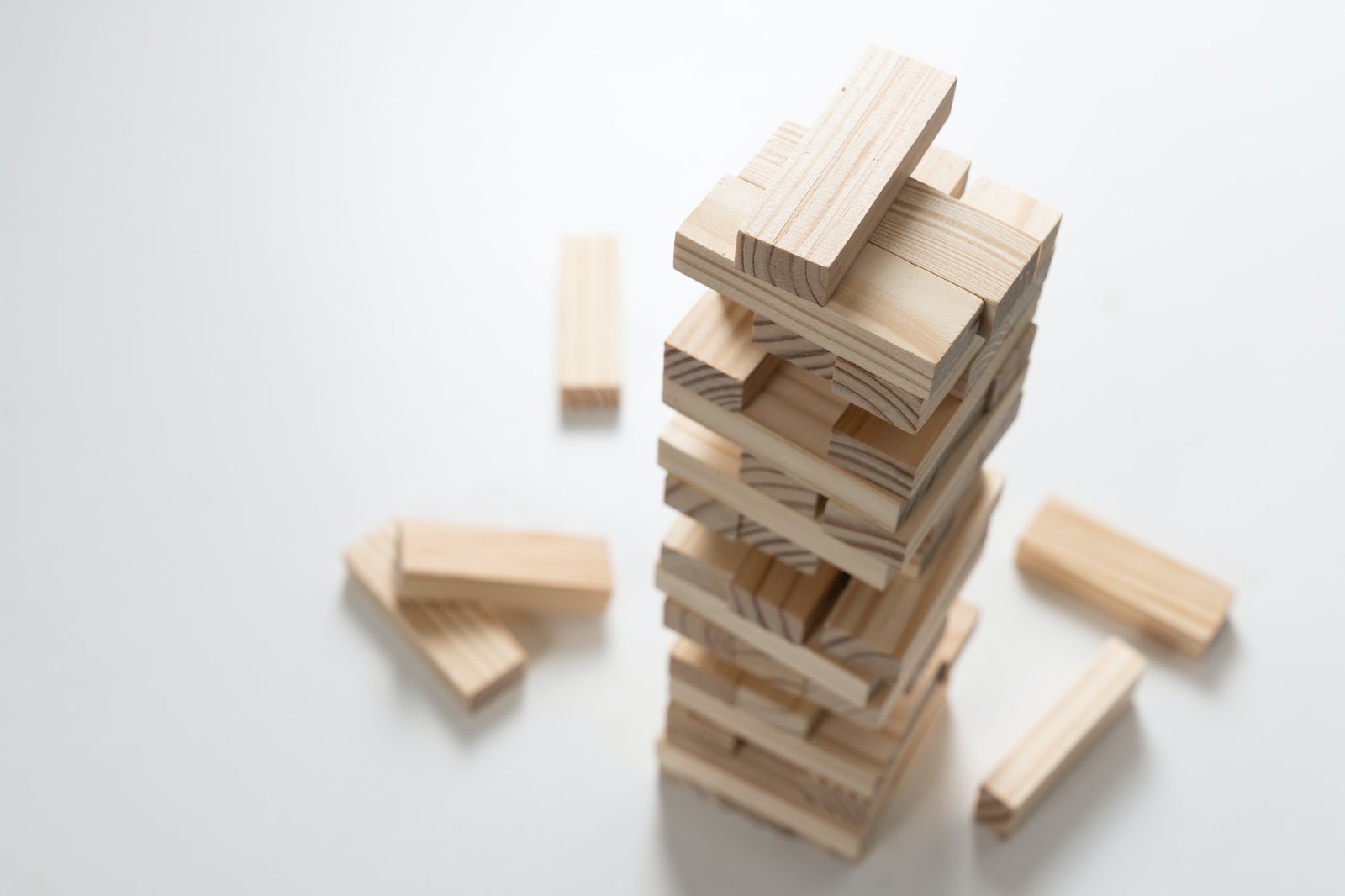
A tower game needs clearance above its built height, because the failure mode is a collapse and the pieces go sideways and up. The rule of thumb is 1.5 times the built height for comfortable play. A 1.2 metre tower needs about 1.8 metres of clearance, which most rooms have, and a 1.8 metre tower needs 2.7 metres, which most do not.
This is the single most common mistake in commercial installations. A pub buys a giant tower for an indoor function room and discovers on the first night that it cannot be built past shoulder height.
2. Floor Damage
A wooden block dropped from a metre onto hardwood leaves a mark. A rug is not decoration in this context, it is part of the product. If you are selling to venues, say so in the instructions, because the venue will not think of it until after the first dent.
3. Noise
An outdoor game played indoors sounds different in kind, not degree. A cornhole bag landing on a board is a dull thud. A tower collapsing onto a hard floor is a sharp crack that travels through the structure into the flat below. Games with soft components transfer indoors; games that are entirely rigid wood generally do not.
Which Games Transfer
| Game | Indoors | Why |
|---|---|---|
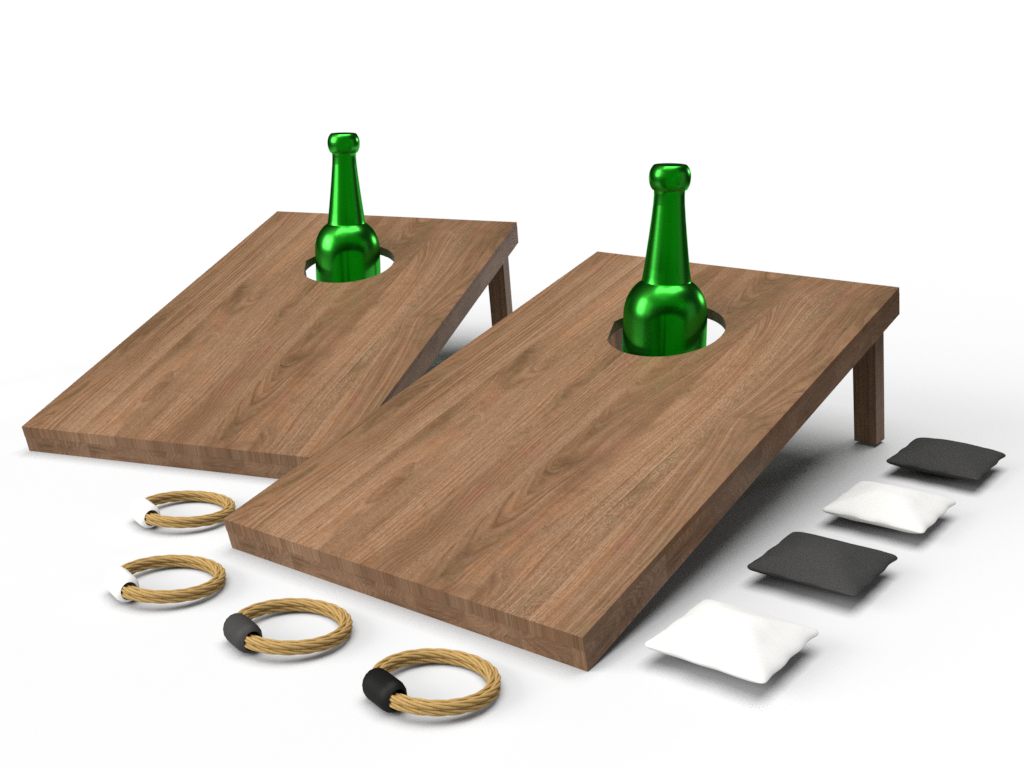
| Cornhole | Yes, with a low-bounce bag | Soft landing, small footprint, quiet |
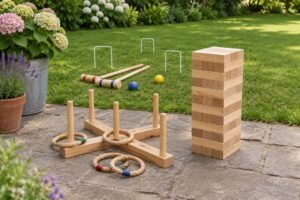
| Tumble tower | Yes, if the ceiling allows | Needs 1.5x built height and a rug |
| Four in a row | Yes | Tabletop versions exist and the game is unchanged |
| Chess and draughts | Yes, natively | A table game by design |
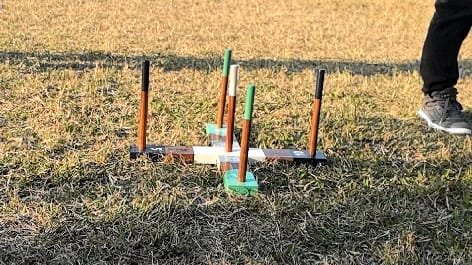
| Ring toss | No | Needs distance and a soft landing area |
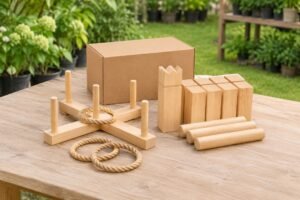
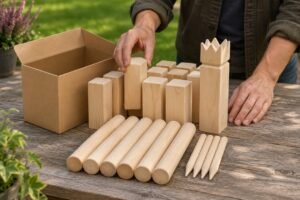
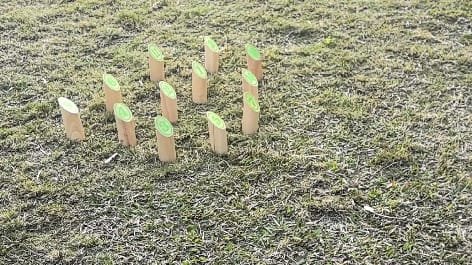
| Kubb | No | Batons and a five by eight metre field |
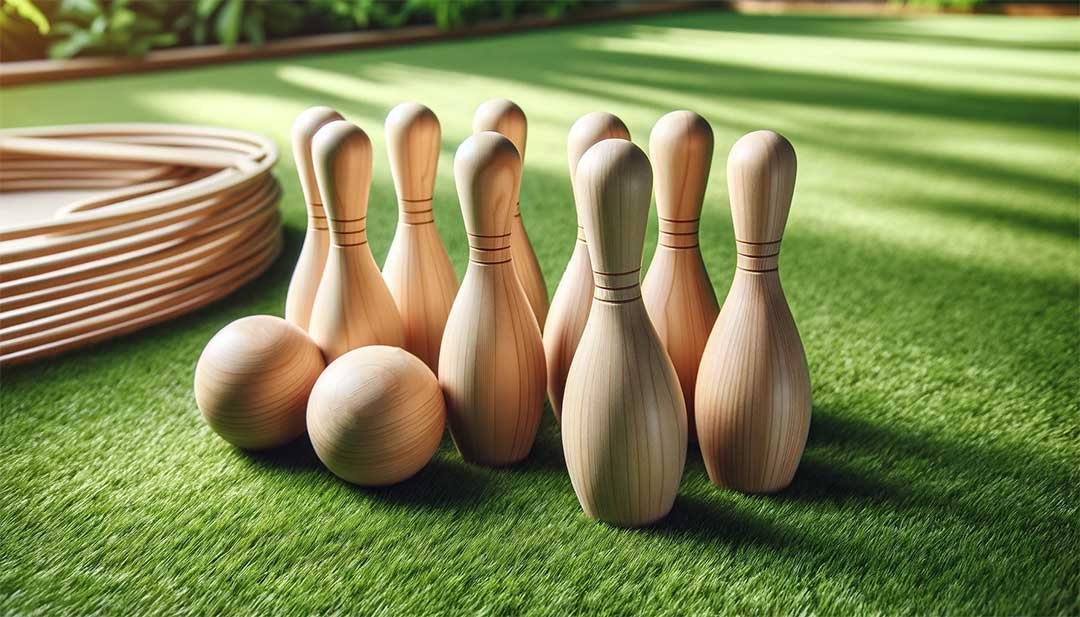
| Molkky | No | Pins need to fall and scatter. Indoors they hit furniture |
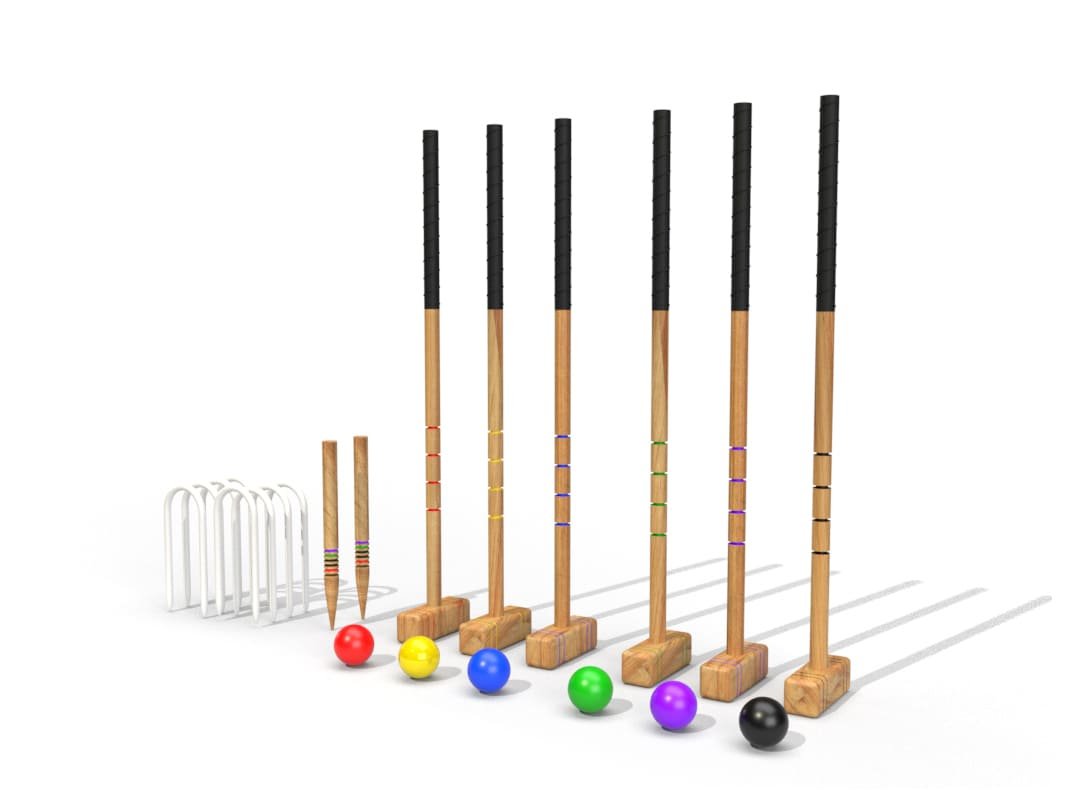
| Croquet | No | Mallets, a swing arc, and a hard ball |
The pattern is that games where the projectile is soft transfer, and games where the projectile is rigid wood do not. That is not a rule anyone wrote down; it is what happens when you try.
The Commercial Version of the Question
For a buyer, indoor and outdoor are two different product lines with two different customers, and mixing them up is expensive.
- Outdoor, retail: the season is April to July, the display needs floor space, and the buyer is a household. Weight matters because the customer carries it to a car.
- Outdoor, commercial: pubs, holiday parks, offices. The specification changes completely: the set is moved by staff, stored in a shed, and left out in the rain by people who do not own it. Weight, stackability and a replaceable-parts list matter more than finish.
- Indoor, retail: a table game, sold as a gift, with a shelf footprint. The buyer already knows the game.
- Indoor, commercial: offices and function rooms. Noise and floor protection are the specification, and neither is on the box.
The one thing that does not change between them is the small-parts rule. Anything that fits inside a cylinder 31.7 mm across and 57.1 mm deep is a hazard for children under three, and moving a game indoors puts those pieces on a carpet where a crawling child will find them.
What Wood Does in Each Setting
Outdoors, wood’s advantage is mass. A heavy piece stays where it is put in wind, and it does not blow across a lawn. Its disadvantage is water, and it is a real one: UV greys the surface, freeze-thaw cycles open glue lines, and end grain absorbs water faster than any finish can stop it. A wooden game left outside through a northern winter will not look the same in spring.
Indoors, wood’s advantage is that it does not need to survive anything. No UV, no rain, no freeze. A wooden set kept indoors and used regularly will outlast the same set kept outdoors by a wide margin, and that difference is entirely about storage rather than about build quality.
Which is the practical argument for the indoor line: it is the same product with a much longer service life, and customers notice.
Conclusion
Outdoor games are for groups, daylight and mess. Indoor games are for small numbers, any hour, and a floor you care about.
If you are choosing for a household, the answer is usually both, because the two cover different evenings. If you are choosing for a business, the answer depends on ceiling height, floor material and who is going to move the set, and those three questions are more useful than any list of benefits.
FAQs
1. Can garden games be used indoors?
Some. Games with a soft projectile transfer well. Games with rigid wooden pieces generally do not, because of noise and floor damage.
2. How much ceiling height does a tower game need?
About 1.5 times the built height. A 1.2 m tower needs 1.8 m of clearance.
3. Do wooden games survive being left outside?
Not through a winter. UV greys the surface and freeze-thaw opens glue lines. Store them under cover and they last for years.
4. What is the difference between retail and commercial buyers?
Commercial sets get moved by staff, stored in a shed and left in the rain by people who do not own them. Weight, stackability and replaceable parts matter more than finish.
5. Are there safety differences between indoor and outdoor use?
Yes, one. Small pieces on a carpet are more accessible to a crawling child than pieces on a lawn. The 31.7 mm cylinder test applies in both settings.
Sourcing Wooden Garden Games in Bulk?
Kangjie is the direct manufacturer behind these games — no trading company, no middleman margin. We supply Kubb, Croquet, Molkky, Ring Toss, Tumble Tower, Cornhole and more to importers, retailers and brand owners worldwide.
- Factory-direct pricing with transparent volume tiers (500 / 1,000 / 5,000 units)
- OEM & ODM: logo, packaging, size and finish built to your specification
- EN71 & ASTM F963 compliant; FSC-certified timber
- Bulk lead time 30–45 days, quotation within 24 hours