A large order is not a small order scaled up. At container volume, four decisions account for most of the cost and almost all of the delay: the freight mode, whether the load is shared or dedicated, the Incoterm, and whether the documentation was right the first time.
This page works through those four in order, then the parts that are easier to get wrong than they look — packaging, insurance and the forwarder relationship.
1. Choose the Freight Mode
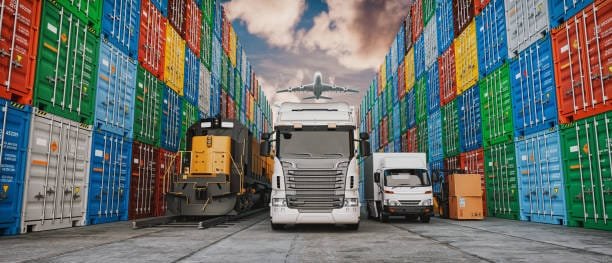
For wooden garden games the answer is almost always sea freight, because the product is bulky and the value per cubic metre is low. Air freight only makes sense when the goods are needed for a launch date that cannot move, or when the order is small enough that the volumetric weight is manageable.
- Sea freight — the default. Cheap per unit, slow, and subject to schedule changes and port congestion.
- Air freight — several times the cost per unit and worth it only when the delay costs more than the freight. A late container of garden games misses the season; a late container of samples does not.
- Rail — relevant on some Asia–Europe routes and worth asking about, though availability and transit time vary.
We will not quote you a rate per container. Freight rates move constantly with fuel, capacity and season, and any figure in an article is out of date before it is published. Ask your forwarder for a quote against your actual carton dimensions and volume.

2. Decide LCL or FCL
Less than Container Load means sharing a container with other shippers. Full Container Load means the container is yours.
- LCL is cheaper below roughly half a container, and it adds handling: your cartons are loaded, unloaded and consolidated more than once, which increases the risk of damage and the chance of a delay at a hub.
- FCL costs more in freight and less in damage risk. For anything with large flat components — cornhole boards, four-in-a-row frames — the reduced handling is usually worth the difference.
The break-even is not a fixed number of cartons. Ask your forwarder to price both against your actual volume, then compare landed cost rather than freight cost.
3. Fix the Incoterm
The Incoterm decides who pays for what and where risk transfers. Copying the term from a previous order without checking it is the most expensive mistake in the whole process.
- EXW — you collect from the factory and carry everything after that, including export clearance. Cheapest on paper and the one that most often goes wrong for a first-time importer.
- FOB — we deliver to the named port and load on board; risk passes to you once the goods are on the vessel. The usual term for container shipments and the one we quote by default.
- CIF — we pay freight and insurance to the destination port. Note that risk still passes at origin, so CIF is not “seller responsible until it arrives”.
- DAP — we deliver to a named address and you handle import clearance and duty.
- DDP — we handle everything including duty. Convenient, and usually the most expensive once the risk is priced in.
If a quotation does not name the Incoterm and the port, it is not comparable with anything.
4. Get the Documentation Right First Time
Missing or inconsistent paperwork is the most common cause of a held shipment, and every item on this list should be agreed before production starts:
- Commercial invoice, with the HS code and the Incoterm stated.
- Packing list, with carton dimensions, weights and counts.
- Bill of lading or sea waybill.
- Certificate of origin, if required by the destination or if a trade agreement reduces duty.
- Test reports and certificates — EN71, ASTM F963, FSC chain of custody — as the destination market requires.
- ISPM 15 marking on any solid wood packaging.
Note that ISPM 15 applies to the pallets and crates, not the product. A shipment arriving with unmarked solid wood packaging can be fumigated at the importer’s cost or refused.
5. Packaging for a Container, Not a Courier
A container is not a gentle environment. Cartons are stacked several high, the floor vibrates for weeks, and the box is dropped at least twice between the factory and your warehouse.
- Internal bracing for long pieces. A hardwood peg is a lever and it snaps at the grain when the carton lands on its end. Padding does not fix this; a block insert does.
- Double-wall corrugate for anything over about 5 kg or 60 cm.
- Moisture protection. A container can sweat. A liner bag or desiccant costs very little and prevents the mould that ruins an otherwise perfect shipment.
- Labelling. Clear handling marks and a carton count. This is not decoration; it is what stops a pallet being mis-routed.
6. Insure the Cargo, Not the Container
Carrier liability is limited by international convention and is far below the value of the goods. It is not insurance, and the limit applies per package rather than per shipment, which is why the figure is often startlingly small.
Cargo insurance is cheap relative to the value of a container and almost never bought until after the first loss. Under CIF we arrange minimum cover, which is usually enough to satisfy a contract and not enough to replace a loss. If the goods matter, buy your own cover from the point of loading.
7. Choose a Forwarder Who Asks Questions
A good forwarder asks for the carton dimensions, the weight, the HS code and the delivery address before quoting. One who quotes without those is estimating.
- Ask for the quote broken down: origin charges, ocean freight, destination charges, clearance.
- Ask what the transit time is door to door, not port to port.
- Ask which charges are fixed and which vary at destination. Destination charges are where quotes are usually lowest and invoices are highest.
- Ask for two references from shippers in a similar product category.
Why We Do Not Quote Freight Rates
Because they are not ours to quote accurately. Ocean rates are set by carriers and move with capacity, fuel and season; a figure quoted today can be wrong next month. What we can do is give you accurate carton dimensions, weights and volumes with every quotation, so your forwarder can price the shipment properly and you can compare quotes on the same basis.
Conclusion
At container volume, the cost is decided by volume rather than weight, the risk is decided by the Incoterm, and the date is decided by the documentation. Get those three right and the rest is routine.
Tell us the destination port and the volume and we will give you the packing data you need to get a real freight quote, along with the production dates the shipment has to fit.
FAQs
Should I use LCL or FCL for a first order?
LCL if the order is genuinely small and the product is robust. FCL once the volume approaches half a container, or when the product has large flat components that suffer from extra handling.
Do wooden games need fumigation?
The product does not. Solid wood packaging — pallets and crates — must be ISPM 15 treated and stamped. Plywood and processed board are exempt.
Which Incoterm is best for a first order?
FOB is the usual starting point: we handle export and loading, and you control freight and insurance from there. EXW looks cheaper and is harder to manage without a presence at origin.
How far in advance should I book freight?
Book space as soon as the production date is confirmed, and earlier in peak season. Vessel cut-offs are fixed and a missed cut-off means a two-week wait for the next sailing.
What is the most common cause of delay?
Documentation that does not match the goods, followed by production finishing later than planned. Both are avoidable with a checklist and a buffer between the production date and the vessel cut-off.
Sourcing Wooden Garden Games in Bulk?
Kangjie is the direct manufacturer behind these games — no trading company, no middleman margin. We supply Kubb, Croquet, Molkky, Ring Toss, Tumble Tower, Cornhole and more to importers, retailers and brand owners worldwide.
- Factory-direct pricing with transparent volume tiers (500 / 1,000 / 5,000 units)
- OEM & ODM: logo, packaging, size and finish built to your specification
- EN71 & ASTM F963 compliant; FSC-certified timber
- Bulk lead time 30–45 days, quotation within 24 hours