
Main Menu
The obvious thing to look at in a horseshoe set is the shoe, and the obvious question is what it is made of. A set lives outdoors, takes a beating every throw, and gets left in the rain, so the material decides whether it is a season’s toy or a set that stays in the family. Here is what actually matters when you compare the common materials.
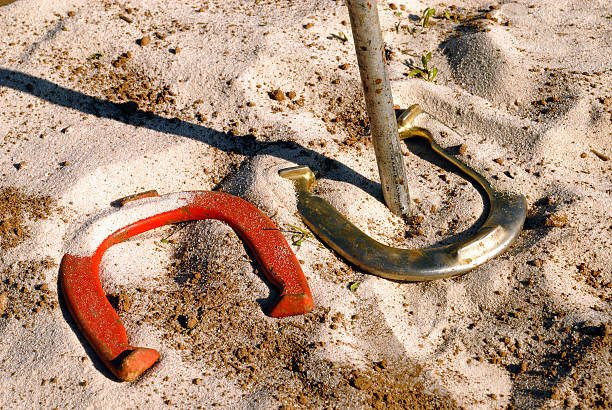
Horseshoe pitching is often traced to Roman soldiers who passed time throwing horseshoes at a stake, though the exact origin is disputed. It has since grown into a lawn game with a serious competitive scene and a simple appeal: minimal equipment, a short rule set, and a skill that takes a lifetime to master.
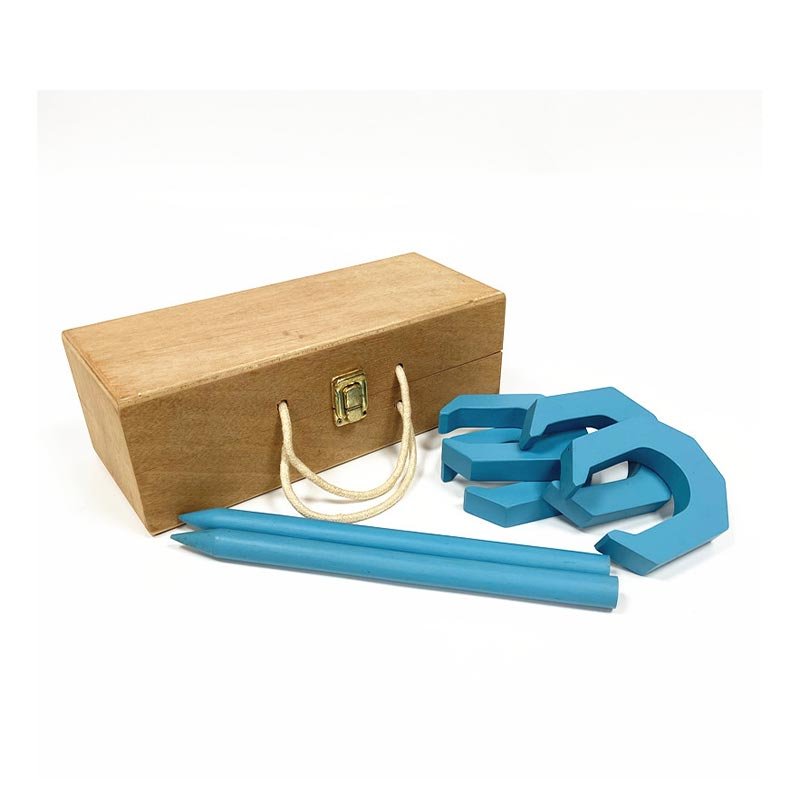
A set is two stakes and four horseshoes. The stakes are driven into the ground and players take turns tossing the shoes at them, scoring by closeness and ringers. The parts are simple, which is exactly why the material matters: there is nothing else to hide behind.
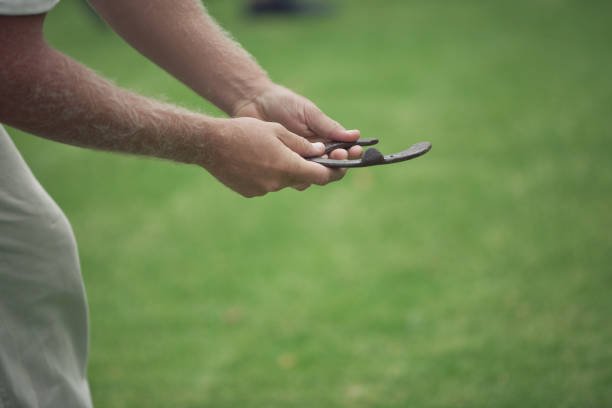
These sets live outside. Sun, rain, and in some places snow and salt are the working conditions, so the material has to survive weather as a baseline, not as a bonus.
Rust is the failure mode for any metal set. A material that resists corrosion, or that holds a protective coating, is the difference between a set that plays for years and one that flakes apart. Wear at the contact points matters too, because a shoe that deforms stops landing cleanly on the stake.
Weight is both a feel and a function. A heavier shoe flies straighter and lands with more authority, which is part of the game, but density also affects how the shoe holds up to repeated impact. Heavier is not automatically better; consistent is what matters.
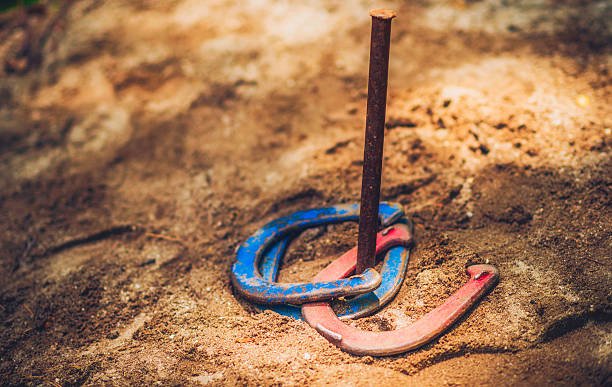
Carbon steel, an alloy of iron and carbon, is the standard material for a reason: it is strong, affordable, and throws the way the game is meant to feel.
Stainless steel adds chromium, which forms a passive layer that resists rust and keeps the surface bright.
Bronze and brass are copper alloys, long used in marine settings for their corrosion resistance, and they bring a warmer, more decorative look to the game.
Material choice is the start, not the whole story. Store the set indoors or under cover when it is not in use, check it for rust and wear between seasons, and keep a protective coating on any uncoated steel. A little routine turns a good material into a long-lasting set.
The right material comes down to how the set will be used and what you want it to feel like. Carbon steel is the value choice, stainless steel the low-maintenance choice, and bronze the premium, decorative one. All three last if they are looked after. For buyers specifying sets in volume, lock down two things: the coating on any carbon steel, and consistent weight across every shoe in the set. Those two decide whether the product holds up and plays the same for every customer.
Yes, coatings can provide additional protection against rust and corrosion, especially for carbon steel horseshoes.
It's good practice to inspect them after every season or after intense periods of play.
Typically, yes. Many manufacturers offer individual replacements for worn-out or damaged components.
There are plastic and rubber variants, but for an authentic game experience, metal is preferred.
Colors can be due to coatings or the natural hue of the material. They also help differentiate players' horseshoes during a game.
Whether it is a casual backyard toss or a competitive match, the right material keeps the game going season after season. Choose it once, look after it, and it stays in play.
Get a free copy of our catalog
Trust our wooden game experts to deliver premium quality and unbeatable value, on-time and on-budget.
kangjiegardengame.com
Typically replies within minutes
How Can We Assist You Today?
WhatsApp Us
🟢 Online | Privacy policy
WhatsApp us
Get notified about new products
Custom garden games available—our expert design team brings innovative ideas to life.