
Main Menu
Limbo is usually filed under party games, and it teaches something more specific than that: how to bend at the hips while keeping the spine long, on one leg, under control. That is a genuine physical skill and most adults have lost it.
The interesting part is that the popular version of the game teaches the wrong technique. The arched-back limbo posture that everyone imitates is the unsafe one, and it is the reason adults who try it at a party pull something.
Here is what the game actually develops, how to do it without hurting yourself, and the two things it does not teach that most descriptions claim it does.
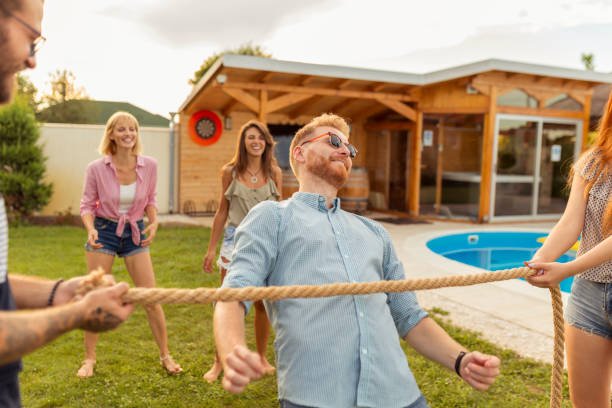
Passing under a low bar requires four things at once, and that is why it is harder than it looks.
A child does all four without thinking, because children are still mobile in the hips and have not spent a decade in a chair. That is the real reason children are better at limbo, and it has nothing to do with height.
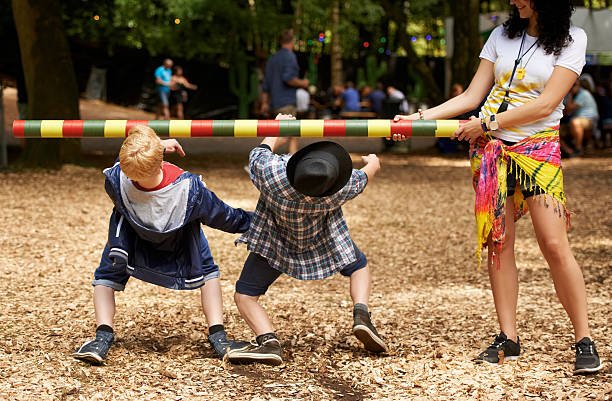
The classic limbo posture — feet together, back arched hard, head thrown back — is what people copy and it is the version that injures people.
The trained version is different in every detail.
| Detail | The version people copy | The version that works |
|---|---|---|
| Feet | Together | Wide, at least shoulder width |
| Knees | Straight | Bent, and turning outward |
| Back | Arched hard, head back | Long and flat, chin tucked |
| Descent | Drops straight down | Hinges forward at the hips first, then sinks |
| Weight | On both feet, heels down | On one foot, the other extended forward |
| Head | Thrown back to clear the bar | Neutral, and the bar passes over the chest |
The wide stance with turned-out knees is the whole trick. It creates room for the hips to sink between the legs instead of forcing the lower back to arch past its range. Every trained limbo dancer does it, and almost nobody copying the game at a party does.
Two injuries, and both come from the arched-back version.
Neither is serious in a garden, and both end the game for that player.

Three things, and it is worth being specific rather than saying “life skills”.
The child has to know where their body is while it is in a position they do not normally adopt. That is a real sensorimotor skill and it transfers to gymnastics, dance and any sport with an unusual body position.
Limbo is not one motion. It is hinge, sink, transfer, rise, in that order. Children who get the order wrong fall over; children who get it right succeed. Learning that a movement has an order is the beginning of motor planning.
The bar is the score. There is no judgement and no arguing. A child who clears a lower bar has objectively done something harder, and that is a rare and clean feedback loop.
Those three are the ones most articles claim. The three above them are the ones that hold.
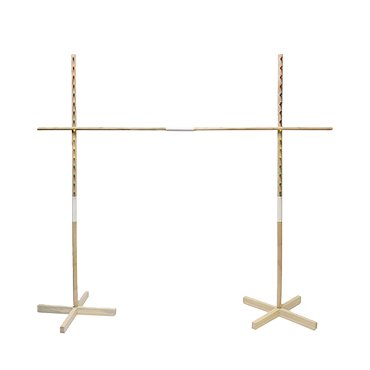
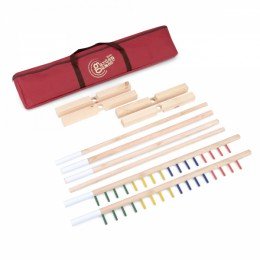
The equipment is a bar and two supports, and the supports are the part that matters.
From about four, with an adult setting the height. Below that the hip hinge is not yet reliable and children tend to go under head-first, which is the one position that risks the neck.
Limbo teaches a hip hinge, lumbar extension, single-leg balance and ankle mobility, all at once, with a visible score. That is a better physical education than most party games offer.
The catch is that the popular technique is the wrong one. Wide stance, bent knees, long flat back, chin tucked. Teach that and the game is both safer and considerably easier, which is usually the same thing.
About four, with an adult setting the height. Below that the hip hinge is not reliable and children tend to go under head-first, which is the one position that puts load on the neck.
Yes, on a carpet with the bar resting loose on two supports. The risk indoors is the fall backward onto a hard floor, so a rug is not optional.
With the right technique, yes. The arched-back posture that everyone copies is what causes lumbar strain and backward falls. Wide stance, bent knees, flat back, chin tucked.
A bar and two supports. The important detail is that the bar should rest loose rather than be fixed, so a mistimed pass knocks it off instead of stopping the child.
They can practise alone, and it is a decent drill. The game needs at least two so there is a queue and a comparison.
Note: we make wooden garden games, not limbo bars. If you are looking for a game that develops balance and coordination in wood, croquet and Molkky both ask for a controlled movement with a visible result.
Get a free copy of our catalog
Trust our wooden game experts to deliver premium quality and unbeatable value, on-time and on-budget.
kangjiegardengame.com
Typically replies within minutes
How Can We Assist You Today?
WhatsApp Us
🟢 Online | Privacy policy
WhatsApp us
Get notified about new products
Custom garden games available—our expert design team brings innovative ideas to life.