
Main Menu
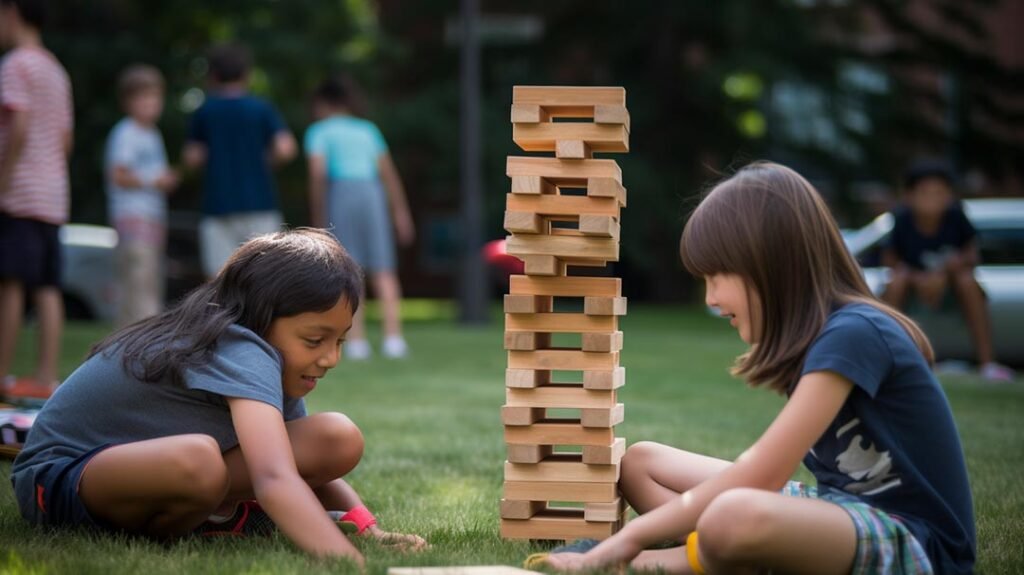
A picnic and a set of wooden garden games have one thing in common: both are ruined by the same three conditions. Uneven ground, wind, and the weight of everything you have to carry to the spot.
Most picnic game guides ignore all three. They rank games by how much fun they are, which is not a specification you can buy against. This one ranks them by what the ground has to be, what the wind does to them, and what they weigh in the bag, because those are the things that decide whether the game gets played after the sandwiches are gone.
There is a fourth condition nobody mentions until it happens: what happens to the wood when it comes home damp and sits in a car boot for two days.
A picnic has a natural length. About ninety minutes of eating and talking, and then the group either disperses or looks for something to do. Games fill that gap, and they fill it better than a speaker does.
What decides whether a game gets played is not how good it is. It is how fast it can be explained and how easily people can join and leave.
| Game | Explaining it | One round | Players | People can drop in |
|---|---|---|---|---|
| Cornhole | 30 seconds | 3 to 5 min | 2 or 4 | Yes, in pairs |
| Tumble tower | 10 seconds | 2 to 10 min | Any | Yes, turn order is obvious |
| Kubb | 3 minutes | 15 to 25 min | 2 to 12 | Yes, but a round is long |
| Molkky | 1 minute | 15 to 25 min | 2 to 6 | Hard, scores are cumulative |
| Croquet | 4 minutes | 30 min or more | 2 to 6 | No |
| Giant dice | 20 seconds | 1 min | Any | Yes |
| Dominoes | 20 seconds | 5 min | 2 to 4 | Yes, but wind is a problem |
The pattern is clear enough. Anything with a cumulative score keeps people locked in. Anything with a round that resets lets people wander off to the food and come back.
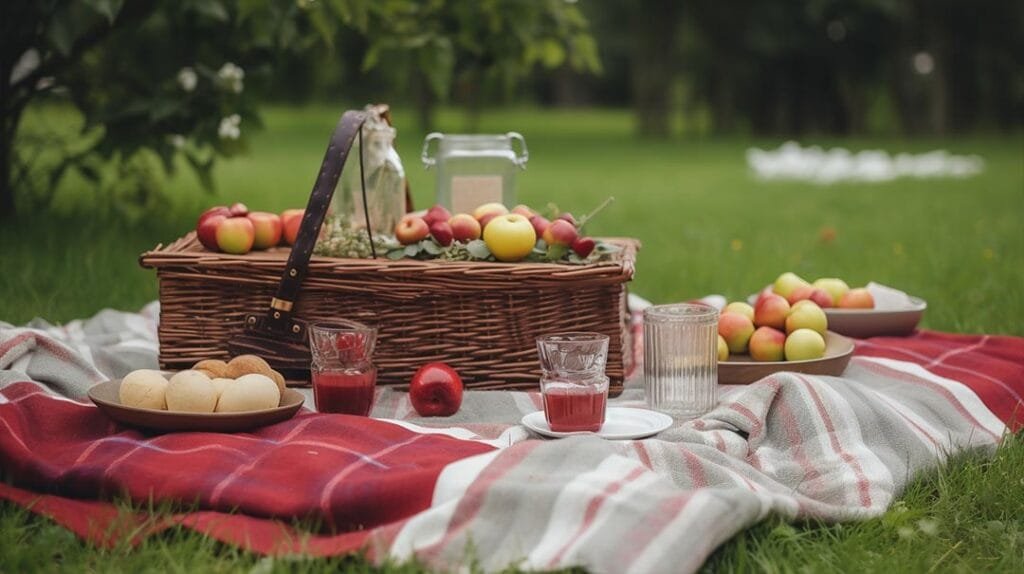
The single most common picnic game failure is a tower built on grass. Grass is neither flat nor firm, and a fifty-four block tower needs both. This is not a small inconvenience; it means the game cannot be played at all.
| Game | Ground it needs | Footprint | Wind | Packed weight |
|---|---|---|---|---|
| Tumble tower | Flat and firm: a board or a table | 1 x 1 m | Good, blocks are 200 to 400 g | 9 to 11 kg |
| Cornhole | Level; the board carries its own pitch | 2 boards, 8 m apart | Good, bags are 450 to 500 g | 9 to 12 kg |
| Kubb | Short grass, any flat surface | 5 x 8 m | Fair, pieces are 60 to 300 g | 3 to 4 kg |
| Molkky | Short grass, sand or firm ground | 4 x 5 m | Fair | 2.5 to 3 kg |
| Croquet | Mown grass under about 25 mm | 20 x 25 m | Good, mallets are heavy | 7 to 9 kg |
| Giant dice | Any flat surface | 2 x 2 m | Poor, they are light | 1 to 2 kg |
| Dominoes | A table, not a blanket | 0.5 m | Very poor, a piece is 8 g | 0.5 to 1 kg |
Anything under about fifty grams per piece is a problem above roughly fifteen kilometres an hour, which is a normal afternoon. A giant tower block stays put because it weighs three hundred grams. A standard domino does not, and neither does a playing card.
If the forecast is breezy, the shortlist is cornhole, tumble tower and croquet. Everything else becomes a table game or stays in the bag.
Public parks are usually mown long, not short. Croquet on grass over twenty-five millimetres stops dead and the game turns into a series of short frustrated taps. If the plan is croquet, the plan needs a mown lawn, which usually means a garden rather than a park.
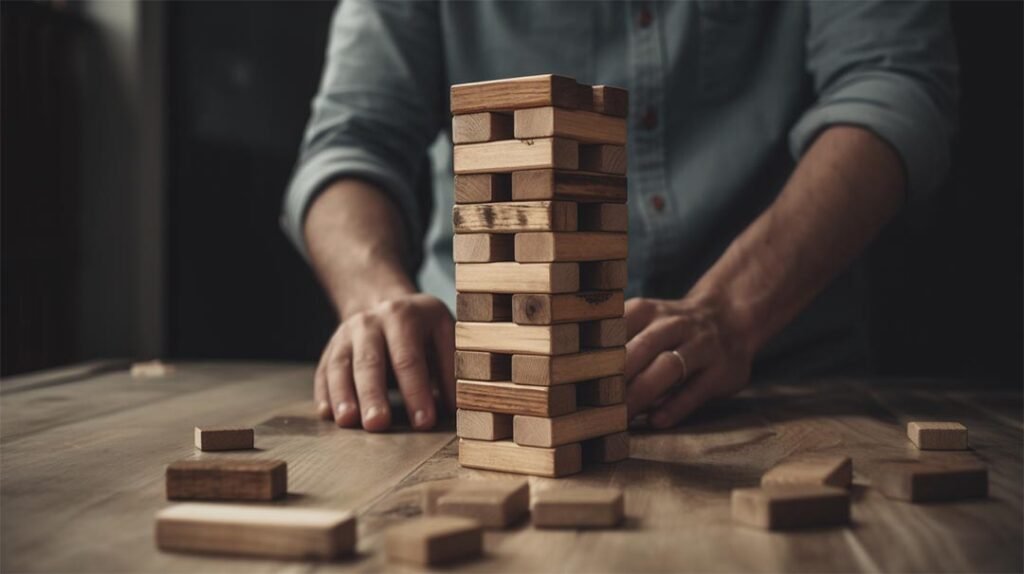
The injuries in this category almost never come from the game. They come from the swing. A croquet mallet or a cricket bat needs a clear radius, and in a park that radius contains strangers.
The one that catches people out is not a safety issue until it is. A wooden mallet left on wet grass overnight swells at the head, the shaft loosens, and the next hard swing sends the head further than the ball.
Wood fails at the end grain first. That is true of a croquet mallet head, a bat toe, a cornhole board edge and a tower block, and it is the reason the care instructions matter more than the finish.
One game that suits the ground, one that suits the group size, and nothing that weighs more than you want to carry back. A tower and a cornhole set covers a picnic of four to twelve people in almost any condition, and between them they weigh about twenty kilos, which is the real constraint.
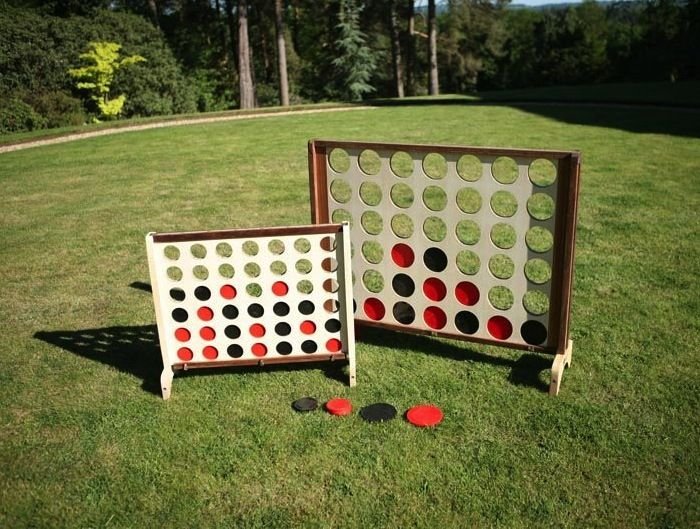
Wooden garden games work at a picnic for a reason that has nothing to do with aesthetics. They have enough mass to stay where they are put, they survive being dropped on a path, and they do not need batteries or a flat surface to be assembled on.
The trade is weight and care. A set that weighs ten kilos is a set somebody has to carry, and a set that is left out overnight is a set that will not last three summers.
Pick by ground and wind first. The game you actually play is the one that works where you are standing.
1. What is the best game for a picnic on grass?
Cornhole or Kubb. Both work on ordinary grass. A tumble tower does not, because the base needs to be flat and firm.
2. How much weight is reasonable to carry?
Under ten kilos for a family picnic. A giant tower alone is nine to eleven kilos, which is why most people leave it in the garden.
3. Will wooden games warp in a hot car?
They can, if they go in damp. Dry them first and the heat is not a problem on its own.
4. Are these games safe for young children?
Depends on the pieces. Anything small enough to pass through a 31.7 mm cylinder is not for under-threes. Croquet and cricket need a swing zone that children stay out of.
5. Do we need to treat the wood?
Oil the end grain twice a year. Do not varnish. If a set is stored indoors and only used in dry weather, even that is optional.
Get a free copy of our catalog
Trust our wooden game experts to deliver premium quality and unbeatable value, on-time and on-budget.
kangjiegardengame.com
Typically replies within minutes
How Can We Assist You Today?
WhatsApp Us
🟢 Online | Privacy policy
WhatsApp us
Get notified about new products
Custom garden games available—our expert design team brings innovative ideas to life.