
Main Menu
Short answer: no. There is no evidence that hook-and-ring boards are taking over American gardens, and anyone who tells you otherwise is describing their own sales rather than a market.
What is true is more modest and more useful. It is a low-price, high-margin, self-explaining product that photographs well, which makes it a good impulse item for a patio or bar-games range. That is a stocking argument, not a trend story.
There is also a naming problem that anyone selling this in the US should know about before they write a product listing.
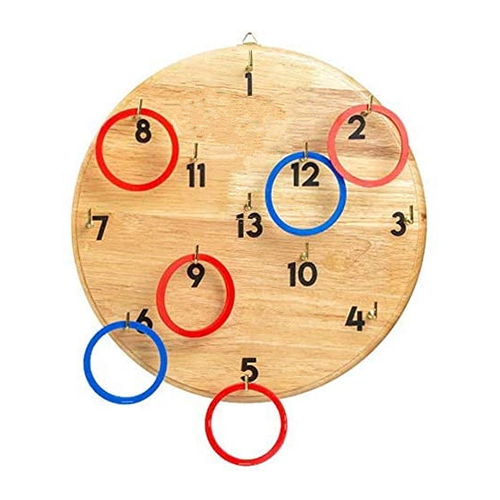
In American and Australian English, “playing hookey” means skipping school. The word is already taken, and it is taken by a meaning with a much larger search volume than any garden game.
So a listing titled “Hookey game” competes with truancy. That is not a small SEO inconvenience; it is the reason the product is usually sold under a different name.
The names that actually describe it, and that people search for:
This is the same product as the hook and ring game, and we describe it as such elsewhere. There is no second game hiding behind the name.
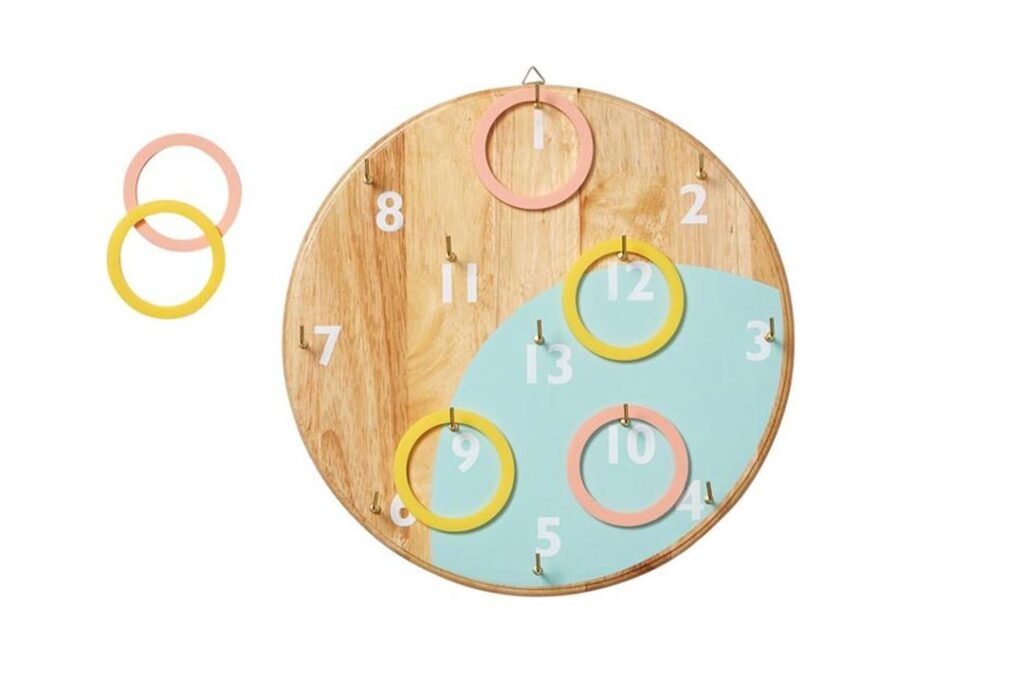
A board with a hook or a set of hooks, mounted vertically. A ring on a string, anchored to the top of the board. The player swings the ring outward and tries to catch it on a hook as it comes back.
Two forms exist and they are different products.
| Form | Hooks | Scoring | Best for |
|---|---|---|---|
| Single hook | 1 | One point per catch, first to 21 | Bar and patio. Cheapest, and the hardest |
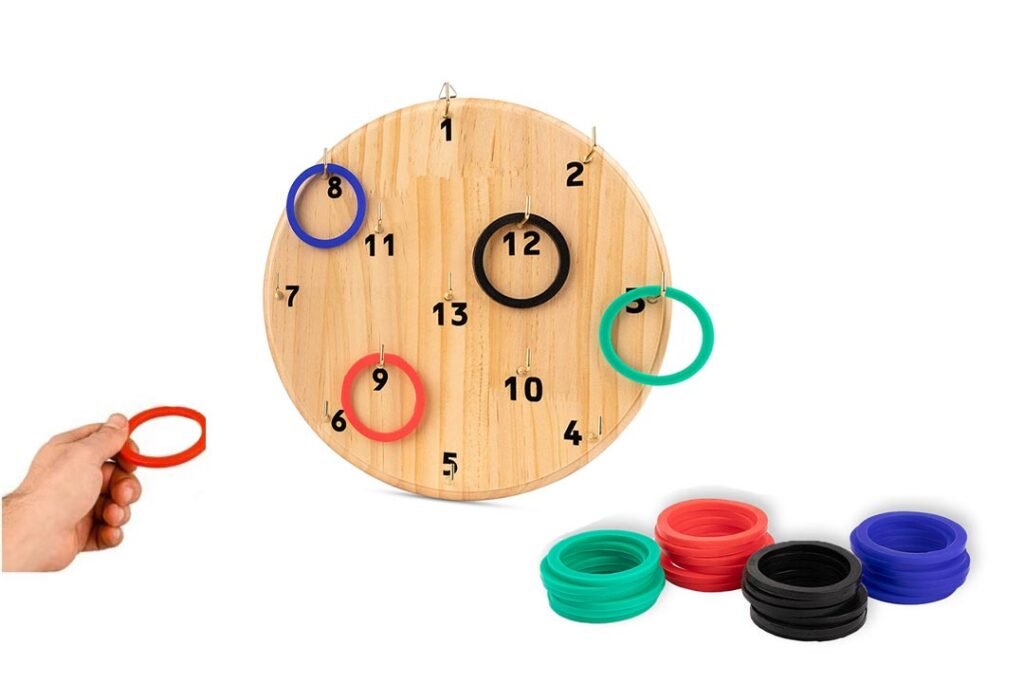
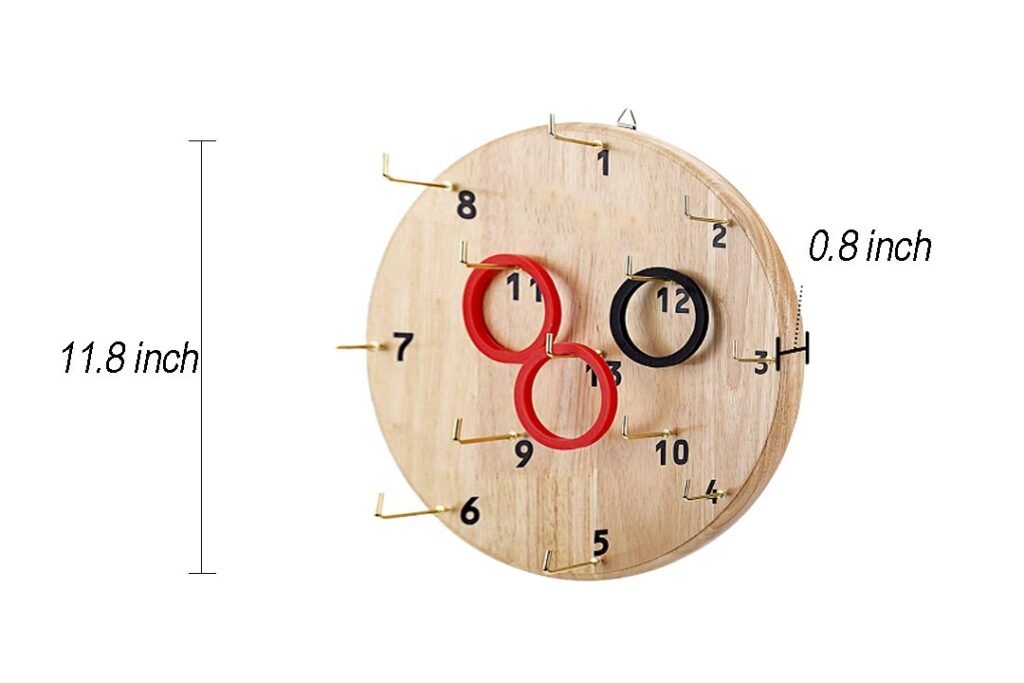
| Multi hook | 5 to 13, in a diamond or rows | Each hook has a value, usually 1 to 5 | Retail. More forgiving and more visual |
| Two board | 1 per board | Simultaneous play, no waiting | Events and rental |
The single-hook version is the one that gets played at a bar, because it is genuinely hard and the difficulty is the appeal. The multi-hook version sells better in retail, because a player who catches nothing on a single hook stops playing.
There is no published participation data for this game. It is not tracked by any sports body, it has no national championship, and no trade association counts it. Any figure you see quoted is either a proxy or an invention.
What can be observed, and what a buyer can act on:
That profile — low price, small footprint, high visual appeal — describes a steady niche item. It does not describe a trend, and describing it as one is how a retailer ends up over-ordering.
The origin claims are also worth treating carefully. “Traced back to ancient times” is the kind of sentence that appears in every listing and cannot be sourced. The honest version is that it is a twentieth-century pub game with several regional variants and no documented inventor.
The single-hook version is simple: one point per catch, first to 21, and the streak rule is what makes it a game rather than a coin toss.
The streak rule is not decoration. Without it, the game has no pressure and no endgame, because every throw is worth the same and nothing is at stake until the last point.
The multi-hook version uses hook values: the outer hooks are worth 1, the middle ones 3, the centre 5. A common variant is “call your hook”, where a player names the hook before the swing and scores double if it lands there. That variant is worth printing on the rules card, because it turns a target game into a game with a decision in it.
The ring and string are consumables. A set that ships with a spare string costs almost nothing and removes the most common complaint in the category.
The board itself is safe. The thing to watch is the swing: a brass ring on a 500 mm string travels fast at the bottom of its arc, and it comes back toward the player. Mount the board so the hook is at adult chest height and children play from a step back.
Because "playing hookey" means skipping school, and that meaning has far more search volume than the game. "Hook and ring toss" or "ring on a string" describe the product and rank for what people actually search.
Bolted to a post, a wall or a tree, with the hook at 1,500 to 1,700 mm. A second mounting point at about 1,100 mm makes it playable by a seven-year-old and costs one bolt hole.
Yes. It needs a wall and about a metre of clear space, which is less than darts. The ring will mark the wall behind the board, so a backboard or a mounting plate is worth specifying.
No. There is no governing body. The conventions are one point per catch to 21, or hook values on a multi-hook board. Print whichever you use on the rules card, because two players who learned different versions will argue.
If you are adding a hook and ring board to a patio or bar-games range, send us the hook count, the mounting method and the ring diameter you want. We will come back with the board dimensions, the species options and the carton size.
Get a free copy of our catalog
Trust our wooden game experts to deliver premium quality and unbeatable value, on-time and on-budget.
kangjiegardengame.com
Typically replies within minutes
How Can We Assist You Today?
WhatsApp Us
🟢 Online | Privacy policy
WhatsApp us
Get notified about new products
Custom garden games available—our expert design team brings innovative ideas to life.