
Main Menu
Picture this. It’s a perfect Saturday afternoon. The grill is smoking, the drinks are cold, and your friends are over. But something’s missing. The usual small talk is starting to drag. You need an activity. Something that sparks friendly rivalry, gets everyone laughing, and doesn’t require the athleticism of a professional. Sound familiar? I’ve been there. That’s exactly why I fell in love with Ladder Golf.
Ladder Golf, also known as Ladder Toss, is a deceptively simple lawn game where players toss bolas (two golf balls connected by a string) at a ladder-like target. The goal is to wrap your bolas around the rungs to score points, with the first player or team to reach exactly 21 points winning the game. It’s a blend of skill, strategy, and just a little bit of luck.
It’s the kind of game that looks easy until you’re down 15 points and your competitive spirit kicks in. But beyond being a blast to play, for someone in your shoes, it’s a potential goldmine. Let’s break down everything you need to know.

Imagine if horseshoes and cornhole had a baby, and that baby decided it wanted to be way more interesting. That’s Ladder Golf in a nutshell. It’s a portable, addictive yard game that has taken backyards, tailgates, and breweries by storm.
You don’t need a trailer full of equipment. The beauty is in the simplicity:
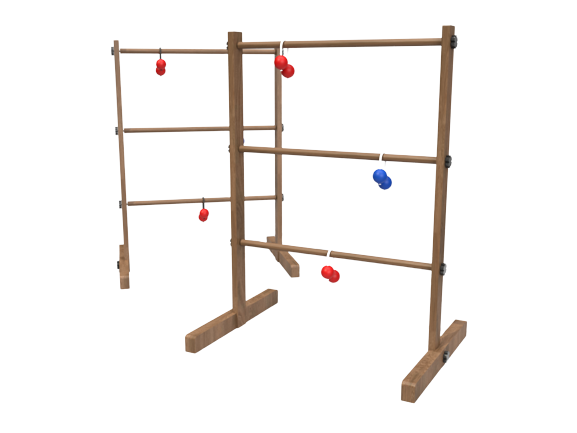
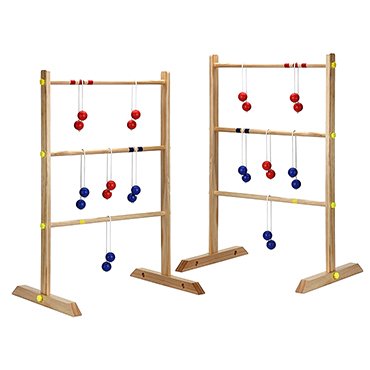
The Ladders: Two stable, free-standing ladders, each with three rungs.
The Bolas: Typically, three sets per player. A bola is just two golf balls connected by a sturdy nylon rope. The satisfying thwack of a perfect wrap is a sound you’ll come to love.
That’s it! No batteries, no complicated parts. Just pure, unadulterated fun.
Alright, let’s get down to business. You can’t have a game without rules, and in Ladder Golf, they’re what keep things interesting.
Place your two ladders on a flat surface, facing each other. Now, here’s the first strategic decision. According to many tournament guidelines, the official distance between the ladders is 15 feet. That’s the standard for a real challenge. But hey, if you’re playing with kids or just starting out, feel free to move them closer. The goal is to have fun, not frustrate your guests into quitting!
Decide who goes first (a simple coin toss usually does the trick). Players stand next to one ladder and toss all three of their bolas at the opposite ladder. You must throw underhand. No overhand fastballs allowed! The idea is to get your bola to cleanly wrap around one of the rungs. After one player tosses all three, the other player does the same from the same side. Then, you both walk to the other ladder, score that round, and toss back.
Scoring is where the mind games begin. After all bolas have been thrown in a round, you tally up the points:
Top Rung: 3 Points. The high-risk, high-reward shot.
Middle Rung: 2 Points. The bread and butter for consistent players.
Bottom Rung: 1 Point. Better than nothing!
A bola that leans on a rung without wrapping? Sorry, that’s a big, fat zero. It has to be wrapped to count.
The Golden Rule: The 3-Point Bolas Cancellation
This is the rule that changes everything. In each round, if both you and your opponent get a bola on the same rung, they cancel each other out. No points are awarded for either. This means you can use your throws defensively. See your opponent has a perfect 3-point shot hanging? You can try to knock it off or, even better, wrap your own bola on the same rung to cancel it. It’s a beautiful, strategic twist. v
Anyone can toss a bola. Winning takes a little finesse.
Don’t use your whole arm like you’re throwing a softball. The best throw is a gentle, underhand pendulum motion from the elbow or wrist. You’re aiming for a soft arc that allows the bola to unfold and wrap cleanly around the rung. Think of it like a gentle frisbee toss, not a pitch.
Remember the cancellation rule? When you’re in the lead, sometimes the best offense is a good defense. Instead of always aiming for the high-value 3-point rung, use your throws to cancel out your opponent’s scoring bolas. It’s a surefire way to protect your lead and get inside their head.
Okay, Andy, let’s switch gears for a second. You’re not just a player; you’re a buyer. You’re looking at this game and thinking, “Is this a headache or a moneymaker?” From my perspective, it’s solidly the latter.
Think about the games that sell. They’re easy to learn, hard to master, and infinitely replayable. Ladder Golf checks all those boxes. It has a tiny footprint in a warehouse, is durable (if made with quality materials, of course), and has universal appeal. You’re not selling a fad; you’re selling a backyard staple.
This is where the real magic happens. You can buy generic games from a hundred different suppliers. But what if you could offer your clients something unique? Imagine selling Ladder Golf sets branded with a company’s logo, or in custom color schemes for a university or a big corporate event. This isn’t just a product; it’s a premium, personalized experience. And let’s be honest, that’s where the margins get really attractive.
I get it. Sourcing a product like this can be a nightmare. You worry about quality control, delayed shipments, and whether your supplier actually understands your need for customization and speed. What if you had a partner who eliminated those headaches?
At Kangjie, this is all we do. We build fully customized wooden garden games, like premium Ladder Golf sets, designed to your exact specifications. We offer competitive pricing without the quality taking a hit, and we can turn around samples faster than you can say “21 points.” We protect your designs with confidentiality and act as your direct factory source. That means you get a better product, a better price, and a supplier that actually responds when you need them.
Ladder Golf is more than a game; it’s an experience. It’s the centerpiece of a great gathering and a fantastic addition to any retail lineup. Now that you know how to play—and win—all that’s left is to get a set in your hands and, more importantly, on your shelves.
1. What happens if I go over 21 points?
Ah, the classic blunder! If you score points that push your total over 21, the points from that entire round are wiped out. Your score reverts to what it was at the start of the round. It forces you to be precise with your final throws!
2. Can you play Ladder Golf on any surface?
Grass or sand is ideal because the bolas don’t bounce as much. You can play on concrete or asphalt, but be prepared for your bolas to bounce and roll all over the place, which can slow the game down.
3. How long does a typical game last?
A game to 21 points is pretty quick, usually between 10 to 20 minutes. This “quick hit” nature is part of what makes it so addictive—you always have time for “one more game.”
4. What’s the best way to untangle bolas?
Patience, young grasshopper! Don’t just pull. Find the main knot and work it loose gently. High-quality bolas with better rope are less prone to tangling, which is a small but crucial detail for customer satisfaction.
5. Is there an official governing body for Ladder Golf rules?
While there’s no single “world governing body,” the Ladder Golf FAQ from the Ladder Golf brand itself and the World Ladder Golf Association provide standardized tournament rules that most players follow.
Custom Message:
This article was crafted with your customer, Andy, in mind by the team at Kangjie. We don’t just make wooden garden games; we build reliable, profitable partnerships. Let’s get your next best-selling game into production. Visit us at www.kangjiegardengame.com to start the conversation.
Get a free copy of our catalog
Trust our dominoes game experts to deliver premium quality and unbeatable value, on-time and on-budget.
kangjiegardengame.com
Typically replies within minutes
How Can We Assist You Today?
WhatsApp Us
🟢 Online | Privacy policy
WhatsApp us
Custom garden games available—our expert design team brings innovative ideas to life.
Get notified about new products