
Main Menu
A commercial shuffleboard table is a real purchase. Venues buy them to last years of daily play, and the cost of a table that warps or chips in its first season is not the table, it is the empty space where it used to be. Keeping that surface flat and fast is not difficult, but it is a discipline, and this is the routine that protects the investment.
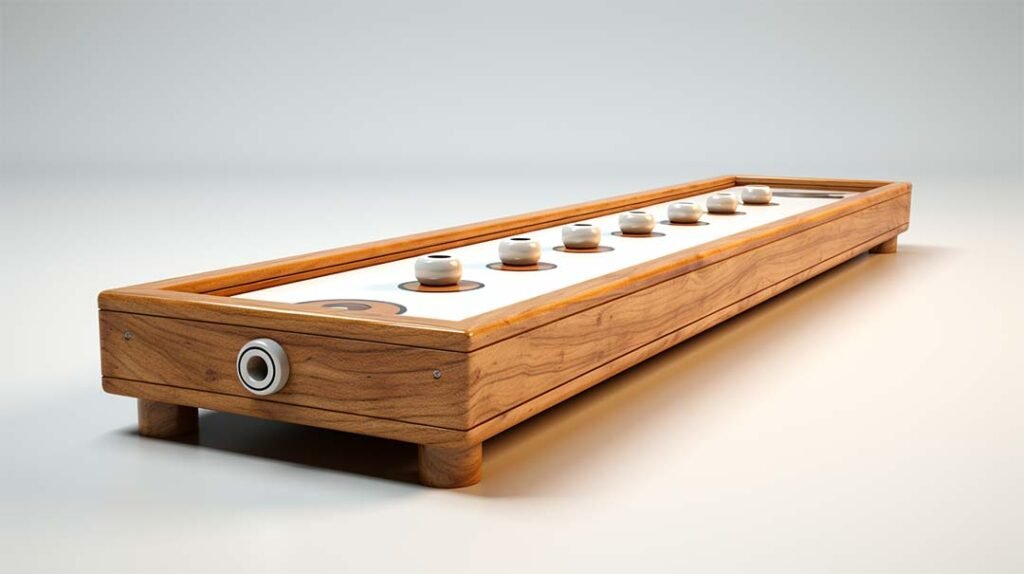
The playing surface is the part that decides the game. On a commercial table it is usually a hardwood build, often with a polymer or epoxy cap, and its job is to stay flat and smooth. Small dips or a rough patch change where a puck stops, and players notice within a few throws.
The gutters are the channels along the sides that catch pucks thrown too hard. They are not central to play, but they are part of the table’s structure, and a gutter that has come loose rattles and eventually pulls the rail with it.
The surface sits on a frame, and the frame sits on legs. If either wobbles, every throw is a gamble, because a table that moves under a player’s weight plays differently from one end to the other. Check that the legs are locked, the frame is square, and the table does not rock when you push on a corner. Most complaints about a warped surface turn out to be a frame that was never level.
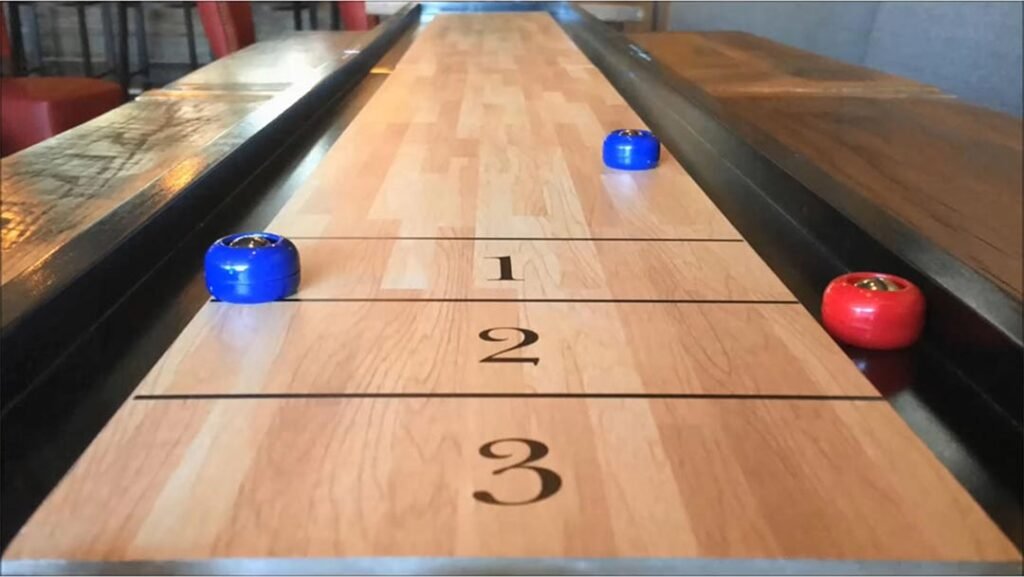
Wood moves with moisture. In a humid room the surface can swell; in a dry one it can shrink, and either way the flatness goes. This is the slow failure mode for shuffleboard tables, and it is worth managing before it shows.
A flat surface needs checking, not trusting. Run a hand across it and look for any dip, bump, or soft spot before it becomes a complaint. Catching wear early is the difference between a quick fix and a full strip.
Depending on use, a commercial table benefits from resurfacing every few years. It is routine maintenance, closer to a service than a repair, and it restores the speed and consistency players expect.
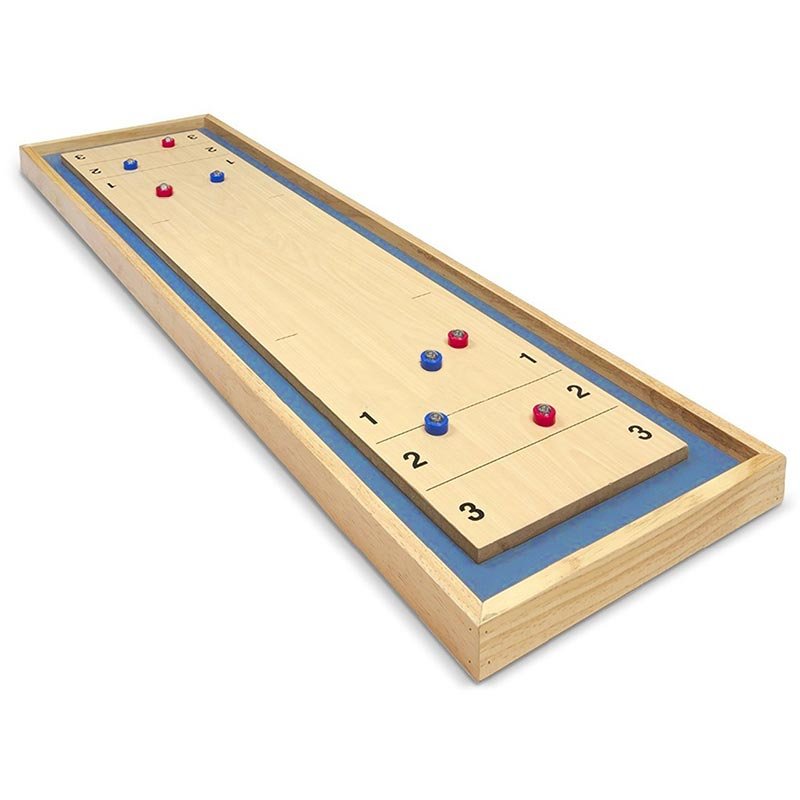
A daily wipe is not always enough. Sticky spots and a surface that feels rough under the hand are the signs to go further.
If the puck drags, or if you can feel residue under your palm, it is time. Do not wait for the surface to look bad; by then the wax has already bonded to the dirt.

A commercial shuffleboard table is a piece of equipment that earns its place only if it stays playable. The work is not glamorous: control the humidity, check the surface, clean it on schedule, and resurface before it complains. Consistency is the whole job. For venues specifying tables in volume, the things that matter are a level frame, a sealed surface, and a supplier who stocks the spare parts, because the table that stays in service is the one that pays for itself.
For a table in regular use, every few weeks keeps the surface fast. A venue table in daily play may need it more often.
Use a cleaner made for shuffleboard. Household cleaners can strip the finish or leave a film that changes how the puck runs.
It helps. The spray cleans and preps the surface so the new wax bonds evenly, which is what gives a consistent slide.
Look for unevenness, bumps, or dips you can feel or see. If the puck no longer behaves the same across the width of the table, it is time.
It can. Wood responds to moisture, and a table left in a damp room will move. Steady humidity is the cheapest insurance you have.
A shuffleboard table looked after properly stays in service for years. The routine is simple; the payoff is a surface that plays the same in its tenth year as in its first.
Get a free copy of our catalog
Trust our wooden game experts to deliver premium quality and unbeatable value, on-time and on-budget.
kangjiegardengame.com
Typically replies within minutes
How Can We Assist You Today?
WhatsApp Us
🟢 Online | Privacy policy
WhatsApp us
Get notified about new products
Custom garden games available—our expert design team brings innovative ideas to life.