
Main Menu
Wood type affects durability, but not in the way most buying guides suggest. It is not a ranking from good to bad. It is a set of separate properties, and which one matters depends on how the piece fails.
A dense wood resists impact. A wood with natural extractives resists rot. Neither property predicts whether the piece survives three seasons outdoors, because what usually fails first is a joint, an end grain face, or a fastener.
Here is what each property actually does, and where the ordering changes.
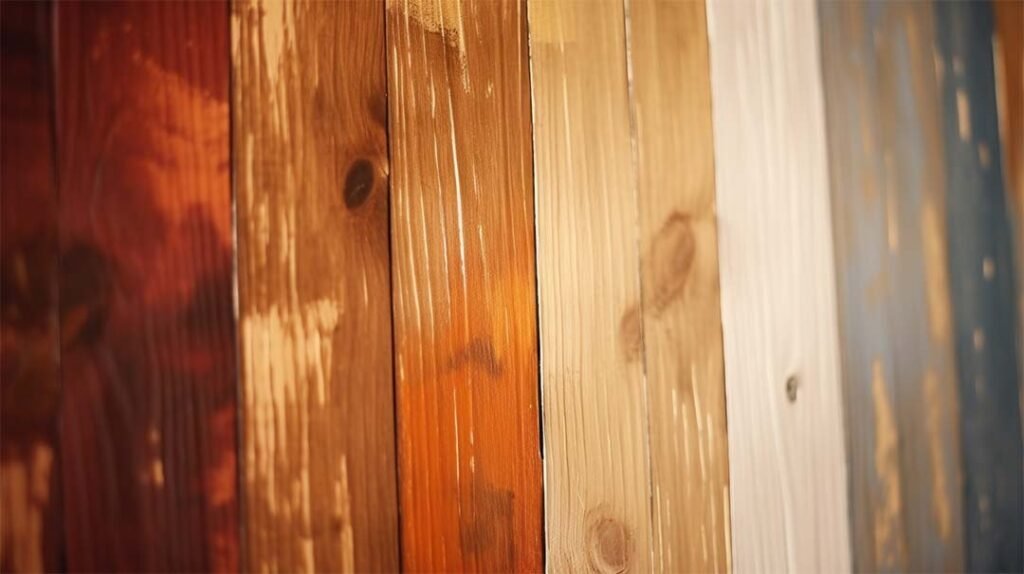
Hardwood comes from a broad-leaved tree that loses its leaves. Softwood comes from a conifer. That is the whole distinction, and it is botanical rather than mechanical.
Two counter-examples settle it:
So “use a hardwood for outdoor games” is advice that is neither true nor useful. What matters is density, extractives, grain, and detailing.
Durability is not one property because failure is not one event. Six mechanisms, and different species resist different ones.
| Mechanism | What happens | What resists it |
|---|---|---|
| Fungal decay | Rot, starting wherever moisture stays above about 20 percent | Natural extractives in the heartwood. Durability class 1 to 2 |
| Water uptake at end grain | End grain absorbs 10 to 20 times faster than the face, then swells | Sealing the end grain. Species choice barely matters |
| UV degradation | Lignin breaks down at the surface and the wood greys | Pigmented finish. Cosmetic rather than structural |
| Freeze-thaw | Water in a joint or glue line freezes, expands, opens the joint | Joint design and keeping water out of the joint |
| Impact and abrasion | Dents, splits, worn edges | Density. Beech and robinia resist; pine and cedar do not |
| Movement | Cupping, bowing, twisting as moisture changes | Plywood for panels. Quarter-sawn stock for solid pieces |
Read down that table and the ordering changes completely. For a cornhole board the answer is plywood, because the failure is movement. For a croquet mallet head the answer is density, because the failure is impact. For a board left out all summer the answer is extractives, because the failure is decay.
This is the single most common mistake in the category, and beech is the clearest proof.
Beech is about 720 kg/m3, which makes it one of the hardest woods in common use. It is also durability class 5, meaning not durable at all. A beech mallet head left out in the rain will be soft and stained within a season.
The reason is that density and decay resistance come from different things. Density comes from cell wall thickness. Decay resistance comes from extractives — the oils, resins and tannins that make teak smell like teak and cedar repel moths.
Beech has thick cell walls and almost no extractives. Teak has moderate density and a great deal of extractive. That is why a beech mallet and a teak board fail for completely different reasons.
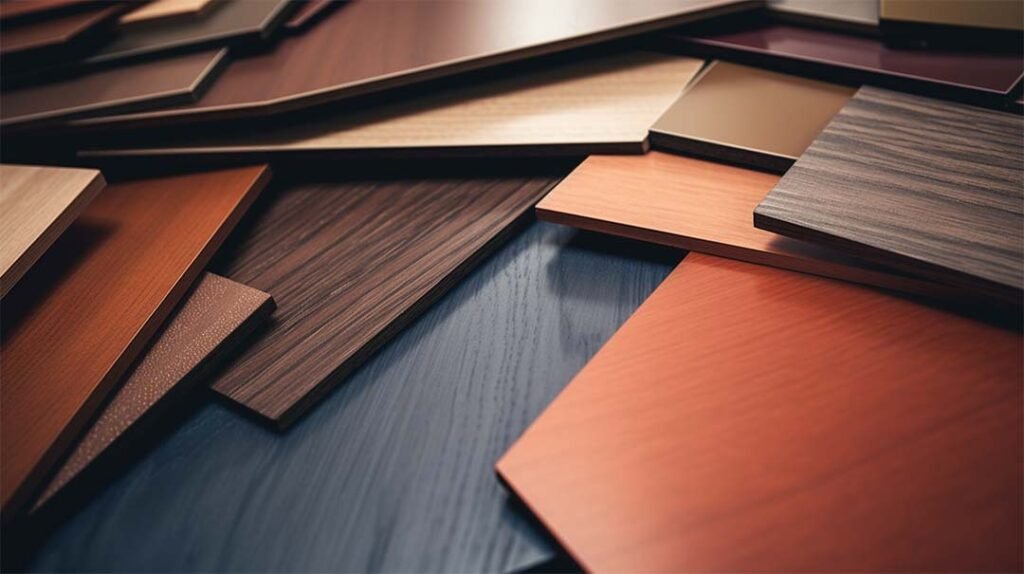
The European standard rates the heartwood of a species for resistance to fungal decay. It is the only number in this whole discussion that is standardised.
| Class | Meaning | Examples |
|---|---|---|
| 1 | Very durable | Teak, robinia, ipé |
| 2 | Durable | Oak, cedar, thermowood |
| 3 | Moderately durable | Larch, Douglas fir |
| 4 | Slightly durable | Pine, spruce |
| 5 | Not durable | Beech, birch, rubberwood |
Two caveats. The class refers to heartwood only — sapwood of any species is class 5. And the class assumes the piece is above ground and ventilated; a piece in contact with soil behaves one or two classes worse.
For anything that gets struck — a baton, a mallet head, a skittle, a bat — the grain direction decides the failure before the species does.
A piece cut with the grain running along its length will dent. A piece cut with the grain running diagonally will split, and it will split at the first hard contact. A baton turned from a diagonal-grained blank of excellent beech fails faster than one turned from straight-grained pine.
So “straight grain on all struck parts” belongs in a purchase specification, and it is more useful than any species name on the same document.
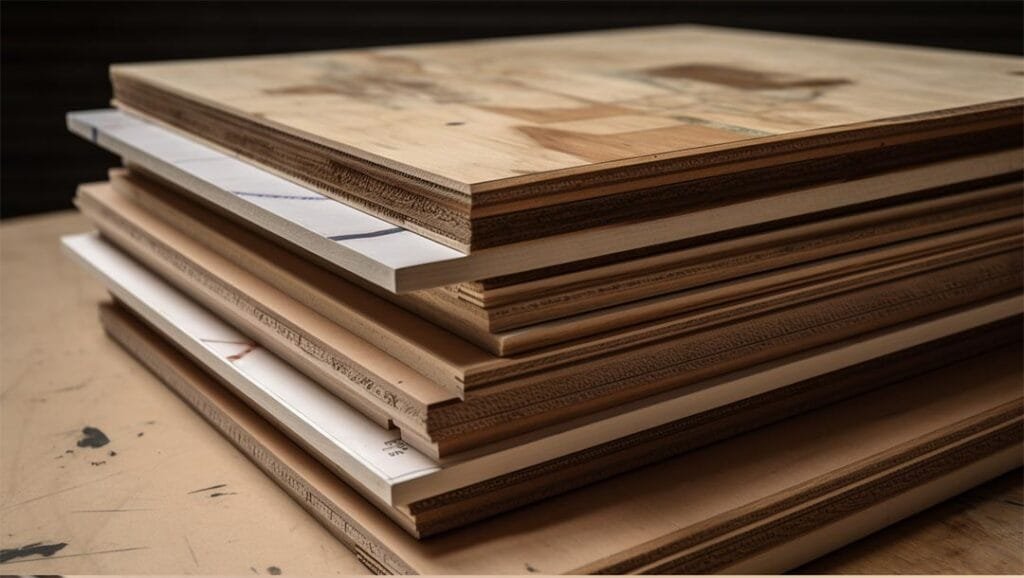
For flat panels the equivalent is plywood. Crossed plies restrain each other, which is why an 18 mm plywood cornhole top stays flat where a solid pine panel of the same thickness cups within a season.
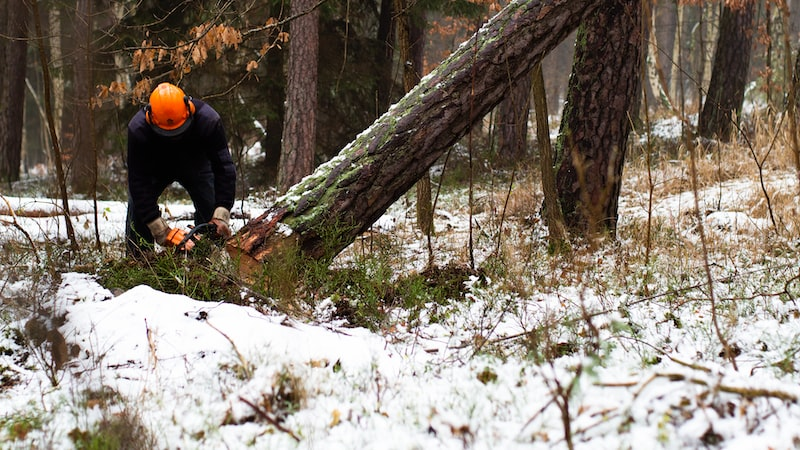
UV breaks down lignin at the surface and the wood greys. This is cosmetic and it is not structural, which is worth saying because greying is what convinces people a set is ruined when it is not.
What is structural is the heat. A dark-painted piece in direct sun reaches temperatures high enough to soften some finishes and to accelerate the moisture cycling inside the wood. A light finish or a pale species runs cooler.
Water is the mechanism that ends most garden games, and it works at the end grain and at the joints rather than through the face.
A film finish on the face of a board is the least important part of the protection. The edge of the plywood, the end of the baton, the toe of the bat and the base of the stump are where water gets in, and they are the parts nobody finishes.
What helps, in order of effect: seal every end grain face, raise the piece off the ground, and use a penetrating oil rather than a film. A film cracks at the corners where it is thinnest, and then it holds water against the wood instead of keeping it out.
In a climate with hard winters this is the mechanism that actually destroys sets, and it destroys them at the joints.
Water enters a glue line or a fastener hole, freezes, expands by about nine percent, and opens the joint a fraction. It refreezes the next night and opens it further. Over one winter a joint that was tight becomes a joint that moves.
Two design responses: keep water out of the joint in the first place, and accept that a wooden set left outside through a northern winter will need re-gluing. That is not a defect. It is what wood does, and any product claiming otherwise is either treated with something it does not disclose or is not going to survive.
Species selection gets you a better starting point. Detailing decides whether you ever reach it.
A wooden set kept indoors and used outdoors will outlast the same set kept outdoors by a wide margin, and the difference is entirely storage.
What that means practically: a shed is better than a lawn, a dry cupboard is better than a shed, and a bag that breathes is better than a sealed one. A set packed away damp in a sealed bag grows mould and the mould transfers to whatever is stored next to it.
Wood type affects durability through four separate properties: density for impact, extractives for decay, grain for splitting, and ply construction for movement. No single species is best at all four, which is why a well-specified set uses different materials in different places.
The ranking that matters for a buyer is: sealed end grain first, joint design second, fasteners third, species fourth.
No. MDF swells and disintegrates once water reaches the core, and the swelling is permanent. Plywood is the panel for outdoor use because the crossed plies restrain movement, but even plywood fails at the exposed edge.
Twice a year, and only the end grain needs it. A penetrating oil, not a film finish. Varnish cracks at the thin corners and then holds water against the wood.
Yes. Beech, rubberwood, pine, birch plywood, cedar and thermowood are all quotable. Species that are CITES-listed or that cannot be traced to a harvest country are not.
Teak, robinia or cedar, all durability class 1 to 2. In a humid climate the finish matters as much as the species, because the humidity cycling is continuous.
It can be left out, and it will not be the same in spring. Freeze-thaw opens joints and the surface greys. Store it under cover and it lasts years.
If you are specifying a wooden game range and want the species, the durability class and the detailing written down, send us the game and the destination climate. We will come back with what we would use and why.
Get a free copy of our catalog
Trust our wooden game experts to deliver premium quality and unbeatable value, on-time and on-budget.
kangjiegardengame.com
Typically replies within minutes
How Can We Assist You Today?
WhatsApp Us
🟢 Online | Privacy policy
WhatsApp us
Get notified about new products
Custom garden games available—our expert design team brings innovative ideas to life.