
Main Menu
Yes, and most of what is sold as eco-friendly is not. The word has no standard behind it, so it means whatever the seller decides it means.
What does have standards behind it are four specific things: certified fibre, species choice, a tested finish, and packaging. Each is verifiable, and each is worth a different amount.
Here is what each one actually delivers, and where the claims that sound best turn out to be the weakest.
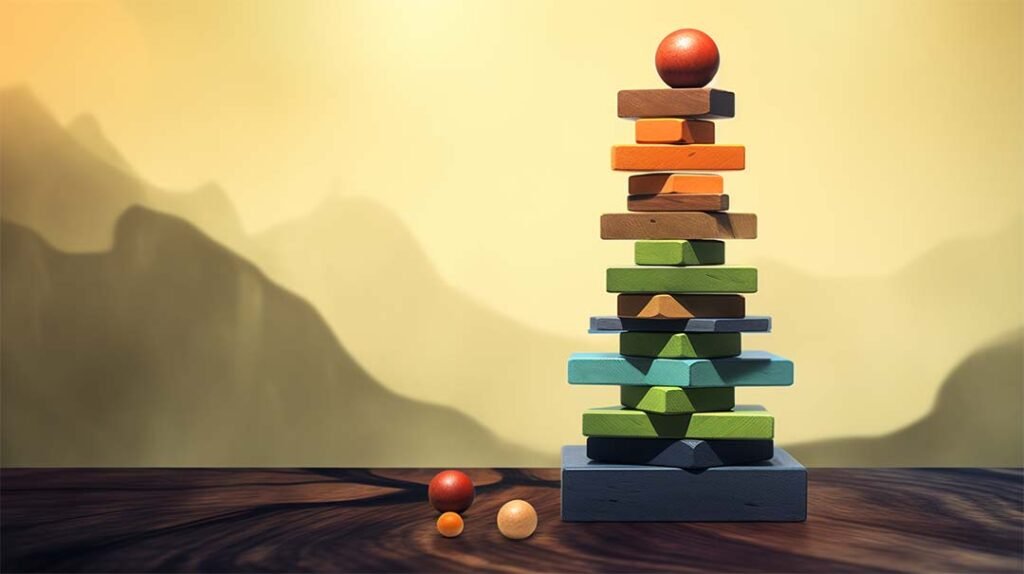
Three pegs, a stack of discs of decreasing size, and one rule: move one disc at a time, and never place a larger disc on a smaller one. The minimum number of moves is 2 to the power of n, minus 1, where n is the disc count. Five discs is 31 moves. Eight is 255.
It matters for the eco question because the puzzle is almost entirely wood. There is no plastic, no electronics and no battery, so the environmental argument is about the timber and the finish rather than about the product category.
Ranked by how much they actually deliver, not by how good they sound.
| Claim | Verifiable | What it delivers |
|---|---|---|
| FSC or PEFC certified timber | Yes, third party, certificate number | Chain of custody for the fibre. Nothing about finish or safety |
| Species choice | Yes, and it is on the invoice | Fast-growing plantation timber instead of old growth. This is the biggest single lever |
| Water-based finish | Yes, and testable | Lower solvent emissions in the factory. The finish itself still needs EN 71-3 |
| Plastic-free packaging | Yes | Removes the film and the blister. Real and cheap |
| Recycled or reclaimed wood | Only with documentation | Avoided felling. Without paperwork it is an assertion |
| Plant-based dyes | No standard exists | Nothing you can verify |
| Biodegradable | No, and it is false here | A glued, sanded, coated puzzle does not compost |
The ranking is uncomfortable: the two claims that appear most often in marketing, plant-based dyes and biodegradability, are the two that cannot be substantiated.
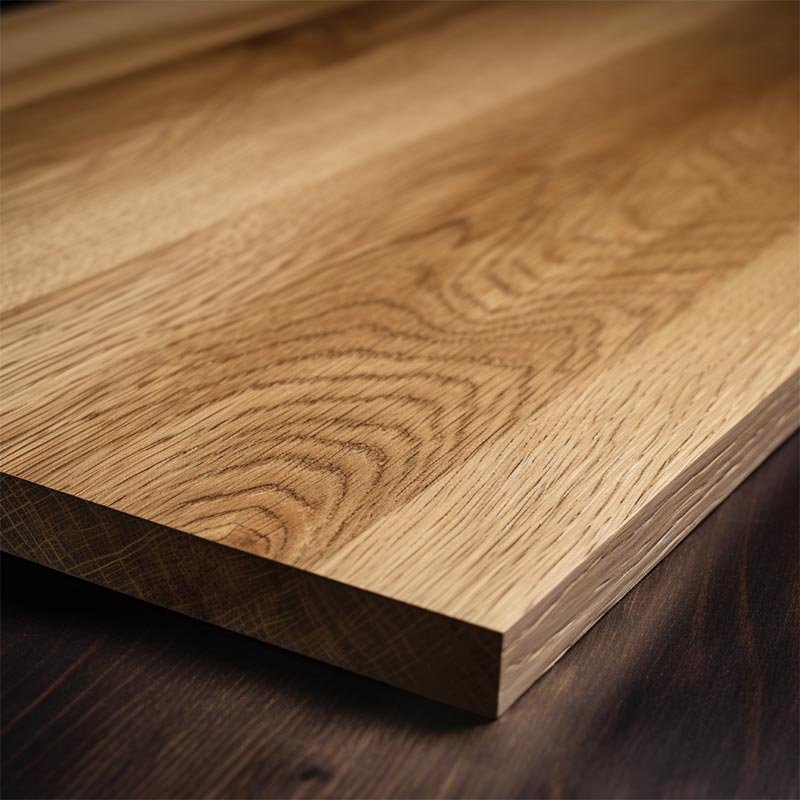
Bamboo is genuinely sustainable as a crop: it is a grass, it grows back in three to five years, and it needs no replanting.
As a material for this puzzle it has one specific problem. Bamboo is a hollow tube of longitudinal fibres. A disc cut across it and drilled for a peg has the drill running across the fibre, and that is exactly the orientation in which bamboo splits.
What works instead is strand-woven or flattened bamboo board, where the fibres are rearranged and glued into a panel. That material behaves like a hardwood panel and machines well. It is also a glued composite, so the “it is just bamboo” argument weakens.
The honest summary: bamboo is a good choice for the pegs and a poor one for the discs unless it is a laminated board.
Reclaimed timber avoids new felling, which is a real benefit. It also brings three problems that a buyer should know about.
It is a legitimate material for an artisan product. It is a difficult one for a volume product with a compliance file.
This is the part that matters most for a children’s product, and it is the part least discussed.
The relevant test is EN 71-3, which measures migration of nineteen elements from the finished surface. It applies to what a child can put in their mouth, which is the coating rather than the wood.
Water-based stains and clear coats are the straightforward route: lower solvent content, easier to pass, and no strong smell in the factory. A solvent lacquer is not automatically a problem, but it needs the same testing and it is harder to pass.
Two specifications worth putting in writing: the finish is tested on the finished surface rather than on bare wood, and the test report names the standard parts.

Three real ones, in order of size.
The health argument is narrower than it sounds. A tested water-based finish reduces the risk from the coating, and that is the whole claim.
What it does not mean is that the product is “non-toxic” in any absolute sense. Wood dust is a hazard in the factory rather than in the home, and the finished puzzle is safe because it was tested, not because it is natural.
Eco-friendly does not mean fragile, and in this product it usually means the opposite. A solid hardwood puzzle with a penetrating oil finish is more repairable than a moulded plastic one: it can be sanded and re-oiled, and a chipped edge can be dressed.
The failure mode to watch is the peg. A 200 mm rod standing vertically out of a base is the part that breaks, and it is also the part where the grain direction matters most. Straight grain on the pegs is the specification that decides whether the puzzle lasts.
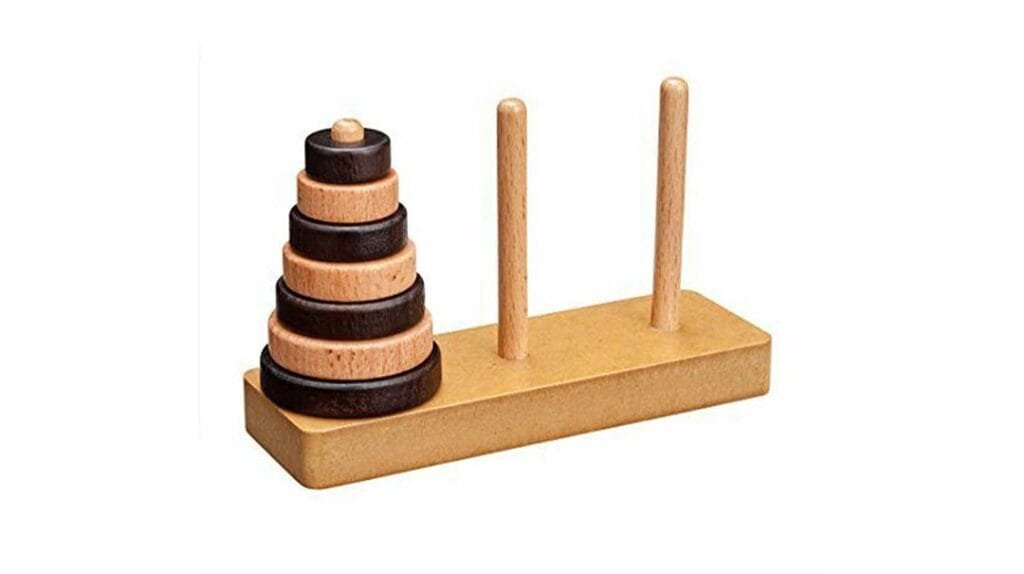
An eco-friendly Tower of Hanoi is a puzzle made from certified or plantation timber, finished with a tested water-based coating, packed without plastic, and built to last. That is a specification, and every part of it can be checked.
What it is not is biodegradable, and it is not made greener by calling the dyes plant-based. Those two claims are the ones to strike first when you are reviewing a supplier’s copy.
Ask for four things: an FSC or PEFC certificate number, the species and harvest country, the finish test report, and the packaging specification. Anything beyond those four is a claim rather than a fact.
No. A solid hardwood puzzle with a water-based finish is more durable and more repairable than a moulded plastic one. The two properties are unrelated.
Certification has an audit cost, water-based finishes need more careful application, and plantation species are not always cheaper than the alternative. The premium is real and it is smaller than the marketing suggests.
Yes, and the same four checks apply. The species changes with the game, but the fibre, finish, packaging and documentation requirements do not.
For the pegs, yes. For the discs, only if it is a strand-woven or flattened bamboo board, because solid bamboo splits when drilled across the fibre.
If you are sourcing a wooden puzzle and need the fibre, finish and packaging documented rather than described, send us the disc count and the destination market. We will come back with the species options, the finish specification and the carton.
Get a free copy of our catalog
Trust our wooden game experts to deliver premium quality and unbeatable value, on-time and on-budget.
kangjiegardengame.com
Typically replies within minutes
How Can We Assist You Today?
WhatsApp Us
🟢 Online | Privacy policy
WhatsApp us
Get notified about new products
Custom garden games available—our expert design team brings innovative ideas to life.