
Main Menu
The question is usually asked as if a garden game were one piece of wood. It is not. A croquet mallet has a head that gets hit, a shaft that gets bent, and a ball that gets rolled on wet grass. A tumble tower has fifty-four blocks that must stay dimensionally identical for years. A cornhole board is a flat panel that has to stay flat. Those four jobs want four different materials, and no single species is good at all of them.
So the useful answer is not a list of species. It is a list of jobs, with the species that survive each one, and the two or three numbers that decide whether the piece is still usable after a season outdoors.
There is also a naming problem. Most of the wood sold under a familiar trade name is not the species the name suggests, and a purchase order written in trade names is not a specification.

Split any outdoor game into its parts and the requirements separate immediately.
One species cannot do all four. Teak is excellent at the fourth job and mediocre at the first, because it is not hard enough to take repeated impact without denting. Ash is excellent at the first job and fails the fourth completely, which is why tool handles are ash and fence posts are not.
The intuitive answer is that wood rots. In practice, on a garden game, four other things fail first.
Which leads to an unpopular conclusion: the finish and the detailing matter more than the species. A properly sealed robinia set will outlast an unsealed teak one, at a third of the material cost.
For anything that gets hit, the material property that matters is shock resistance, not hardness. Three species dominate for good reasons.
Ash is the standard for tool handles and bats: straight grain, high shock resistance, and it bends before it breaks. It is not durable outdoors at all, so an ash mallet head has to be fully finished and stored dry. That is a real constraint and it is why ash belongs on indoor and covered games rather than on a set that lives in a garden.
Hickory has the highest shock resistance of the commercial North American hardwoods and is the traditional choice for axe and sledge handles. It is heavy, which is either the point or a problem depending on the game, and it is expensive outside North America.
Hornbeam is the traditional European wood for mallets, butcher blocks and skittle pins. It is dense, fine-grained and wears rather than dents. Supply is limited and the logs are small, so it suits turned parts rather than wide panels.
For a retail garden set, the honest compromise on struck parts is usually a durable hardwood with a straight grain and a sealed end, rather than a premium species left unfinished.
Anything that touches soil or wet grass for years needs decay resistance in the heartwood, and this is where the durability classes earn their keep. EN 350 sorts heartwood into five classes, from very durable to not durable, and the class refers to the heartwood only. Sapwood of any species is perishable, which is why a specification that names a species without naming a grade is not a specification.
Cedar, redwood and teak appear in almost every article on this subject, and each one needs a qualifier.
Cedar – usually western red cedar – is class 2 in the heartwood and genuinely resistant to decay. It is also soft. On a Janka scale where hickory is around 1800 and oak around 1300, cedar sits near 350. It dents under a fingernail and it will not survive being struck. It is an excellent choice for a box, a liner or a board that is never hit, and a poor choice for a mallet, a skittle or a tower block.
Redwood is class 2, soft in the same way, and comes from a limited Californian supply. It is a fine material and a difficult one to build a retail programme on, because the volume, the grade consistency and the price are all working against a garden game at a mass-market price point.
Teak is class 1, dimensionally stable, and genuinely the best all-round outdoor hardwood. It is also the most expensive line on the sheet, it contains silica that blunts tooling, and its dust is a known sensitiser, so it needs extraction rather than a mask. For a premium set it is the right answer. For a set that has to hit a shelf price, it is usually the wrong one, and the same performance is available from robinia or iroko at a fraction of the cost.
None of the three is wrong. All three are answering a different question from the one a game manufacturer is actually asking.
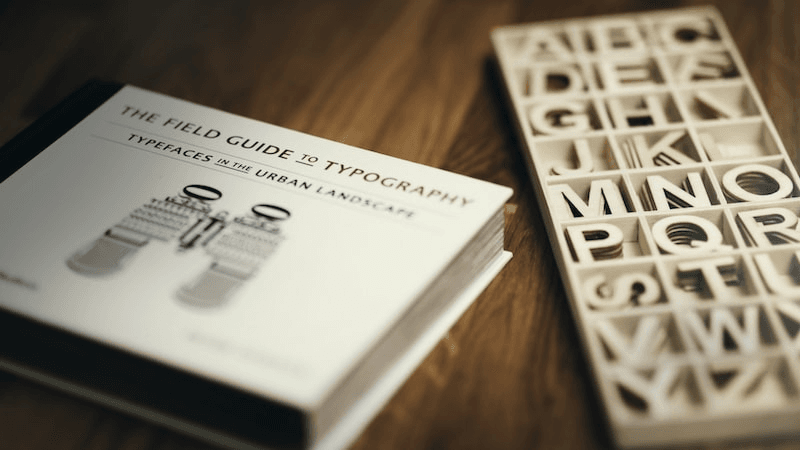
A trade name is a selling word. It is chosen to sound like something better, and it carries no botanical meaning. This matters because durability, hardness and price are properties of a species, and a purchase order written in trade names cannot be checked against anything.
Four examples are enough to make the point. Brazilian teak is cumaru, a different genus with different properties and a different price. African teak is usually iroko, and sometimes afzelia. Rhodesian teak is neither. Malaysian oak is a meranti, which is not an oak and is not durable. None of these is fraud – they are established trade names – but a specification that says “teak” and accepts any of them has specified nothing.
The test that resolves all of this is a single question: what is the botanical name on the supplier’s paperwork. If the answer is a trade name, the answer is not an answer.
A specification that can be checked has six lines, and only one of them is the species:
Then one acceptance test, because the six lines only describe the material and not the assembly. A three-cycle soak-and-dry on a production sample will find more real problems than any certificate, and it costs a week.
If there is one intervention that outperforms upgrading the species, it is sealing the end grain. A pin base, a mallet head end and a board edge are all open-cell faces, and they take up water an order of magnitude faster than a side face. Two coats of a penetrating sealer on the ends, applied before assembly, will do more for the life of a garden game than moving up two durability classes.
The rest of the finish is a choice between three systems. Penetrating oil leaves the wood looking like wood and needs re-coating annually. A hardwax oil does the same with better water resistance and a longer interval. A film finish – lacquer or polyurethane – looks best on day one and fails worst, because once water gets behind a film it cannot get out, and the film lifts in sheets.
For outdoor games at retail, hardwax oil on the exposed faces and a penetrating sealer on every end grain is the combination that produces the fewest complaints.
In practice, the specification we build to for a garden game that has to survive outdoors and still hit a retail price is:
None of that is exotic. It is the ordinary answer once the question is split into four jobs instead of one.

There is no single best wood for outdoor garden games, because a garden game is not a single piece of wood. Struck parts want shock resistance, rolled parts want density and stability, flat parts want an engineered panel, and ground-contact parts want a durability class of 1 or 2 in the heartwood.
Cedar, redwood and teak are all good materials answering a narrower question than the one being asked. For most retail programmes the working answer is robinia, acacia or iroko on the exposed parts, ash or hornbeam where something gets hit, an engineered panel for boards, and a finish that seals every end grain before assembly.
And the specification has to name botanical species, not trade names, or none of the rest can be checked.
For parts that are never struck, yes. Western red cedar is class 2 for decay resistance and light enough to carry. It is also very soft, so it dents easily and should not be used for mallets, skittles or tower blocks.
For a premium set, yes - it is class 1, stable and the best all-round outdoor hardwood. For a set with a shelf price to hit, robinia or iroko deliver comparable outdoor performance at a fraction of the cost.
Because trade names are marketing words, not species. Brazilian teak is cumaru, African teak is usually iroko, and Malaysian oak is a meranti. Always specify the botanical name and the country of origin.
Sealing the end grain. It absorbs water ten to twenty times faster than a side face, and every pin base, mallet end and board edge is an end-grain face. Two coats before assembly outperforms moving up two durability classes.
Only in some parts. Solid bamboo is stable as a panel and suitable for posts, but it has no cross-grain reinforcement, so it splits along the fibre if it is used as a struck part.
Kangjie manufactures wooden garden games for importers, retailers and brand owners. If you need a species specified for a particular part, send the drawing and the intended use, and we will come back with the material and the finish rather than a price list.
Get a free copy of our catalog
Trust our wooden game experts to deliver premium quality and unbeatable value, on-time and on-budget.
kangjiegardengame.com
Typically replies within minutes
How Can We Assist You Today?
WhatsApp Us
🟢 Online | Privacy policy
WhatsApp us
Get notified about new products
Custom garden games available—our expert design team brings innovative ideas to life.