
Main Menu
“Certified” is the most overused word in this category and the least defined. A supplier will tell you a product is CE certified, FSC certified, EN 71 certified and ASTM certified, and three of those four phrases describe something that does not exist in the form described.
This page sets out what each one actually is: who issues it, what it covers, what it does not cover, and what a buyer should ask for instead of a certificate.

| What it is called | What it actually is | Who issues it |
|---|---|---|
| CE marking | A self-declaration of conformity by the manufacturer or importer | Nobody. There is no CE certificate for toys in the ordinary case |
| EN 71 | A European standard, published in parts | Not a certificate. A test report cites the parts applied |
| ASTM F963 | The US toy safety specification, mandatory under CPSIA | A CPSC-accepted third-party laboratory tests it |
| CPC | A genuine certificate, but for children’s products | The importer or US manufacturer, not the factory |
| FSC | Chain of custody for wood fibre | A certification body, for the wood only |
| ISO 9001 | A quality management system for the factory | A certification body, for the process |
| TSCA Title VI | Formaldehyde limits in composite wood | A third-party certifier, if plywood or MDF is used |
| ISPM 15 | Heat treatment of wood packaging | The packaging supplier, not the product |
| BSCI / Sedex | Social compliance audits of the workplace | An audit firm. Not a product mark |
Read that table again and the practical consequence is obvious: almost none of these are documents you can be handed on request as a single PDF called “certificate”. They are a set of claims, and each one has a specific piece of paper behind it.
CE is the manufacturer’s own statement that the product meets the applicable European legislation. For toys that legislation is Directive 2009/48/EC. The manufacturer, or the importer placing the product on the EU market, compiles a technical file, applies the harmonised standards, and signs a Declaration of Conformity. The declaration is one page and it names the standards by number.
Nobody approves it. There is no application, no fee, no issuing body. This is why “we are CE certified” is a phrase that should be read as “we have a technical file and a signed declaration”, and why the thing to ask for is the declaration itself.
Self-declaration is only sufficient where the manufacturer applies all relevant harmonised standards in full. If a standard does not exist for a particular risk, or is not applied in full, a Notified Body has to carry out an EC-type examination. For a wooden garden game where EN 71-1, -2 and -3 cover the risks, self-declaration is the normal route, and a supplier who claims a Notified Body certificate for a plain croquet set is either describing a different product or misunderstanding their own paperwork.
EN 71 is not one document. Which parts apply depends on the product, and a test report that says “EN 71” without listing parts is not telling you anything.
| Part | What it covers | Relevance to wooden games |
|---|---|---|
| EN 71-1 | Mechanical and physical properties: sharp edges, points, small parts, drop and torque tests | Applies to almost everything. This is where small-part failures come from |
| EN 71-2 | Flammability | Low risk for solid wood. Relevant to fabric bags, felt and any fibre component |
| EN 71-3 | Migration of certain elements: 19 elements in three limit categories | Applies to any painted, stained or printed surface, and to the wood itself if it is a toy |
| EN 71-8 | Activity toys for domestic use | Slides, swings, climbing frames. Rarely a garden game |
| EN 71-9, -10, -11 | Organic chemical compounds: requirements, sampling, test methods | Not harmonised. Applying them does not give presumption of conformity |
| EN 71-14 | Trampolines | Not applicable |
EN 71 applies to toys, which the directive defines as products designed or intended, whether or not exclusively, for use in play by children under fourteen. An adult croquet set marketed to adults is arguably outside the toy directive entirely. The same set with a cartoon on the box and “ages 6+” printed on it is inside it.
That is not a technicality. It decides whether you need the test report at all, and it decides which warnings go on the carton. Changing the marketing changes the obligation, and it is the one place where a product manager has direct control over the compliance cost.


ASTM F963 is the toy safety specification and under CPSIA it is mandatory, not voluntary. Testing must be carried out at a laboratory accepted by the CPSC. There is no self-declaration route for the standards it covers.
The Children’s Product Certificate is a real certificate, and it is issued by the importer or the domestic manufacturer. Not by the Chinese factory. The factory supplies the test report; the importer signs the certificate and carries the legal responsibility for it.
This matters because a factory that offers to “issue your CPC” is describing something it cannot legally do. What a good factory does is supply the test report, the lab accreditation number, the report date, and the exact standard versions tested, and then stay available when the importer’s compliance team has questions six months later.
The small parts test uses a cylinder 31.7 mm in diameter and 57.1 mm deep, with a defined radius at the opening. Anything that fits entirely inside it is a hazard for products intended for children under three. Standard dice, marbles, counters, croquet clips and most game pieces fail it. If a set is labelled for ages three and up, the pieces are allowed to be small, but the labelling has to be right and the warning has to be on the product.
TSCA Title VI regulates formaldehyde emissions from composite wood: plywood, MDF, particleboard. Solid wood is exempt. A cornhole board made from plywood is in scope; a solid pine board is not. The same distinction applies to the EU, where E1 limits are on the panel and not on the timber.
The US import declaration requires genus, species and country of harvest for plant products. It is a declaration filed by the importer, not a certificate held by the factory, and it is the point where a supplier who cannot name the species becomes a problem rather than an inconvenience.

FSC is a chain-of-custody system for wood fibre. It traces material from a certified forest through processing and trade to the finished product. That is a real and useful thing, and it is also narrow.
FSC says nothing about the finish, the glue, the small parts, the sharp edges, or whether the product is safe. A product can carry FSC 100% and still be a choking hazard. Buyers conflate these two questions constantly, and suppliers are happy to let them.
PEFC is the other credible scheme. Both are legitimate; neither is a safety mark, and neither is a substitute for a test report.
EUTR, and the EUDR that replaces it, put the due diligence obligation on the operator placing timber on the EU market. That is the importer, not the factory. What the factory supplies is species, country of harvest, and increasingly the geolocation of the harvest plot. If a supplier cannot state the species, the due diligence file cannot be built, and the product cannot legally be placed on the market by a compliant operator.
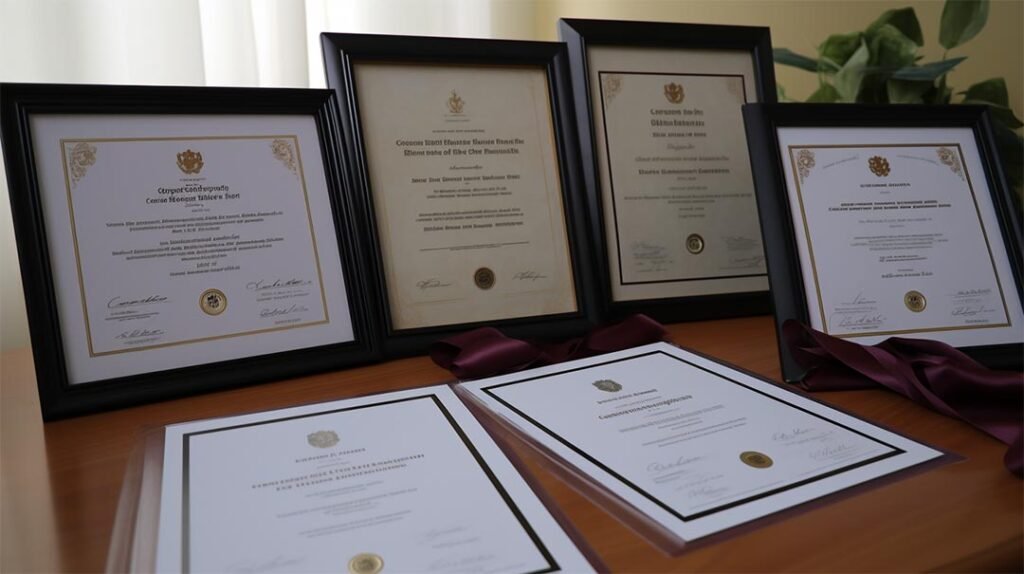
Four documents, and all four are documents rather than adjectives.
None of this makes a product good. It makes it traceable, which is a different and more useful property: a traceable product can be defended when something goes wrong, and an untraceable one cannot.
The difference between a supplier who can produce these four things within a day and one who cannot is the difference between a supply chain and a hope.
If you are building a compliance file for a wooden game range, send us the destination market and the age grading. We will tell you which parts of EN 71 apply, which do not, and which pieces of paper you will actually be asked for.
Get a free copy of our catalog
Trust our wooden game experts to deliver premium quality and unbeatable value, on-time and on-budget.
kangjiegardengame.com
Typically replies within minutes
How Can We Assist You Today?
WhatsApp Us
🟢 Online | Privacy policy
WhatsApp us
Get notified about new products
Custom garden games available—our expert design team brings innovative ideas to life.