
Main Menu
A warm afternoon, a lawn, a few friends, and something to do that is not a screen. Wooden garden games fill that gap better than most things sold for the purpose, and they have done so for a very long time.
But “best choice” is a claim that needs a qualifier. Wood is the best choice for some games and a poor one for others, and the difference is almost always about water rather than about aesthetics.
This article covers what wood actually does outdoors, where the sustainability argument holds and where it does not, and the practical questions that decide whether a set is still usable in five years.

The short version: wood is warm to handle, repairable, and pleasant to look at in a way that moulded plastic is not. It is also heavier, it moves with the weather, and it will not survive being left out through a winter. Those are the terms of the deal, and a buyer who knows them will choose better than one who is told the product is simply superior.
Ultraviolet light breaks down lignin, the polymer that holds wood fibres together. The visible result is the silver-grey surface of any untreated outdoor timber. That greying is not decay, and a set that has gone grey is not failing. What is happening underneath is a slow erosion of the surface layer, which is why an untreated board loses a fraction of a millimetre a year and why a UV-blocking finish is worth having.
Water is the real enemy, and it works in two directions. Wood swells as it absorbs and shrinks as it dries, and a glued joint that is tight at 12 percent moisture content can open at 8 percent. End grain absorbs fastest, which is why a board fails at its ends before anywhere else.
Water expands by about nine percent when it freezes. Water sitting in a surface check, freezing overnight and thawing the next morning, widens that check a little each cycle. One winter of that does more damage than a whole summer of rain, and it is the single strongest argument for storing a wooden set under cover.
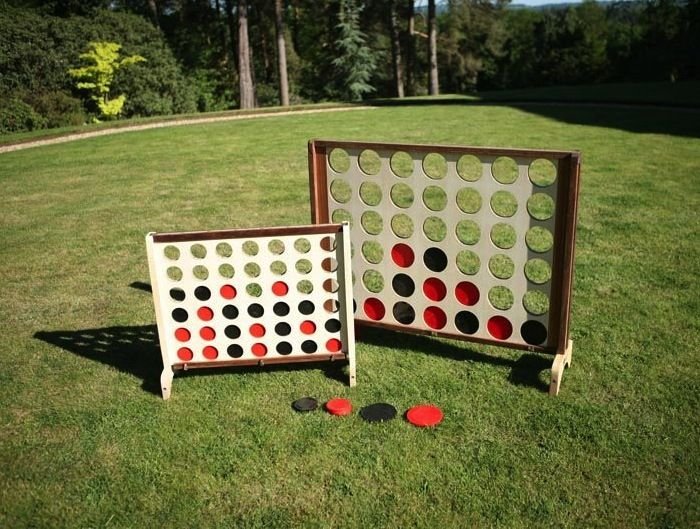
Wood is renewable in a way that oil-based plastic is not, and roughly half its dry weight is carbon the tree took out of the atmosphere. That advantage only holds if the timber comes from a managed forest, which is what an FSC or PEFC chain-of-custody certificate evidences. It is an auditable document about the fibre, and it says nothing about the finish, the factory or the freight.
A water-based clear coat carries a fraction of the solvent load of a traditional lacquer, and a penetrating oil leaves the surface repairable by the customer. Neither makes the product compostable. A finished, glued wooden game is not recyclable in a kerbside stream, and a set that is replaced every two years is worse than a plastic one that lasts fifteen. Longevity is the environmental argument, not the material label.
Nobody plays a garden game for fitness, and claiming otherwise is why so much of this category reads as filler. What these games do is keep a group of mixed ages standing, walking and paying attention to each other for an hour, which is a different and more useful thing than a workout.
The good ones have a genuine handicap structure built in. Bocce rewards aim, a ring toss rewards rhythm, a numbered-pin game rewards both, and none of them require the strength or speed that would exclude a grandparent or a seven-year-old. That is rare in outdoor equipment and it is the reason these games get played at family events rather than bought and shelved.
Aiming at a target is absorbing in a way that scrolling is not, and the attention it demands is the point. There is a body of research on restorative environments and directed attention that supports this, and there is also the simpler observation that people play longer when the game is in front of them rather than in their hand.

A wooden set looks like furniture rather than equipment, which is why it gets left out where people can see it, and a game that is visible gets played. That is a real design advantage and it is worth more than most product photography suggests.
This is the trade-off nobody mentions. A six-player croquet set is 10 to 14 kg. A pair of cornhole boards is around 16 kg together. A giant tumble tower runs 12 to 18 kg. Wood is dense, and a set that is heavy enough to feel substantial is also heavy enough that the customer needs somewhere to put it. Storage volume is the specification that decides whether the product gets used.
Times matter more than buyers expect. Cornhole is two minutes. A giant tumble tower is five. A nine-wicket croquet court is 20 to 40 minutes the first time and about 15 once the hoop positions are marked. Anything over half an hour will not be set up casually on a weekday evening, which changes who the product is really for.
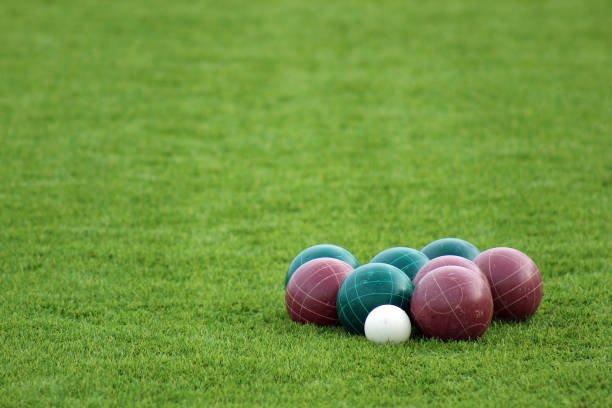
A well-made wooden set costs more up front and less per year, because it is repairable. A mallet head can be re-wedged, a hoop can be re-straightened, a board can be re-oiled. A cracked moulded plastic component cannot be fixed at all, which is how a cheap set becomes a disposable one.
Three places, honestly. It is not recyclable in kerbside streams. It moves with humidity, so a joint that was perfect in the factory can loosen in a dry room. And it is heavy, which makes it a sea-freight product with a long lead time rather than something you can reorder quickly. If any of those is decisive for your market, a different material is the right answer.
Wooden garden games earn their place by being repairable, pleasant to handle and worth leaving out where people can see them. They keep that place only if the timber is certified, the finish is sensible and the product is built to survive more than a few seasons.
If you are specifying a set for retail, the four numbers that decide whether it holds up are moisture content at machining, finish type, hardware material and per-part tolerance. Everything else is presentation.
Many are, with the right age grading. A croquet mallet or a thrown baton is a swinging object, so the product needs to be designed and tested for the age group it is sold to. If it is sold as a toy in the EU it needs EN 71-1, -2 and -3; in the United States it needs ASTM F963 and a Children's Product Certificate. If it is sold as adult sporting equipment at 14+, that package does not apply. The age grade has to match the packaging, the listing and the imagery, not just the label.
They keep people standing, walking and aiming for an hour at a time, and they work across a wide age range, which is more than most outdoor equipment manages. We would not attach figures to that. The category is full of invented percentages and they do not help anybody decide what to buy.
A set will survive a season outdoors. It will not survive a decade of it, and the reason is freeze-thaw rather than rain: water in a surface check expands about nine percent when it freezes and widens the check each cycle. Store it under cover through winter, and bring mallets and bats indoors.
Cornhole takes two minutes, a giant tumble tower about five, and a nine-wicket croquet court 20 to 40 minutes the first time. Setup time is worth checking before you buy, because a game that takes half an hour does not get played on a weekday evening.
Logo, packaging, size, colour, species and finish are all open to specification, and minimum order is 500 sets. Samples take 5 to 10 days once the specification is agreed, and bulk production runs 30 to 45 days. What we will not do is print a sustainability or safety claim that the material cannot support.
If you are sourcing wooden garden games and want the specification rather than the adjectives, send us the brief. We will come back within 24 hours with the species, moisture content, finish and tolerances we would use, and the carton dimensions your forwarder will ask for.
Get a free copy of our catalog
Trust our wooden garden game experts to deliver premium quality and unbeatable value, on-time and on-budget.
kangjiegardengame.com
Typically replies within minutes
How Can We Assist You Today?
WhatsApp Us
🟢 Online | Privacy policy
WhatsApp us
Contact us directly for the best deals on source factories!
Get notified about new products
Custom garden games available—our expert design team brings innovative ideas to life.